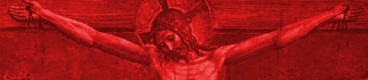
"This is the Charity of God, That We Keep His Commandments"
Part Eight
by
Thomas A. Droleskey
Whosoever believeth that Jesus is the Christ, is born of God. And every one that loveth him who begot, loveth him also who is born of him. In this we know that we love the children of God: when we love God, and keep his commandments. For this is the charity of God, that we keep his commandments: and his commandments are not heavy. (1 John 5: 1-3)
The duties that are imposed upon the souls of a man and a woman who have entered into a valid, sacramental marriage in the Catholic Church are weighty. As was noted in the last installment in this series, a man and a woman who enter into the Sacrament of Holy Matrimony have all of the sanctifying graces at their disposal to fulfill these duties as they help each other to get home to Heaven as members of the Catholic Church.
An Eastern rite Catholic priest told a couple during their marriage ceremony nearly four years ago that they had not found their perfect love. "No, the priest said emphatically. "You have found your Cross!" Indeed.
We must begin every day of our lives with the Sign of the Cross. Married life involves carrying the Cross with love. Saint John Mary Vianney, the Cure of Ars, put it this way in a sermon:
The Saints, my dear brethren, all loved the Cross and found in it their strength and their consolation.
But, you will say to me, is it necessary, then, always to have something to suffer?. . . . Now sickness or poverty, or again scandal or calumny, or possibly loss of money or an infirmity.
Have you been calumniated, my friends? Have you been loaded with insults? Have you been wronged? so much the better! This is a good sign; do not worry; you are the road that leads to Heaven. Do you know when you ought to be really upset? I do not know if you understand it, but it should be precisely for the opposite reason--when you have nothing to endure, when everyone esteems and respects you. Then you should feel envious of those who have the happiness of passing their lives in suffering, or contempt, or poverty. Are you forgetting, then, that at your Baptism you accepted the Cross, which you must never abandon until death, and that it is the key that will you use to open the door of Heaven? Are you forgetting the the words of our Savior: "If any man will come after me, let him deny himself, and take up his cross daily, and follow me." Not for a day, not for a week, not for a year, but all our lives. The saints had a great fear of passing any time without suffering, for they looked upon it as time lost. According to St. Teresa, man is only in this world to suffer, and when he ceases to suffer, he should cease to live. St. John of the Cross asks God, with tears, to give him the grace to suffer more as a reward for all his labors.
What should we conclude, my dear children, from all that? Just this: Let us make a resolution to have a great respect for all the crosses, which are blessed, and which represent to us in a small way all that our God Suffered for us. Let us recall that from the Cross flow all the graces that are bestowed upon us and that as a consequence, a cross which is blessed is a source of blessings, that we should often make the Sign of the Cross on ourselves and always and with great respect, and finally, that our houses should never remain without this symbol of our salvation.
Fill your children, my dear brethren, with the greatest respect for the Cross, and always have a blessed cross on yourselves; it will protect you against the Devil, from the vengeance of Heaven, and from all danger. This is what I desire for you.
Married life brings with it both joys and crosses. Those who enter into the Sacrament of Holy Matrimony must look to Saint Joseph and to Our Lady for the assistance they need to comport themselves with the true dignity of the married state, treating each other as they would treat Saint Joseph and Our Lady themselves. Husbands and wives should think about the reality of how they represent Saint Joseph and Our Lady before they say cross words to one another or develop patterns of bickering that chip away at their respective dignity and undermine the holiness that is meant to fostered within the domestic cell of the Church that is the family.
Indeed, the Sacrament of Holy Matrimony is an expression of Our Lord's own espousal of His Mystical Bride, Holy Mother Church. Our Lord gave Himself up entirely as He offered Himself up to the Father in Spirit and in Truth on the wood of the Holy Cross for the sake of His Church, which was born out of the elements of Blood and Water, the sacramental elements of the Church, that flowed forth from His Wounded Side as Saint Longinus, the Roman Centurion, pierced it with his lance.
Married couples are called to imitate that self-giving of Our Lord. No one should enter into the Sacrament of Holy Matrimony until and unless he or she is ready to give of himself or herself at all times to His beloved for the sake of Our Beloved. Husbands and wives must see Our Lord Himself in the person of their spouses, serving each other as Christ, the Invisible Head of the Catholic Church, continues to serve His Mystical Bride by the working of the Holy Ghost in the sacraments. A married person must anticipate the needs, both spiritual and temporal, of each other. They must be willing to surrender their own time and convenience for the sake of each other--and for the sake of the children, whether few or many, that God chooses to send them over the years. Our children are careful observers. They will see how we did--or did not--offer ourselves up for them. They will see whether the love of the Divine Redeemer flowed from the hearts of their fathers into their fathers and from their mothers into their fathers. They will see whether eternity was the focal point of each and every activity of family life.
The married state, therefore, is the means by which married persons seek to sanctify and thus to save their souls as members of the Catholic Church. Crucifixes and images of the Holy Family and of others saints should be displayed in each and every room of a Catholic home. The Angelus (or Regina Caeli during Paschaltide) must be said, at least upon rising, noon, and six o'clock. Assisting at the daily offering of the Immemorial Mass of Tradition is so important that people must move to avail themselves of it. Nothing is more important than assisting at the Mass of our fathers every day. The state of the Church in her human elements is such that we must make sacrifices in order to sanctify and to save our souls. Let me reiterate: assisting at the Immemorial Mass of Tradition on a daily basis is a prerequisite for each member of the family to live the liturgical life of the Catholic Church fully in order to incarnate that life in one's home in every aspect of family life. Moreover, families must find time, at least one a week, to spend an hour in prayer before Our Lord's Real Presence. Even ten to fifteen minutes before and after the offering of daily Mass will help to fortify family members as they go about the business of serving each other unto eternity.
Total consecration to Our Lady's Sorrowful and Immaculate Heart is also mandatory for those married Catholics serious about forming themselves and their children in the crucible of love that is the gibbet of the Holy Cross. We must give all of our prayers, penances, sufferings and whatever merit we earn from our indulgenced acts to Our Lady's Sorrowful and Immaculate Heart just as she gave herself up for up spiritually to give birth to us as the adopted children of the living God as her Divine Son gave Himself up for us on the wood of the Holy Cross. A family that does not pray at least five decades of Our Lady's Most Holy Rosary every day is not fulfilling its obligation to help souls to be formed in the pattern of the Ark of the New Covenant who made possible our salvation and whose own self-immolation in the home in Nazareth is the model for all mothers.
Yes, the Sacrament of Holy Matrimony is a participation in the work of Redemption wrought by the Second Person of the Blessed Trinity on the wood of the Holy Cross, which work of Redemption is extended to us in time in an unbloody manner every day except Good Friday in the Holy Sacrifice of the Mass. No one except a serious and sober Catholic concerned about getting home to Heaven should even consider getting married, which is why a solid traditional priest must examine a couple carefully before marriage as to their readiness to help each other to sanctify and to save their souls as participants in Our Lord's Redemptive Act on Golgotha.
Fidelity and Exclusivity
There is no need to belabor the fact that the Sixth Commandment forbids any action contrary to the virtue of Chastity as it pertains to married couples. Pope Pius XI commented on this at length in Casti Connubii, December 31, 1930:
Therefore the sacred partnership of true marriage is constituted both by the will of God and the will of man. From God comes the very institution of marriage, the ends for which it was instituted, the laws that govern it, the blessings that flow from it; while man, through generous surrender of his own person made to another for the whole span of life, becomes, with the help and cooperation of God, the author of each particular marriage, with the duties and blessings annexed thereto from divine institution.
Now when We come to explain, Venerable Brethren, what are the blessings that God has attached to true matrimony, and how great they are, there occur to Us the words of that illustrious Doctor of the Church whom We commemorated recently in Our Encyclical Ad salutem on the occasion of the fifteenth centenary of his death: "These," says St. Augustine, "are all the blessings of matrimony on account of which matrimony itself is a blessing; offspring, conjugal faith and the sacrament." And how under these three heads is contained a splendid summary of the whole doctrine of Christian marriage, the holy Doctor himself expressly declares when he said: "By conjugal faith it is provided that there should be no carnal intercourse outside the marriage bond with another man or woman; with regard to offspring, that children should be begotten of love, tenderly cared for and educated in a religious atmosphere; finally, in its sacramental aspect that the marriage bond should not be broken and that a husband or wife, if separated, should not be joined to another even for the sake of offspring. This we regard as the law of marriage by which the fruitfulness of nature is adorned and the evil of incontinence is restrained."
Fidelity to one's spouse involves more than an avoidance of any illicit actions with a person of the opposite gender (or, it must be added in today's culture of perversity, with a person of the same gender). Fidelity to one's spouse involves the loving and patient fulfillment of the duties, both spiritual and temporal, imposed by the married state. Fidelity to one's spouse involves seeing in him or her the very image of the Divine Redeemer, recognizing that it is that person, for better or for worse, who has been given to him or her to sanctify and save his soul. Not even a single thought is to be given to how "life would be different" with someone else (the Ninth Commandment). Each person comes with his own sets of strengths and weaknesses. Someone who is unhappy in one marriage will be unhappy in another. Unhappy marriages are the result of unhappy people, of people who do not accept the will of God and thus embrace the Cross by forgetting themselves in the recognition that the situation they have is exactly the one that God has fashioned for them from all eternity.
Additionally, fidelity to one's spouse involves avoiding even the appearance of scandal and the near occasion of sin. That is, a married person is not free to spend his time conversing on the telephone or engaging in e-mail chats or in having lunches or dinner with a person of the opposite gender, whether married or not. After prayer to Our Lord before His Real Presence and to His Most Blessed Mother, one's spouse is meant to be the sole source of a married person's emotional support. One is to recognize that the graces are present within the Sacrament of Holy Matrimony itself to handle all of the daily difficulties that might arise, to say nothing of the extraordinary and unexpected difficulties (economic loss, natural disaster, accident, chronic disease) that God has known from all eternity will occur. A married man or a married woman is simply not free to seek emotional support and consolation from a member of the opposite gender. One thing really does lead to another. Emotional ties lead to emotional infidelity, to a denial of the time, care and attention that are due our spouses alone and to no other person.
Pope Pius XI spoke directly to this matter in Casti Connubii:
It follows therefore that they are destroying mutual fidelity, who think that the ideas and morality of our present time concerning a certain harmful and false friendship with a third party can be countenanced, and who teach that a greater freedom of feeling and action in such external relations should be allowed to man and wife, particularly as many (so they consider) are possessed of an inborn sexual tendency which cannot be satisfied within the narrow limits of monogamous marriage. That rigid attitude which condemns all sensual affections and actions with a third party they imagine to be a narrowing of mind and heart, something obsolete, or an abject form of jealousy, and as a result they look upon whatever penal laws are passed by the State for the preserving of conjugal faith as void or to be abolished. Such unworthy and idle opinions are condemned by that noble instinct which is found in every chaste husband and wife, and even by the light of the testimony of nature alone, -- a testimony that is sanctioned and confirmed by the command of God: "Thou shalt not commit adultery," and the words of Christ: "Whosoever shall look on a woman to lust after her hath already committed adultery with her in his heart." The force of this divine precept can never be weakened by any merely human custom, bad example or pretext of human progress, for just as it is the one and the same "Jesus Christ, yesterday and to-day and the same for ever," so it is the one and the same doctrine of Christ that abides and of which no one jot or tittle shall pass away till all is fulfilled.
A former professor of mine from Saint John's University (and one of the legions of my former friends) noted over thirty years ago that men and women cannot be "friends." They can be "friendly" to each other. However, they cannot be "friends" without one or both of the parties developing an emotional and perhaps even a physical attachment to the other. This is true, which is why one of the most diabolical aspects of Calvinist capitalism has been the removal of men from their families during the "work day" to be placed alongside women. It was bad enough when women served as secretaries. Now, however, women are serving in every capacity, taking time away from their own families and running the risk of serving as temptations to the men, both married and unmarried, who work around them, especially by how they dress and speak. Pope Pius XI's warnings about co-education apply equally to the mixing of the genders in the work place.
Thus it is, you see, that the economic effects of Protestantism, which is responsible for the industrialism and corporatism in the world today, include threats to marital fidelity. Many millions of men spend more time each day with other women in the work place than they do with their own wives and children. Many millions of women do the same. The availability of agents designed to frustrate the first end of human conjugal intimacy make infidelity more and more possible. Although the reality of our economic situation is what it is, men should seek a return to the rural life, whereby they could work on their own family farms (or in their own family run business) without having to be far from their wives and children. No matter what the Modernists in the Church contend to the contrary, the Church has taught traditionally that men belong with their families and away from any means of temptation. And meaning not to denigrate the capabilities of women in any way, shape, or form, a married woman of child-bearing age belongs at home with her family to imitate Our Lady herself, who did not seek to "fulfill" herself outside of the Holy Family of Nazareth.
Pope Pius XI discussed the revolutionary agenda of feminists and their allies in Bolshevism in Divini Redemptoris, March 19, 1937:
Refusing to human life any sacred or spiritual character, such a doctrine logically makes of marriage and the family a purely artificial and civil institution, the outcome of a specific economic system. There exists no matrimonial bond of a juridico-moral nature that is not subject to the whim of the individual or of the collectivity. Naturally, therefore, the notion of an indissoluble marriage-tie is scouted. Communism is particularly characterized by the rejection of any link that binds woman to the family and the home, and her emancipation is proclaimed as a basic principle. She is withdrawn from the family and the care of her children, to be thrust instead into public life and collective production under the same conditions as man. The care of home and children then devolves upon the collectivity. Finally, the right of education is denied to parents, for it is conceived as the exclusive prerogative of the community, in whose name and by whose mandate alone parents may exercise this right.
It has been quite wrong for the late Pope John Paul II and now Pope Benedict XVI to encourage women to work outside of the home unnecessarily. Yes, the Church has recognized traditionally that there are circumstances that necessitate such work outside of the home, e.g., the death of a husband, a husband's disability or dereliction, abandonment. Such work, however, as Pope Pius XI noted in Casti Connubii, must be consonant with the dignity of their femininity and not interfere with her maternal duties. It is simply not so that women must work so that they can be "part" of society. Women are the most important part of society by fulfilling their roles as wives and mothers. An abundant reward awaits those wives and mothers who have sacrificed themselves endlessly for the sake, both spiritually and temporally, of their husbands and children. The rise of the modern "work place" outside of the home is bad enough. The influx of women into a work place that should not exist to begin with has hastened the Masonic desire to breakdown the family and to make children more and more dependent upon the largesse--and the social engineering--of the State. Indeed, a legislator in The Netherlands wants to enact legislation to penalize educated women who "waste" their education by staying at home to raise their children. Please tell me that The Brave New World is not here.
Pope Pius XI summed up the matter of conjugal fidelity and the submission of the wife to the husband this way in Casti Connubii:
This conjugal faith, however, which is most aptly called by St. Augustine the "faith of chastity" blooms more freely, more beautifully and more nobly, when it is rooted in that more excellent soil, the love of husband and wife which pervades all the duties of married life and holds pride of place in Christian marriage. For matrimonial faith demands that husband and wife be joined in an especially holy and pure love, not as adulterers love each other, but as Christ loved the Church. This precept the Apostle laid down when he said: "Husbands, love your wives as Christ also loved the Church," that Church which of a truth He embraced with a boundless love not for the sake of His own advantage, but seeking only the good of His Spouse. The love, then, of which We are speaking is not that based on the passing lust of the moment nor does it consist in pleasing words only, but in the deep attachment of the heart which is expressed in action, since love is proved by deeds. This outward expression of love in the home demands not only mutual help but must go further; must have as its primary purpose that man and wife help each other day by day in forming and perfecting themselves in the interior life, so that through their partnership in life they may advance ever more and more in virtue, and above all that they may grow in true love toward God and their neighbor, on which indeed "dependeth the whole Law and the Prophets." For all men of every condition, in whatever honorable walk of life they may be, can and ought to imitate that most perfect example of holiness placed before man by God, namely Christ Our Lord, and by God's grace to arrive at the summit of perfection, as is proved by the example set us of many saints.
This mutual molding of husband and wife, this determined effort to perfect each other, can in a very real sense, as the Roman Catechism teaches, be said to be the chief reason and purpose of matrimony, provided matrimony be looked at not in the restricted sense as instituted for the proper conception and education of the child, but more widely as the blending of life as a whole and the mutual interchange and sharing thereof.
By this same love it is necessary that all the other rights and duties of the marriage state be regulated as the words of the Apostle: "Let the husband render the debt to the wife, and the wife also in like manner to the husband," express not only a law of justice but of charity.
Domestic society being confirmed, therefore, by this bond of love, there should flourish in it that "order of love," as St. Augustine calls it. This order includes both the primacy of the husband with regard to the wife and children, the ready subjection of the wife and her willing obedience, which the Apostle commends in these words: "Let women be subject to their husbands as to the Lord, because the husband is the head of the wife, and Christ is the head of the Church."
This subjection, however, does not deny or take away the liberty which fully belongs to the woman both in view of her dignity as a human person, and in view of her most noble office as wife and mother and companion; nor does it bid her obey her husband's every request if not in harmony with right reason or with the dignity due to wife; nor, in fine, does it imply that the wife should be put on a level with those persons who in law are called minors, to whom it is customary to allow free exercise of their rights on account of their lack of mature judgment, or of their ignorance of human affairs. But it forbids that exaggerated liberty which cares not for the good of the family; it forbids that in this body which is the family, the heart be separated from the head to the great detriment of the whole body and the proximate danger of ruin. For if the man is the head, the woman is the heart, and as he occupies the chief place in ruling, so she may and ought to claim for herself the chief place in love.
Again, this subjection of wife to husband in its degree and manner may vary according to the different conditions of persons, place and time. In fact, if the husband neglect his duty, it falls to the wife to take his place in directing the family. But the structure of the family and its fundamental law, established and confirmed by God, must always and everywhere be maintained intact .
With great wisdom Our predecessor Leo XIII, of happy memory, in the Encyclical on Christian marriage which We have already mentioned, speaking of this order to be maintained between man and wife, teaches: "The man is the ruler of the family, and the head of the woman; but because she is flesh of his flesh and bone of his bone, let her be subject and obedient to the man, not as a servant but as a companion, so that nothing be lacking of honor or of dignity in the obedience which she pays. Let divine charity be the constant guide of their mutual relations, both in him who rules and in her who obeys, since each bears the image, the one of Christ, the other of the Church."
These, then, are the elements which compose the blessing of conjugal faith: unity, chastity, charity, honorable noble obedience, which are at the same time an enumeration of the benefits which are bestowed on husband and wife in their married state, benefits by which the peace, the dignity and the happiness of matrimony are securely preserved and fostered. Wherefore it is not surprising that this conjugal faith has always been counted amongst the most priceless and special blessings of matrimony.
The fulfillment of the duties of fidelity and exclusivity involves a desire to spend one's time with his or her family. Those seeking to be married should understand that it must be their joy to spend time to with spouses and the children God chooses to send them. Apart from an annual retreat or some genuine family emergency, men should not be seeking "time with the boys" and women should not be seeking "time with the girls." Children watch, folks. Children will come to believe that it is normal and natural and desirable to take "time off" from their own families when they grow up if their parents are off in ten different directions with meetings or get-togethers outside of the home while leaving them in the care of baby-sitters on a regular basis. The place for a husband and a wife to be is called the home. No escape from the home should be sought under any pretext whatsoever.
Indissolubility
A valid, ratified and consummated sacramental marriage is indissoluble. No power on earth can end such a marriage. The civil state has no power to do so. Only death does so. Nothing else.
Our Blessed Lord and Saviour Jesus Christ, Who elevated Matrimony to the status of a sacrament at the wedding feast in Cana, changed the Mosaic law and forbade divorce. He spoke clearly and unequivocally when He taught the following:
And there came to him the Pharisees tempting him, and saying: Is it lawful for a man to put away his wife for every cause? Who answering, said to them: Have ye not read, that he who made man from the beginning, Made them male and female? And he said: For this cause shall a man leave father and mother, and shall cleave to his wife, and they two shall be in one flesh.
Therefore now they are not two, but one flesh. What therefore God hath joined together, let no man put asunder. They say to him: Why then did Moses command to give a bill of divorce, and to put away? He saith to them: Because Moses by reason of the hardness of your heart permitted you to put away your wives: but from the beginning it was not so. And I say to you, that whosoever shall put away his wife, except it be for fornication, and shall marry another, committeth adultery: and he that shall marry her that is put away, committeth adultery. (Mt. 19:3-9)
Martin Luther changed all of that with his revolt against the Divine Plan that God had instituted for man's return to Him through the Catholic Church. The late Father John A. Hardon, S.J., put it very succinctly in 1987 when he said, "The Protestant Revolt was all about lust and divorce." Indeed, it was, which is why so many people joined Luther's revolt. They sought a supposed "liberation" from "unhappy" marriages, failing to recognize that the only truly "unhappy" marriages are ones where the spouses involved are not carrying the Cross of the Divine Redeemer and giving away to the Immaculate Heart of Mary whatever sacrifices they are called to make in the course of their married lives. The source of all unhappiness in the world, including marital unhappiness, is a refusal to accept the will of God and to therefore cooperate with all of His sufficient graces to bear the crosses that come our way.
One of the keys to married life is forgiveness. Husbands and wives are called to forgive--and to forget--the petty grievances that they have against each other. A heart that permits itself to be hardened over time because of petty grievances is one that will look to the "escape hatch," that is, civil divorce and/or the infidelity that leads to it. A heart that permits itself to be hardened over the time because one spouse is resentful of the other's spiritual climb (perhaps to embrace the Faith more fully, perhaps to embrace the Immemorial Mass of Tradition, perhaps to embrace the fullness of the Catholic Faith by seeking out the Mass of Tradition in the catacombs) will find ways to absent itself from hearth and home. A heart that permits itself to be hardened over time because of selfishness and pride and sloth will come to view marriage as a burden rather than as the great participation in God's ineffable love for man that it is.
Forgiveness should never be "hard" or given a moment's though. This applies to bigger crosses as well as smaller ones. While the Church has taught from time immemorial that a husband or a wife who has been aggrieved by the infidelity of his spouse may "put away" the offender, this is not the same as civil divorce and this must be done, if it is done at all, in a spirit of true Charity and absolute, unconditional forgiveness. That is, the Church has taught from time immemorial, especially in cases of serial infidelity and/or physical abuse to oneself and to one's children, that a husband or a wife may seek to separate himself or herself from an offending spouse. The marriage bond remains intact until the death of one of the spouses. Neither party is free to act in any other way than as a married person even though a physical separation has taken place as a last resort following good spiritual direction from a Catholic priest who understands both the gravity of a separation and the particularities of a given situation. The union produced between two souls in the Sacrament of Holy Matrimony must be such, however, that constant prayer for an abusive or unfaithful spouse must be maintained no matter long periods of separation.
A monsignor in Illinois told the story ten years ago of how he had offered Holy Mass for a couple on the occasion of their fiftieth wedding anniversary. He put in a perfunctory appearance at the reception that followed the Mass, responding with a bit of diffidence when the husband said, "That's quite a little gal I've got, Monsignor." Seeing that the monsignor was not taking his remark seriously, the man pulled on his cassock and told him to listen to his story, which is quite remarkable.
The man told the monsignor that he, the husband, had abandoned his wife a few years after they were married. He began to drink heavily and was very unfaithful. He wound up in various flop houses and boarding rooms from time to time, frequently finding himself sleeping on park benches. Whenever he hit rock bottom, however, a friend of his would happen by to give him some money or to give him shelter for a time so that he might get back onto his feet once again. After about ten years of this self-indulgent and self-destructive behavior the man came to his senses, realizing that the people who came to his aid all the time were not his friends. They were his wife's friends whom he had gotten to know when he was courting her and in the first years of their marriage. She was sending these people to help him find his way back home. With contrition in his heart and soul, therefore, he headed back, a veritable Prodigal Husband, and begged forgiveness of his wife, who gave it unconditionally. She had been praying for him and keeping an eye on him all those years. She forgave her wayward husband as Our Lord forgives each one of us wayward sinners. There's quite a lesson in there for all of us who only have to deal with minor difficulties in married life, isn't there?
If a separation is deemed by a competent spiritual director to be necessary, the words of Pope Pius XI in Casti Connubii are to be heeded:
If therefore the Church has not erred and does not err in teaching this, and consequently it is certain that the bond of marriage cannot be loosed even on account of the sin of adultery, it is evident that all the other weaker excuses that can be, and are usually brought forward, are of no value whatsoever. And the objections brought against the firmness of the marriage bond are easily answered. For, in certain circumstances, imperfect separation of the parties is allowed, the bond not being severed. This separation, which the Church herself permits, and expressly mentions in her Canon Law in those canons which deal with the separation of the parties as to marital relationship and co-habitation, removes all the alleged inconveniences and dangers. It will be for the sacred law and, to some extent, also the civil law, in so far as civil matters are affected, to lay down the grounds, the conditions, the method and precautions to be taken in a case of this kind in order to safeguard the education of the children and the well-being of the family, and to remove all those evils which threaten the married persons, the children and the State. Now all those arguments that are brought forward to prove the indissolubility of the marriage tie, arguments which have already been touched upon, can equally be applied to excluding not only the necessity of divorce, but even the power to grant it; while for all the advantages that can be put forward for the former, there can be adduced as many disadvantages and evils which are a formidable menace to the whole of human society.
Even if a husband or a wife finds himself divorced involuntarily he or she must conduct himself as a married person. The bond of Holy Matrimony is not ended as a result of a civil divorce. Those who are so victimized are not excommunicated. They are not out of Holy Mother Church. Those who find themselves abandoned by a wayward, abusive and/or unfaithful spouse have committed no sin. The sin of adultery is committed by those who remarry after a civil divorce without having secured a decree of nullity. No one whose spouse is living and lacks a decree of nullity is free to even consider dating again, no less free to consider another marriage. There is a man in my acquaintance who had a nonconsummated marriage some years ago. Neither he nor the woman he attempted to marry conducted themselves as single persons although they had separated and were awaiting the disposition of the case. There is always the presumption in favor of the bond, even in cases such as this one.
Indeed, Saint John of Capistran had such a situation in his own life. He and his wife lived as brother and sister before both sought a dissolution from Rome to enter the religious life. Neither attempted to enter religious life, however, until the determination had been made to declare the marriage dissolved. None of us, therefore, is free to "enable" any relative is wants to "date" after being civilly divorced. We must, in the exercise of the Spiritual Works of Mercy, instruct the ignorant and admonish the sinner.
Most people do not know that they are not free to date once they are divorced and until and unless they have a decree of nullity. They need our help to avoid the appearance of scandal and the near occasion of sin, to say nothing of entering into a sacramentally invalid marriage, which can never receive the approbation of any Catholic parent, child, sibling, friend or acquaintance. While we pray for such a person to return to the Church, we cannot in any way appear to be indifferent to the situation of sin into which that person has chosen for himself. If we do not speak up in love, as Our Lord did with the woman caught in adultery, to exhort the sinner to sin no more as soon as we are aware of a sinful situation, then it is likely the case that we will never say anything, which will be to our own eternal detriment.
While noting that only a divorced person who has a decree of nullity is canonically free to consider another marriage, it must be recognized that the nullity process is out of control in the postconciliar era. Some will argue that this is because of the bad catechesis of the past forty years, that young people today really do not understand the constituent elements of the Sacrament of Holy Matrimony. Others will argue that the whole process itself has become a matter of simply ratifying divorce and remarriage. Father Stephen P. Zigrang, who served for many years on the marriage tribunal of the then named Diocese of Galveston-Houston (which has been raised to an Archdiocese), has said that his bishop, the Most Reverend Joseph Fiorenza, put pressure on him to "break" the marriages of prominent Houstonians who wanted to receive decrees of nullity. Father Zigrang refused, eventually resigning from the tribunal. The situation is so corrupt today that it is probably the case that King Henry VIII could have gotten a decree of nullity from any marriage tribunal in this country if he lived in our era.
Recognizing the corrupt nature of the nullity process, however, does not mean that anyone else other than a diocesan marriage tribunal has the authority to review the facts of a contested marriage. No religious community, including those which offer the Immemorial Mass of Tradition, has any right to review the facts of a contested marriage. What did good, faithful Catholics do who found themselves divorced involuntarily before conciliarism? They offered up their situation to God through the Immaculate Heart of Mary. They spent their lives praying for their wayward spouse. They offered themselves as victim-souls to Jesus through Mary. Why is that not good enough in our own day? To accept the "need" to seek a decree of nullity in cases other than those involving nonconsummation (which are different than regular nullity cases) and other than "defect of form" (a person, whether Catholic or non-Catholic, who was married to a divorced Catholic who had no decree of nullity) is to reject the sufficiency of the graces won for us on Calvary to handle the crosses of loneliness and rejection and abandonment. Why is there any need for traditional Catholic religious communities to ape the very problems that exist in the diocesan structures?
Pope Leo XIII wrote about the indissolubility of the Sacrament of Holy Matrimony in Arcanum, February 10, 1880:
These many and glorious fruits were ever the product of marriage, so long as it retained those gifts of holiness, unity, and indissolubility from which proceeded all its fertile and saving power; nor can anyone doubt but that it would always have brought forth such fruits, at all times and in all places, had it been under the power and guardianship of the Church, the trustworthy preserver and protector of these gifts. But, now, there is a spreading wish to supplant natural and divine law by human law; and hence has begun a gradual extinction of that most excellent ideal of marriage which nature herself had impressed on the soul of man, and sealed, as it were, with her own seal; nay, more, even in Christian marriages this power, productive of so great good, has been weakened by the sinfulness of man. Of what advantage is it if a state can institute nuptials estranged from the Christian religion, which is the mother of all good, cherishing all sublime virtues, quickening and urging us to everything that is the glory of a lofty and generous soul? When the Christian religion is rejected and repudiated, marriage sinks of necessity into the slavery of man's vicious nature and vile passions, and finds but little protection in the help of natural goodness. A very torrent of evil has flowed from this source, not only into private families, but also into States. For, the salutary fear of God being removed, and there being no longer that refreshment in toil which is nowhere more abounding than in the Christian religion, it very often happens, as indeed is natural, that the mutual services and duties of marriage seem almost unbearable; and thus very many yearn for the loosening of the tie which they believe to be woven by human law and of their own will, whenever incompatibility of temper, or quarrels, or the violation of the marriage vow, or mutual consent, or other reasons induce them to think that it would be well to be set free. Then, if they are hindered by law from carrying out this shameless desire, they contend that the laws are iniquitous, inhuman, and at variance with the rights of free citizens; adding that every effort should be made to repeal such enactments, and to introduce a more humane code sanctioning divorce.
Now, however much the legislators of these our days may wish to guard themselves against the impiety of men such as we have been speaking of, they are unable to do so, seeing that they profess to hold and defend the very same principles of jurisprudence; and hence they have to go with times, and render divorce easily obtainable. History itself shows this; for, to pass over other instances, we find that, at the close of the last century, divorces were sanctioned by law in that upheaval or, rather, as it might be called, conflagration in France, when society was wholly degraded by the abandoning of God. Many at the present time would fain have those laws reenacted, because they wish God and His Church to be altogether exiled and excluded from the midst of human society, madly thinking that in such laws a final remedy must be sought for that moral corruption which is advancing with rapid strides.
Truly, it is hardly possible to describe how great are the evils that flow from divorce. Matrimonial contracts are by it made variable; mutual kindness is weakened; deplorable inducements to unfaithfulness are supplied; harm is done to the education and training of children; occasion is afforded for the breaking up of homes; the seeds of dissension are sown among families; the dignity of womanhood is lessened and brought low, and women run the risk of being deserted after having ministered to the pleasures of men. Since, then, nothing has such power to lay waste families and destroy the mainstay of kingdoms as the corruption of morals, it is easily seen that divorces are in the highest degree hostile to the prosperity of families and States, springing as they do from the depraved morals of the people, and, as experience shows us, opening out a way to every kind of evil-doing in public and in private life.
Further still, if the matter be duly pondered, we shall clearly see these evils to be the more especially dangerous, because, divorce once being tolerated, there will be no restraint powerful enough to keep it within the bounds marked out or presurmised. Great indeed is the force of example, and even greater still the might of passion. With such incitements it must needs follow that the eagerness for divorce, daily spreading by devious ways, will seize upon the minds of many like a virulent contagious disease, or like a flood of water bursting through every barrier. These are truths that doubtlessly are all clear in themselves, but they will become clearer yet if we call to mind the teachings of experience. So soon as the road to divorce began to be made smooth by law, at once quarrels, jealousies, and judicial separations largely increased: and such shamelessness of life followed that men who had been in favor of these divorces repented of what they had done, and feared that, if they did not carefully seek a remedy by repealing the law, the State itself might come to ruin. The Romans of old are said to have shrunk with horror from the first example of divorce, but ere long all sense of decency was blunted in their soul; the meager restraint of passion died out, and the marriage vow was so often broken that what some writers have affirmed would seem to be true -- namely, women used to reckon years not by the change of consuls, but of their husbands. In like manner, at the beginning, Protestants allowed legalized divorces in certain although but few cases, and yet from the affinity of circumstances of like kind, the number of divorces increased to such extent in Germany, America, and elsewhere that all wise thinkers deplored the boundless corruption of morals, and judged the recklessness of the laws to be simply intolerable.
Even in Catholic States the evil existed. For whenever at any time divorce was introduced, the abundance of misery that followed far exceeded all that the framers of the law could have foreseen. In fact, many lent their minds to contrive all kinds of fraud and device, and by accusations of cruelty, violence, and adultery to feign grounds for the dissolution of the matrimonial bond of which they had grown weary; and all this with so great havoc to morals that an amendment of the laws was deemed to be urgently needed.
Can anyone, therefore, doubt that laws in favor of divorce would have a result equally baneful and calamitous were they to be passed in these our days? There exists not, indeed, in the projects and enactments of men any power to change the character and tendency with things have received from nature. Those men, therefore, show but little wisdom in the idea they have formed of the well-being of the commonwealth who think that the inherent character of marriage can be perverted with impunity; and who, disregarding the sanctity of religion and of the sacrament, seem to wish to degrade and dishonor marriage more basely than was done even by heathen laws. Indeed, if they do not change their views, not only private families, but all public society, will have unceasing cause to fear lest they should be miserably driven into that general confusion and overthrow of order which is even now the wicked aim of socialists and communists. Thus we see most clearly how foolish and senseless it is to expect any public good from divorce, when, on the contrary, it tends to the certain destruction of society.
It must consequently be acknowledged that the Church has deserved exceedingly well of all nations by her ever watchful care in guarding the sanctity and the indissolubility of marriage. Again, no small amount of gratitude is owing to her for having, during the last hundred years, openly denounced the wicked laws which have grievously offended on this particular subject; as well as for her having branded with anathema the baneful heresy obtaining among Protestants touching divorce and separation; also, for having in many ways condemned the habitual dissolution of marriage among the Greeks; for having declared invalid all marriages contracted upon the understanding that they may be at some future time dissolved; and, lastly, for having, from the earliest times, repudiated the imperial laws which disastrously favored divorce.
As often, indeed, as the supreme pontiffs have resisted the most powerful among rulers, in their threatening demands that divorces carried out by them should be confirmed by the Church, so often must we account them to have been contending for the safety, not only of religion, but also of the human race. For this reason all generations of men will admire the proofs of unbending courage which are to be found in the decrees of Nicholas I against Lothair; of Urban II and Paschal II against Philip I of France; of Celestine III and Innocent III against Alphonsus of Leon and Philip II of France; of Clement VII and Paul III against Henry VIII; and, lastly, of Pius VII, that holy and courageous pontiff, against Napoleon I, when at the height of his prosperity and in the fullness of his power. This being so, all rulers and administrators of the State who are desirous of following the dictates of reason and wisdom, and anxious for the good of their people, ought to make up their minds to keep the holy laws of marriage intact, and to make use of the proffered aid of the Church for securing the safety of morals and the happiness of families, rather than suspect her of hostile intention and falsely and wickedly accuse her of violating the civil law.
The indissolubility of the Sacrament of Holy Matrimony is an expression of the indissolubility of the indissoluble bond that exists between the Divine Bridegroom, Our Blessed Lord and Saviour Jesus Christ, and His Mystical Bride, Holy Mother Church. Our Lord is with His Holy Church
"all days, even to the consummation of the world" (Mt. 28:20). And while bond of Holy Matrimony does indeed end with the death of one of the spouses, the fruit of the marital bond, namely, children, continue on as a sign of the bond that existed once in time and is meant to keep bearing spiritual fruit until the end of time.
Fecundity
The begetting of children is the natural end of human conjugal intimacy. Children are not an "accident." They are what God means to bring forth in abundance during a woman's child-bearing years. Children are meant to be brought into this world so that they can be incorporated as members of the Catholic Church in the baptismal font, thus making it possible for them to get home to God in Heaven. No action which frustrates the begetting of children is licit. There is no need here to discuss each method of frustrating the begetting of children. Each and every method or pill or device designed to frustrate the begetting of children is from the devil and is meant to deny God the glory and honor that children would give Him as members of the Catholic Church in this life as a preparation for the honor and glory they are meant to give Him for all eternity in Heaven.
As Pope Pius XI noted in Casti Connubii:
Thus amongst the blessings of marriage, the child holds the first place. And indeed the Creator of the human race Himself, Who in His goodness wishes to use men as His helpers in the propagation of life, taught this when, instituting marriage in Paradise, He said to our first parents, and through them to all future spouses: "Increase and multiply, and fill the earth." As St. Augustine admirably deduces from the words of the holy Apostle Saint Paul to Timothy when he says: "The Apostle himself is therefore a witness that marriage is for the sake of generation: 'I wish,' he says, 'young girls to marry.' And, as if someone said to him, 'Why?,' he immediately adds: 'To bear children, to be mothers of families'."
How great a boon of God this is, and how great a blessing of matrimony is clear from a consideration of man's dignity and of his sublime end. For man surpasses all other visible creatures by the superiority of his rational nature alone. Besides, God wishes men to be born not only that they should live and fill the earth, but much more that they may be worshippers of God, that they may know Him and love Him and finally enjoy Him for ever in heaven; and this end, since man is raised by God in a marvelous way to the supernatural order, surpasses all that eye hath seen, and ear heard, and all that hath entered into the heart of man. From which it is easily seen how great a gift of divine goodness and how remarkable a fruit of marriage are children born by the omnipotent power of God through the cooperation of those bound in wedlock.
But Christian parents must also understand that they are destined not only to propagate and preserve the human race on earth, indeed not only to educate any kind of worshippers of the true God, but children who are to become members of the Church of Christ, to raise up fellow-citizens of the Saints, and members of God's household, that the worshippers of God and Our Savior may daily increase.
For although Christian spouses even if sanctified themselves cannot transmit sanctification to their progeny, nay, although the very natural process of generating life has become the way of death by which original sin is passed on to posterity, nevertheless, they share to some extent in the blessings of that primeval marriage of Paradise, since it is theirs to offer their offspring to the Church in order that by this most fruitful Mother of the children of God they may be regenerated through the laver of Baptism unto supernatural justice and finally be made living members of Christ, partakers of immortal life, and heirs of that eternal glory to which we all aspire from our inmost heart.
If a true Christian mother weigh well these things, she will indeed understand with a sense of deep consolation that of her the words of Our Savior were spoken: "A woman . . . when she hath brought forth the child remembereth no more the anguish, for joy that a man is born into the world"; and proving herself superior to all the pains and cares and solicitudes of her maternal office with a more just and holy joy than that of the Roman matron, the mother of the Gracchi, she will rejoice in the Lord crowned as it were with the glory of her offspring. Both husband and wife, however, receiving these children with joy and gratitude from the hand of God, will regard them as a talent committed to their charge by God, not only to be employed for their own advantage or for that of an earthly commonwealth, but to be restored to God with interest on the day of reckoning.
The blessing of offspring, however, is not completed by the mere begetting of them, but something else must be added, namely the proper education of the offspring. For the most wise God would have failed to make sufficient provision for children that had been born, and so for the whole human race, if He had not given to those to whom He had entrusted the power and right to beget them, the power also and the right to educate them. For no one can fail to see that children are incapable of providing wholly for themselves, even in matters pertaining to their natural life, and much less in those pertaining to the supernatural, but require for many years to be helped, instructed, and educated by others. Now it is certain that both by the law of nature and of God this right and duty of educating their offspring belongs in the first place to those who began the work of nature by giving them birth, and they are indeed forbidden to leave unfinished this work and so expose it to certain ruin. But in matrimony provision has been made in the best possible way for this education of children that is so necessary, for, since the parents are bound together by an indissoluble bond, the care and mutual help of each is always at hand.
Since, however, We have spoken fully elsewhere on the Christian education of youth, let Us sum it all up by quoting once more the words of St. Augustine: "As regards the offspring it is provided that they should be begotten lovingly and educated religiously," -- and this is also expressed succinctly in the Code of Canon Law -- "The primary end of marriage is the procreation and the education of children."
Nor must We omit to remark, in fine, that since the duty entrusted to parents for the good of their children is of such high dignity and of such great importance, every use of the faculty given by God for the procreation of new life is the right and the privilege of the married state alone, by the law of God and of nature, and must be confined absolutely within the sacred limits of that state.
Nothing can be done to interfere with the transmission of life. Once again, Pope Pius XI covered this issue thoroughly in Casti Connubii, written at a time when the Anglican Church's Lambeth Committee had voted to permit married couples to use contraceptive devices in the cases of economic or medical "necessity:"
Furthermore, Christian doctrine establishes, and the light of human reason makes it most clear, that private individuals have no other power over the members of their bodies than that which pertains to their natural ends; and they are not free to destroy or mutilate their members, or in any other way render themselves unfit for their natural functions, except when no other provision can be made for the good of the whole body.
Under the moral principle of the double-fold effect, one who is suffering from cancer or who has some other condition that is legitimately life-threatening may undergo a surgical procedure that would render him incapable of continuing the species. The end of such a procedure is not to render oneself sterile but to correct a condition that could, if left untreated, threaten one's life. Pope Pius XI was not, as he noted in the last clause of the sentence above, forbidding people to save their lives. He was discussing the Sixth Commandment's prohibition against any action taken to directly make oneself infertile.
One of the great ironies of our own blasphemous era is that those who go to such efforts to prevent the birth of children by pills and devices have had recourse in the past twenty-seven years to the artificial conception of children by means of in vitro fertilization and/or "surrogate" parenthood. President George W. Bush praised in vitro fertilization, which requires up to twenty living human embryos to be created and then frozen to "create" a human being artificially, as "necessary" to help infertile couples when he announced his preposterous scheme of "limited" Federal funding for stem-cell research on August, 9, 2001. What the poor man does not realize is that no one has a right to have children. A child is a gift from God, Who sends a couple as many or as few children as He wills. Apart from exploring all surgical possibilities to remedy infertility caused by some bodily malfunction or deformity, an infertile couple must accept the will of God, choosing to adopt children, thus imitating the love of Saint Joseph himself, or to spend their time more fully in prayer for the good of Holy Mother Church. No one has a "right" to a child. A just government formed and operated according to Catholic principles would put an end at once to all acts that are designed to artificially create a human being, including cloning.
It must be noted at this juncture that Pope Pius XII's Allocution to Italian Midwives in 1951 paved the way for what is now called "natural family planning," which has become nothing other than Catholic contraception. Pope Paul VI outlined in Humanae Vitae the conditions under which this mechanistic method of "spacing births," which requires people to be engrossed in a physicality that would have repulsed Pope Pius XI, could be used. Even those nebulous conditions ("physical or psychological conditions of husband and wife, or from external conditions") have been dispensed with since 1968. Couples preparing for the Sacrament of Holy Matrimony within the diocesan structures are instructed in the gross details of "natural Catholic contraception" as a matter of routine, accepting, therefore, the very premise of the late Margaret Sanger that it is necessary to "limit" the size of one's family. Indeed, far from being a ringing condemnation of the contraceptive mentality, Humanae Vitae is premised upon finding some "natural" means to respond to a non-existent population crisis, which Pope Paul VI conceded in the first few paragraphs of his encyclical existed and had to addressed in "Catholic" terms without "artificially" interfering with the transmission of new life. Preceded by Pope Pius XII, Pope Paul VI aided and abetted the contraceptive mentality.
Indeed, Pope Pius XI specifically condemned a descent into physical details, yes, even among married couples. Writing in Casti Connubii, Pope Pius XI wrote:
Thus will it come to pass that the faithful will wholeheartedly thank God that they are bound together by His command and led by gentle compulsion to fly as far as possible from every kind of idolatry of the flesh and from the base slavery of the passions. They will, in a great measure, turn and be turned away from these abominable opinions which to the dishonor of man's dignity are now spread about in speech and in writing and collected under the title of "perfect marriage" and which indeed would make that perfect marriage nothing better than "depraved marriage," as it has been rightly and truly called.
Such wholesome instruction and religious training in regard to Christian marriage will be quite different from that exaggerated physiological education by means of which, in these times of ours, some reformers of married life make pretense of helping those joined in wedlock, laying much stress on these physiological matters, in which is learned rather the art of sinning in a subtle way than the virtue of living chastely.
Pope Pius XI stated in Paragraph 53 of Casti Connubii that it might be necessary for married couples to agree, by mutual consent to engage in continence from their marital rights. This is far different that having to descend to physical details in order to mechanistically "plan" what must be a spontaneous act of self-giving. There is a vast difference between the whole tenor of Casti Connubii and that of Humanae Vitae. The first rejects utterly all of the contentions of the world whereas the second is premised upon accepting the false claims of a population "crisis" and of "insights" of secular psychology about the alleged "burdens" of large families.
Much time was spent earlier in this series discussing the role of parents in educating their children. Suffice it to say here that the fecundity of marriage is coupled with the education of children unto eternity. This is a role that the parents, not the civil state, must fulfill, being careful to train their children to love the Faith so much that they will be willing to die for it rather than to seek any blandishment offered them by the world, the flesh, and the devil.
Confidentiality
Excepting cases of real physical and emotional abuse involving threats to one's very life and limb, the Sixth and Ninth Commandments oblige married couples to keep the details of their married lives to themselves. That is, the normal problems of daily life are not meant to be discussed on the telephone or in e-mails with one's family members and friends. No wife or no husband is demonstrating himself to be a faithful spouse by complaining about anything to anyone that goes on in his household. People who do this are seeking to throw off whatever crosses they are asked to carry, desiring to seek consolation from others as they hearts grow embittered frequently from all of the complaining. As imperfect beings, each of us is a cross to our spouses. The difficulties we face in the course of the routine of daily living are offered up to God through Our Lady's Sorrowful and Immaculate Heart. If these difficulties become the source of conflict, then the place to handle them is in the confessional. Period. No one outside of a nuclear family needs to know anything about any of the details of whatever problems exist in that family.
Once again, cases of abuse are an exception to the bond of confidentiality that must exist in the home. However, it needs to be stressed that nothing can undermine the integrity of a marriage more than the harping criticisms that are uttered behind a spouse's back to third parties, criticisms that are bound to find their way back to one's husband or wife. A Christ-like love for one's spouse means to supernaturalize whatever petty problems that exist in a marriage and to prosper beneath the cross. A Christ-like love for one's spouse means to embrace even the larger problems and differences so that His love may flow all the more into the marriage. Those who say that they are divulging details of their marriage to "seek advice" from others are really looking for an excuse to gossip and to complain.
There are people who love to broadcast all of their problems. The wonderfully funny Car 54, Where Are You? featured actress Beatrice Pons playing Lucille Toody, who was married to Officer Gunther Toody. Whenever things got too much in her household, Lucille Toody would open the window to their tenement apartment in the Bronx and yell out with her thick Bronx accent, "Listen, Bronx! I, Lucille Toody, could have had any man in the Bronx. I got Gunther Toody. I am married to Gunther Toody! I am married to a nut!!!!" It cannot be that way with a Catholic, understand?
The state of the Church in her human elements is such that differences might arise between a husband and a wife over where to assist at Holy Mass. Many Catholics are suffering greatly today because of such differences. Some have been divorced and denied access to their children. Others live under the same roof with their spouses but in a state of estrangement. This, of course, is one of the many diabolical consequences of the Novus Ordo Missae. The advice of a good, solidly traditional Catholic priest must be sought in these instances, recognizing that love of God comes before love of one's spouse. We must give God the honor and glory that are His due in the Mass of Tradition even if this causes difficulties in a marriage. However, this is a matter that must be discussed with a good priest in confidence. He alone has the Grace of State to offer the advice that his best suited to each individual circumstance.
Sins Against the Sixth and Ninth Commandments
There is no need to enumerate the many sins that can be committed against the Sixth and Ninth Commandments. These are well-known. Some of us may have, sadly, first-hand experience with them. Most of these sins, however, are being promoted in every aspect of our culture with a particular vengeance. Divorce was pushed by the Freemasons first, followed by contraception and the advent of "respectable" scatological magazines. The innocence and purity of children have been undermined systematically by the rot of "instruction" in such delicate matters. People have been encouraged by practically every aspect of our popular culture and the government to engage in sins of impurity of one sort or another.
How sad it is that Father Ralph Jenkins, C.S.C., the President of the University of Notre Dame, my own Master's alma mater, believes that a play with an unspeakable title and a worse subject matter is fit to be performed in the interests of "free expression of ideas." No none is free to disseminate anything that is injurious to souls. Sadder still is that the Bishop of Fort Wayne-South Bend, the Most Reverend John D'Arcy takes no effective action against the University of Notre Dame (such as interdict upon the sacraments being administered there) as he mouths lip-service opposition to the play in question. Every institution of the Catholic Church should be united in opposing sin and promoting virtue, not giving sin and vice aid and comfort at every turn.
One of the most insidious sins against the Sixth and Ninth Commandments is the sin of Sodom, one of the four sins that cry out to Heaven for vengeance. As the propagandizing in behalf of this vile sin is relentless, I want to reiterate once again points that I have made repeatedly in my writing in the past thirty years: no one "loves" another human being if he does anything, either by omission or commission, that leads another into persisting unrepentantly in a state of Mortal Sin. We must recognize and resist the propaganda, much of it presented in terms to appeal to the emotions. The following list, which ran in an article on this site back in October of 2005, is worth repeating as it helps to refute the diabolical disinformation that is disseminated frequently by Catholic bishops and chancery factotums and alleged "theologians."
1.) God's love for us is an act of His divine will, the ultimate expression of which is the salvation of our immortal souls.
2) Our love for others must be premised on willing for them what God wills for us: their salvation.
3) We love no one authentically if we do or say anything, either by omission or commission, which reaffirms him in a life of unrepentant sin.
4) God hates sin. He wills the sinner to repent of his sins by cooperating with the graces He won for them on the wood of the Holy Cross.
5) One of the Spiritual Works of Mercy is to admonish the sinner. We have an obligation to admonish those who are in lives on unrepentant sin to turn away from their lives of sin and to strive to pursue the heights of sanctity.
6) God has compassion on all erring sinners, meaning each one of us. He understands our weakness. He exhorts us, as He exhorted the woman caught in adultery, to "Go, and commit this sin no more."
7) It is not an act of "love" for people to persist in unrepentant sins with others.
8) It is not an act of "judgmentalness" or "intolerance" to exhort people who are living lives of unrepentant sin to reform their lives lest their souls wind up in Hell for eternity.
9) Mortal sins cast out sanctifying grace from the soul. Those steeped in unrepentant mortal sin are the captives of the devil until they make a good and sincere Confession.
9) Certain sins cry out to Heaven for vengeance. Sodomy is one of the four sins that cry out to Heaven for vengeance.
10) Those engaged in natural or unnatural acts against the Sixth and Ninth Commandments do not "love" the individuals with whom they are sinning. Authentic love cannot exist in a soul committed to a life against the Commandments of God and the eternal welfare of one's own soul, no less the souls of others.
11) Those engaged in natural or unnatural acts against the Sixth and Ninth Commandments are not fit to adopt children.
12) Those engaged in natural or unnatural acts against the Sixth and Ninth Commandments are not fit to adopt children because their very sinful lives put into jeopardy the eternal of the souls of the children they seek to adopt. It is not possible for people who are sinning unrepentantly to teach children to hate sin as God hates sin. They are immersed in sin.
Pope Pius XI put it this way in Casti Connubii, 1930:
But Christian parents must also understand that they are destined not only to propagate and preserve the human race on earth, indeed not only to educate any kind of worshippers of the true God, but children who are to become members of the Church of Christ, to raise up fellow-citizens of the Saints, and members of God's household, that the worshippers of God and Our Savior may daily increase.
13) Those engaged in unnatural, perverse acts against the Sixth and Ninth Commandments are further unfit to adopt children because they have no right in the Divine positive law or the natural law to live together as a "couple."
Once again, Pope Pius XI's Casti Connubii:
Nor must We omit to remark, in fine, that since the duty entrusted to parents for the good of their children is of such high dignity and of such great importance, every use of the faculty given by God for the procreation of new life is the right and the privilege of the married state alone, by the law of God and of nature, and must be confined absolutely within the sacred limits of that state.
14) Those engaged in unnatural, perverse acts against the Sixth and Ninth Commandment have no right in the Divine positive law or the natural law to present a "model" of parenthood that is from the devil himself. The words that Saint Paul wrote about perversity in Rome in his own day are quite apropos of our own:
Wherefore God gave them up to the desires of their heart, unto uncleanness, to dishonour their own bodies among themselves. Who changed the truth of God into a lie; and worshipped and served the creature rather than the Creator, who is blessed for ever. Amen.
For this cause God delivered them up to shameful affections. For their women have changed the natural use into that use against which is their nature.
And in like manner, the men also, leaving the natural use of the women, have burned in their lusts one towards another, men with men working that which is filthy, and receiving in themselves the recompense which was due to their error.
And as they liked not to have God in their knowledge, God delivered them up to a reprobate sense, to do those things which are not convenient; being filled with all iniquity, malice, fornication, avarice, wickedness, full of envy, murder, contention, deceit, malignity, whisperers, detractors, hateful to God, contumelious, proud, haughty, inventors of evil things, disobedient to parents, foolish, dissolute, without affection, without fidelity, without mercy.
Who, having known the justice of God, did not understand that they who do such things are worthy of death; and not only they that do them, but they also that consent to them that do them. (Romans 1: 24-32)
15) Matrimony was elevated to a Sacrament by Our Lord at the wedding feast in Cana. The Holy Sacrament of Matrimony is entered into by one man and by one woman to achieve these ends: the procreation and education of children, the mutual good of the spouses, a remedy for concupiscence.
Pope Pius XI noted this in Casti Connubii:
This conjugal faith, however, which is most aptly called by St. Augustine the "faith of chastity" blooms more freely, more beautifully and more nobly, when it is rooted in that more excellent soil, the love of husband and wife which pervades all the duties of married life and holds pride of place in Christian marriage. For matrimonial faith demands that husband and wife be joined in an especially holy and pure love, not as adulterers love each other, but as Christ loved the Church. This precept the Apostle laid down when he said: "Husbands, love your wives as Christ also loved the Church,"[24] that Church which of a truth He embraced with a boundless love not for the sake of His own advantage, but seeking only the good of His Spouse.[25] The love, then, of which We are speaking is not that based on the passing lust of the moment nor does it consist in pleasing words only, but in the deep attachment of the heart which is expressed in action, since love is proved by deeds. This outward expression of love in the home demands not only mutual help but must go further; must have as its primary purpose that man and wife help each other day by day in forming and perfecting themselves in the interior life, so that through their partnership in life they may advance ever more and more in virtue, and above all that they may grow in true love toward God and their neighbor, on which indeed "dependeth the whole Law and the Prophets." For all men of every condition, in whatever honorable walk of life they may be, can and ought to imitate that most perfect example of holiness placed before man by God, namely Christ Our Lord, and by God's grace to arrive at the summit of perfection, as is proved by the example set us of many saints.
This mutual molding of husband and wife, this determined effort to perfect each other, can in a very real sense, as the Roman Catechism teaches, be said to be the chief reason and purpose of matrimony, provided matrimony be looked at not in the restricted sense as instituted for the proper conception and education of the child, but more widely as the blending of life as a whole and the mutual interchange and sharing thereof.
16) It is never permissible to put even one child into spiritual, if not physical, jeopardy by claiming that so many others would be helped if the Church did not cooperate with an unjust law. Our Lord said that it would be better for one to have a millstone thrown around his neck and thrown into a lake than to lead one of his little ones astray. He was not joking.
Any questions?
Priestly Celibacy
The total self-giving of a priest, who is ordained to serve as an alter Christus, by means of celibacy makes it possible for him to be the spiritual father of many children. Imitating each of three persons of the Holy Family of Nazareth, including the Divine Redeemer Himself, a priest spends himself entirely for the eternal good of the flock entrusted to his pastoral care. A priest has no "down time." He must always be on "duty" to be of service to souls, even if it means getting out of bed at 2:00 a.m. to hear the confession of some soul in need of one. Saint John Marie Vianney, Saint John Bosco and Saint Padre Pio spent endless hours in the confessional. They never hesitated to serve souls. Configured to the Chief Priest and Victim of every Mass by virtue of their priestly ordination these great saints considered it be their singular privilege to spend themselves completely for souls. Saint Anthony of Padua worked so hard that he died at thirty-six years of age.
Priests must be careful, therefore, to avoid even the appearance of scandal, no less permit themselves to be led by the deceiver into developing close emotional bonds with women that wind up leading them out of the priesthood. They are espoused to Christ's Holy Church. They must be at her disposal at all times.
Each priest would be well-seved by reading te chapters on a priest’s attire and “prudence in regard to women” found in Canon Arvisenet’s An Epitome of the Priestly Life (published by Benziger Brothers in 1921) as a reminder of the weighty obligations to avoid even the appearance of scandal.
First, the chapter on “A Priest’s Attire:”
My son, let thy modesty be known to all men; walk as you have the model prescribed by the Church.
If thou dost not conform to the law of the Church, thou shalt be as the heathen and the publican; see therefore that thou despise not the law of thy Mother; she has decreed what shall be the color and the style of thy clothes; observe her rules.
She has prescribed simplicity and becomingness in priestly attire; comply with her rules; she discountenances the wearing of soiled and tattered garments; cast them aside.
How, my son, has the gold become dine, the fine color been changed?
How many are there among my priests who are ashamed of my uniform! They belong to the royal priesthood and they disdain to wear a royal crown.
They have renounced the world and yet they love to wear clothes of the most worldly pattern; they are my soldiers and scarcely have they enlisted and been enrolled when they rebel and cast aside my uniform.
O foolish men! They are esteemed indeed by worldlings, but they are an abomination in my sight; they are ashamed of me before men; I shall be ashamed of them before my Father who is in heaven.
O my son, avoid the society of such disedifying clerics; put far from thee the vanity and pride of their demeanor.
Follow not the example of those, my sons, who do not give themselves wholly to worldly vanity, but who nevertheless are undisciplined and regardless of rules, saying that they do not bother about these rules.
Neither follow the example of those, my son, who by their slovenly attire rather provoke laughter than excite veneration.
But study and imitate those who by the becomingness of their external apparel show forth the interior integrity of their lives; let thy feet walk in their footsteps.
I will observe them, I will imitate them, O Lord; it is indeed good for me to follow their example.
It is good for me, like them, not to violate one iota or tittle of the ecclesiastical law.
It is good for me, like them,. To be faithful in little things that in the greater also I may be like unto them–faithful.
Oh, how beautiful are their footsteps, O Lord; how powerfully does not their manner promote virtue! What reverence is inspired by their serious deportment, their humility, their simplicity, their modesty!
I will follow, O Lord, their example and strive to attain to their standard.
O Lord, the part of mine inheritance, my portion in the land of the living! Never again shall mine eyes look with complacency upon worldly vanity.
What have I to do with the world and worldly splendor? What have I to do with the foppery and elegance of effeminate men?
One thing I have asked of thee, O Lord Jesus, one thing I seek, that I may ever bear about in my body thy modesty, so that thy life may be made manifest in my mortal flesh.
Pretty good advice for every priest in every age, especially those “sophisticates” in the northeast who think of their priesthood in terms of a career and in terms of “days off” rather than in terms of a total self-surrender to Our Lord Himself without ever counting the cost or the hours, men who think that they can hide the fact of their priestly calling by the wearing of civilian clothes so that they will not be sought out spontaneously by some poor soul who might be in need of the absolution that they have been afraid for years and years to seek.
Canon Arvisenet's chapter on "Prudence in Regard to Women" is equally powerful:
On account of Eve, the first man; on account of Delilah, the strongest man; on account of the wife of Urias, the most religious man; on account of strange women, the wisest man fell most wretchedly.
Who art thou, therefore, that thou shouldst dare to treat with them without the most profound reserve?
O my son, O my disciple, shalt thou ever be above thy Master? And if I, Immutable Sanctity, was ever most circumspect in regard to women, shall it be permitted thee, a reed shaken by the wind, to be incautious?
True it is, their conversation could have for me no danger; but I wished to give thee an example that thou mighst set accordingly.
Learn of me that they conversations with them be few, brief and serious.
Learn not to talk to vain Samaritans, unless it be to suggest conversion and penance.
Learn not to hold converse with embarrassed and humiliated sinners, save to give them peace and to teach them to lead a new life.
Learn not to talk to pious Chanaanites but in a grave and dignified manner.
Learn to dismiss, even with severity, those who come to thee on account of thy reputation for sanctity, if they give evidence of too much human affection.
Learn not to visit holy Marthas and Marys, except for the sake of their brother Lazarus, or for some reason of religion, necessity or charity.
Learn not to gossip with them about worldly trifles, but to discuss the one thing necessary, the better part which those in heaven enjoy.
Learn not to call upon women who are haughty, indolent, talkative, attired in the latest fashion or devoted to the vanities of the world, but rather to visit and console the sick, the bereaved, and those who compassionate me in my sorrow.
Learn to be rarely in the company of such, that the faithful will be surprised to see thee conversing with them even when their welfare or necessity demands it.
Learn to abstain from too great affection for relatives. If they frequently visit thee, and freely bring others with them, thus interrupting thee in thy prayer and study, say to them: Why do you seek me, why do you bother me? Know ye not that I must be about my Father’s business?
If those who are about thee or who wait upon thee give evidence of abnormal devotion to thee, strive to restrain it after the example that I gave when I told the daughters of Jerusalem that they should not weep for me but for themselves.
Learn not to be too familiar with any woman, to commend to my Father all good women.
Learn not to enter the homes of widows or of virgins, not to be long alone in the company of any woman.
Learn to beware of suspicions, and to avoid everything that might probably give rise to them.
Learn to despise the charms and smart sayings of young women, and to be ashamed to accept little presents and delicacies from them.
Look, my son, at clerics whose sanctity thou didst once admire, whose example thou didst once imitate, and whom thou beholdest today vile, despised and abhorred.
When, my son, did their gold commence to tarnish? When was its bright color changed? Was it not when they began to exercise too little caution in dealing with women?
They feared not the danger of their company; then affection sprang up, then the vile passion was aroused within them, then they sinned and fell.
Now the stones of the wall cry out, now the wood of the partitions gives forth its voice, now what was committed in secret is revealed to the light of day, and scandal is given to all my people.
Woe to them! It were indeed much better for them if a millstone had been tied about their necks and they were sunk in the depths of the sea.
O my son, the let ruin of these imprudent men, who foolishly trusted in their own strength, be a warning to thee.
Look now at these priests who have not abandoned their first charity, but in holiness and justice have served me all the days of their lives.
They held themselves aloof from the company of women lest wickedness should alter their understanding, or deceit beguile their souls.
They made a covenant with their eyes to not even think of a virgin.
They venerate old women as mothers; they honor young women, but as sisters in all chastity.
They console the widows who are widows indeed, but shun those that live in pleasures.
They carefully avoid also the young widows who are idle, fond of going about from house to house, and speaking the things they should not.
Imitate, my son, those holy priests and, like them, thou shalt preserve both chastity and charity.
Additionally, it would be important to consider the words of Pope Pius XII, offered in his 1954 encyclical letter, Menti Nostrae, concerning priestly affections and the necessity of detachment from worldly possessions:
Yes, watch, beloved sons, because priestly chastity is exposed to so many dangers, whether by reason of laxity in public morals, or because of the allurements of vice which you find so easily seductive in these days, or, finally, because of that excessive liberty in relations between the sexes which at times dares to insinuate itself even into the exercise of the sacred ministry. "Watch and pray", mindful that your hands touch those things which are most holy, that you have been consecrated to God and are to serve Him alone. The very habit which you wear, reminds you that you should live not to the world, but to God. Therefore, trusting in the protection of the Virgin Mother of God, generously make every effort to preserve yourselves "clean, unstained, pure and chaste, as becomes the ministers of Christ and the dispensers of the mysteries of God."
To this end We deem it opportune to address to you a special exhortation as regards your direction of associations and sodalities of women, that you show yourselves as becomes a priest; avoid every familiarity; when you must give your services, give them in a way that is befitting sacred ministers. Moreover, in directing these associations, let your interest be confined to the demands of the sacred ministry.
Nor should you consider it sufficient to renounce earthly pleasures through chastity and to submit in generous obedience to your superiors; to these you must also unite daily a detachment of your hearts from riches and from the things of earth. Reverently take as your models those great saints of ancient and modern times who joined this essential detachment from material goods to a profound trust in Divine Providence and a most ardent priestly zeal; as a result, they produced works that are truly marvelous, confiding solely in God who, assuredly, is never found wanting in our needs. Even priests who do not make a profession of poverty by a special vow, must always be guided by the love of this virtue, a love that ought to show itself in the simplicity and modesty of their manner of life, in their living quarters, and in their generosity to the poor. Let them especially refrain from those economic enterprises which would impede the fulfillment of their pastoral duties, and lessen the respect which is due to them from the faithful. Since it is the office of the priest to spend every effort to obtain the salvation of souls, he must apply to himself those words of St. Paul, "I do not seek yours, but you".
Pope Pius XI addressed this issue himself in Ad Catholici Sacerdotii, December 20, 1935:
Not less than by his chastity, the Catholic priest ought to be distinguished by his detachment. Surrounded by the corruptions of a world in which everything can be bought and sold, he must pass through them utterly free of selfishness. He must holily spurn all vile greed of earthly gains, since he is in search of souls, not of money, of the glory of God, not his own. He is no mercenary working for a temporal recompense, nor yet an employee who, whilst attending conscientiously to duties of his office, at the same time is looking to his career and personal promotion; he is the "good soldier of Christ" who "entangleth not himself with secular business: that he may please Him to whom he hath engaged himself."
The minister of God is a father of souls; and he knows that his toils and his cares cannot adequately be repaid with wealth and honors of earth. He is not indeed forbidden to receive fitting sustenance, according to the teaching of the Apostle: "They that serve the altar may partake with the altar . . . so also the Lord ordained that they who preach the Gospel should live by the Gospel." But once "called to the inheritance of the Lord," as his very title "cleric" declares, a priest must expect no other recompense than that promised by Christ to His Apostles: "Your reward is very great in Heaven." Woe to the priest who, forgetful of these divine promises should become "greedy of filthy lucre." Woe if he join the herd of the worldly over whom the Church like the Apostle grieves: "All seek the things that are their own: not the things that are Jesus Christ's." Such a priest, besides failing in his vocation, would earn the contempt even of his own people. They would perceive in him the deplorable contradiction between his conduct and the doctrine so clearly expounded by Christ, which the priest is bound to teach: "Lay not up to yourselves treasures on earth: where the rust and moth consume and where thieves break through and steal. But lay up to yourselves treasures in Heaven." Judas, an Apostle of Christ, "one of the twelve," as the Evangelists sadly observe, was led down to the abyss of iniquity precisely through the spirit of greed for earthly things. Remembering him, it is easy to grasp how this same spirit could have brought such harm upon the Church throughout the centuries: greed, called by the Holy Spirit the "root of all evil," can incite to any crime; and a priest who is poisoned by this vice, even though he stop short of crime, will nevertheless, consciously or unconsciously, make common cause with the enemies of God and of the Church, and cooperate in their evil designs.
On the other hand, by sincere disinterestedness the priest can hope to win the hearts of all. For detachment from earthly goods, if inspired by lively faith, is always accompanied by tender compassion towards the unfortunate of every kind. Thus the priest becomes a veritable father of the poor. Mindful of the touching words of his Savior, "As long as you did it to one of these My least brethren, you did it to Me," he sees in them, and, with particular affection, venerates and loves Jesus Christ Himself.
Thus the Catholic priest is freed from the bonds of a family and of self-interest, -- the chief bonds which could bind him too closely to earth. Thus freed, his heart will more readily take flame from that heavenly fire that burns in the Heart of Jesus; that fire that seeks only to inflame apostolic hearts and through them "cast fire on all the earth." This is the fire of zeal. Like the zeal of Jesus described in Holy Scripture, the zeal of the priest for the glory of God and the salvation of souls sought to consume him. It should make him forget himself and all earthly things. It should powerfully urge him to dedicate himself utterly to his sublime work, and to search out means ever more effective for an apostolate ever wider and ever better.
The Good Shepherd said: "And other sheep I have that are not of this fold; them also I must bring;" and again, "See the countries for they are white already to the harvest." How can a priest meditate upon these words and not feel his heart enkindled with yearning to lead souls to the Heart of the Good Shepherd? How can he fail to offer himself to the Lord of the harvest for unremitting toil? Our Lord saw the multitudes "Lying like sheep that have no shepherd." Such multitudes are to be seen today not only in the far distant lands of the missions, but also, alas! in countries which have been Christian for centuries. How can a priest see such multitudes and not feel deeply within himself an echo of that divine pity which so often moved the Heart of the Son of God? -- a priest, we say, who is conscious of possessing the words of life and of having in his hands the God-given means of regeneration and salvation?
Any of us, priest or layman, who have not been strangers to scandal in word and in deed must, as noted before, rely upon God’s mercy and Our Lady’s loving intercession to help us to do penance for our forgiven sins before we die.
Father Edward Leen noted our total dependence upon God’s mercy in his powerful In the Likeness of Christ:
It is true that He cannot but look with hatred on sin, and that He cannot love us insofar as we are sinners. But He can, and does, love us for any little good that remains in us, and above all He loves us for what we can possibly become if we respond to the pressing appeals of His grace. He does not love sin, but He does love those who are sinners, and He never shrinks from contact with us, or from our contact with Him, as long as there remains the possibility of our rejecting that which is displeasing in His sight. It is to wrong Him to think otherwise; and the Devil never has got a fully decisive victory over a soul until he has robbed it of full confidence in the inexhaustible goodness of the Heart of Jesus to the wayward, the faithless, and the sinful. And not the very gravest of our infidelities inflict so cruel a wound on that Heart, as is that wound that is inflicted on it when we doubt of its tenderness and mercy.
Those who came into contact with Him whilst He lived on earth never had this attitude of fear toward Him, even when they recognized His awe-inspiring holiness. In spite of the consciousness of grave sin that many who approached Him must have had, we see no trace in their dealings with Him of their having a tendency to shrink from His presence or to dread His approach.... It is evident that not only did the Savior show a habitual readiness to forgive sin, but He must have exhibited such graciousness, tenderness, sympathy, and kindness toward sinners that it caused comments and criticism amongst the rigidly righteous [the Pharisees]. . . .
But when it is a question of the soul and the soul's life-of its nearness to or remoteness from God, there are no limits to be placed to the extent of His anxious tenderness. Hence, His almost extravagant joy when the sinful or the lukewarm, surrendering to the assaults of His grace, turn to Him appealingly and cast themselves at His feet with a sincere confession of their helplessness and a humble appeal for help. The acknowledgment of our powerlessness leaves Him, as it were, powerless to resist our entreaties.
Each of us needs to ask Our Lady and Saint Joseph for all the graces we need to fulfill the Sixth and Ninth Commandments according to the obligations of our state-in-life. Nothing else than our happiness here on earth and for all eternity after death depends upon our doing so.
Whosoever believeth that Jesus is the Christ, is born of God. And every one that loveth him who begot, loveth him also who is born of him. In this we know that we love the children of God: when we love God, and keep his commandments. For this is the charity of God, that we keep his commandments: and his commandments are not heavy. (1 John 5: 1-3)
Our Lady of Sorrows, pray for us.
Saint Joseph, pray for us.
Saints Peter and Paul, pray for us.
Saint Vincent Ferrer, pray for us.
Saint Peter Damien, pray for us.
Saint John the Evangelist, pray for us.
Saint Mary Magdalene, pray for us.
Saint Philomena, pray for us.
Saint Lucy, pray for us.
Saint Agnes, pray for us.
Saint Agatha, pray for us.
Saint Bridget of Sweden, pray for us.
Saint Catherine of Sweden, pray for us.
Saint John of the Cross, pray for us.
Saint Teresa of Avila, pray for us.
Saint Therese Lisieux, pray for us.
Saint Bernadette Soubirous, pray for us.
Blessed Anne Catherine Emmerich, pray for us.
Blessed Francisco, pray for us.
Blessed Jacinta, pray for us.
Sister Lucia, pray for us.