Teach Your Children to Pray the Mass
by
Thomas A. Droleskey
Each of us learns by immersion. Newborn children listen to their parents speak, learning how to pronounce words and to speak in complete sentences. Parents whose diction is good will have children, by and large, whose diction is good. Parents who speak in complete sentences will have children, by and large, who will do so, especially if they are kept from watching television and motion pictures. It was my experience as a classroom teacher of political science for about thirty years, however, that young adults whose diction was bad were simply carrying on the bad habits they had acquired as children. Fifth generation Americans spoke as though they had just come off of the boat from Palermo, replete with "dees," "dems," and "doses." Indeed, I had one student at Allentown College of Saint Francis de Sales (now called De Sales University) in the 1979-1980 academic year whose diction was so bad that a running joke, which he took very well, was made of how he pronounced the word "thirty-third" as "dirty dird."
Well, we learn the Faith by immersion. That is, Catholic parents are supposed to understand that their chief duty is to get their children home to Heaven as members of the Catholic Church, outside of which there is no salvation. The task of helping our children to get home to Heaven begins as soon as we learn that we have been blessed with a preborn child. Parents must be conscious of saying their Rosaries audibly so that the child will become used to the great prayer given to Saint Dominic by Our Lady as part of daily existence. Parents must also be conscious of playing good, traditional religious hymns and music, especially Gregorian chant, for their preborn children to hear and thus to become used to experiencing.
The visual images that parents provide in their homes (statues, icons, Crucifixes, religious artwork, books about the lives of the saints) help to nourish and to fortify children after birth and after they spiritual regeneration in the baptismal font. The images we display and the sounds we play in the home will accustom children to seeing those images in Catholic church buildings. Children are sponges, soaking up the sights and the sounds to which they are exposed. There is no better way to help to catechize a newborn child than to do everything possible to create an image evocative of Heaven as a preparation for instilling in him a love of the things of Heaven, including the Immemorial Mass of Tradition, which is the closest thing to Heaven that we can experience in the passing, mortal vale of tears.
As I have noted in a number of commentaries over the years, the two cornerstones of family life must be daily Mass and the daily recitation of Our Lady's Most Holy Rosary. Father Helmuts Libietis of the Society of Saint Pius X gave a simply superb talk at the Catholic Family News conference in Indianapolis on October 29, 2005, in which he told parents to keep their devotional life simple so that it can be kept regularly. Father Libietis stressed daily Mass and the Rosary. Indeed, these are the twin cornerstones of each person's sanctification. They must be the cornerstones of family life. Children must be immersed in the Mass on a daily basis so that they will come to learn that going to the daily offering of the Immemorial Mass of Tradition is simply part of a family's daily routine. No family can be without it, which is why it is necessary in these times of spiritual desolation to move from one place to another to get one's self and one's children to the daily offering of the Traditional Latin Mass. The Mass is more important than having regular contact with family members, especially if those family members are not immersed in Tradition themselves. The Mass is more important than staying on one's familiar environs, something I can attest to personally.
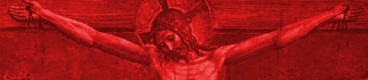
The Holy Sacrifice of the Mass is the unbloody re-presentation (or perpetuation) of the one Sacrifice of the Son to the Father in Spirit and in Truth on the wood of the Holy Cross on Good Friday. The Mass of Tradition, which was taught in all of its essential elements by Our Lord to the Apostles before He ascended to the Father's right hand in glory, conveys the solemnity, reverence, transcendence, and permanence of that ineffable Sacrifice of the Cross. Its rubrics are fixed and thus beyond the ability of the sacerdos, that is, the one who is offering the Sacrifice, the alter Christus, acting in persona Christi, to change at will, thus impressing upon our souls the immutability of the Blessed Trinity and our need to worship Him in the manner and the form that He has prescribed. One who is immersed in the beauty of the glories of the Mass of Tradition from childhood will understand that it is his singular privilege as a Catholic to have daily contact with Heaven itself. For truly it is the case that all of the choirs of angels and of the saints themselves are present at every single offering of the Holy Sacrifice of the Mass.
Vocations to the priesthood and to the consecrated religious life are fostered as a result of the habit of daily Mass. Parents should pray every day that their children will be led by Our Lady's graces to aspire to a religious vocation. Exposing them to Mass as the first priority of our daily lives (noting, obviously that there will be those instances where illness or road conditions preclude us from getting to Mass). No "vacation" should be planned that in any way makes it impossible to get to the daily offering of the Immemorial Mass of Tradition. Yes, that limits the places one can go in the midst of the crisis facing the Church in her human elements. Which is more important, though: having some time in the woods, for example, away from Mass or making the sacrifice to keep close to Our Lord in the unbloody offering of His Holy Sacrifice? We can never be without the Mass.
Children must come to learn that it is not enough simply to be physically at Mass on a daily basis. Oh, no. They must come to learn how to assist interiorly in the Mass, to unite their prayers with those of the priest, who offers them to the Father through the Son in the unity of the Holy Ghost, and to follow the Mass closely. This is called "praying the Mass." Children who are exposed to the Mass of Tradition on a daily basis come to learn the basic structure of the Mass very well.
For example, our Lucy Mary Norma, who has much to learn about self-control during the Mass (she will whisper and fidget, to the consternation of her parents and of priests from coast to coast), knows the structure of the Mass from her daily exposure to it. She will turn four years of age on March 27, and has been interested in thumbing through the pages of a hand missal for the last year or so. She has recently taken to looking at photographs of the parts of the Mass in one hand missal while looking up at the altar to see where the priest is. This is a prelude to her actually using a hand missal to pray the Mass as she learns how to read, a process that has begun in our own home-schooling program. Children must be taught to follow the Mass in their hand missals as soon as they are able to read. This will deepen their appreciation of the Mass and help to develop habits that will permit them to cooperate more fully with the graces they receive just by assisting at Holy Mass and to dispose them to be more ready to receive Our Lord in their First Holy Communion with reverence and devotion.
As is the case with so many scores of children around the nation whose parents take them to the daily offering of the Immemorial Mass of Tradition, Lucy knows enough about the structure of the Mass to tell when something is being done wrong. She was horribly upset in Rome last year when a priest decided omit the Prayers after Low Mass. She cried and cried and cried. She also noticed how a parish that used 1965 rubrics for the faithful (in the context of the offering of Mass according to the Missale Romanum of Pope John XXIII ) differed dramatically from what she knew to be correct. "Which Mass is this, Dada?" she whispered to me very sincerely. That's one of the reasons I wanted to stay clear of Clear Creek, Oklahoma, thank you, last month. No more liturgical monkey-business. Haven't we had enough of that in the past forty years? Haven't we been able to see the wreckage of souls? No, I am going to preserve my daughter from any hint of liturgical novelty.
The hand missals provide an outline of the correct postures for the faithful in the different genres of the Traditional Latin Mass (High Mass, Missa Cantata, Low Mass). I did not get my own first hand missal until after my First Holy Communion on May 30, 1959. It was a Saint Joseph Sunday Missal, and I treasured it. Children can learn to understand and to treasure the Mass through their daily use of the hand missal, learning that true participation in the Mass is the way in which we interiorly follow the Ordinary and the Propers of each Mass. A lifetime of such true interior participation will make it possible for us to profit with a deeper understanding of the cycles of the liturgical year and of the feast days contained in the Church's liturgical calendar each year.
Learning to use a hand missal to follow the Mass of Tradition might take time. As was mentioned before, however, we learn by immersion. I had to re-learn the Mass of my youth all over again when a priest, with whom I was acquainted for twenty years, began to offer the Traditional Latin Mass "privately" in 1990. I fumbled my way through the hand missal during daily Mass, especially on the feast days of saints when one has to switch back and forth between the ordinary and the propers for a saint--and sometimes the common prayers for a particular category of saints. It has been the total immersion in the daily Traditional Latin Mass in the past five years--and the repetition of the feast days year in and year out that has completed the learning process that began sixteen years ago. Equipping our children to learn how to use a hand missal will help them to love the Mass more fully and to meditate more deeply on the beautiful prayers and readings that are part of our treasured tradition in the Roman Rite of the Catholic Church.
A very good practice to help children to learn how to follow the Mass before they can read in preparation for following it better when they have learned to read is to read through the Mass of the day from a hand missal the night before a particular Mass. Dom Prosper Gueranger's The Liturgical Year was written with this in mind. Louis Martin read Dom Prosper's reflections on each day of the year to his daughters, producing one canonized saint, his beloved "Little Queen," Marie Frances Therese, and four other vocations to the religious life. There is no reason why such a practice in our own homes cannot foster religious vocations and/or solid spiritual and devotional practices that will produce good future fathers and mothers from among the ranks of our own children.
Our hand missals should be all set up, therefore, by the time we leave home for daily Mass, making sure that all of the ribbons or bookmarks are in the correct place for the Mass of the day. A family of eleven children on Long Island is headed by a father who makes sure that this is the case, bringing in a box of missals with him to Mass as he ushers his children into a church. He collects the missals after Mass and places them in the same box. He has, along with his wife, taught his children to have a love of the Mass of all ages by teaching them to pray the Mass with fervor and devotion. This is what all parents are called to do. Older children can then help their younger siblings learn how to pray the Mass well, handing down to them what they had received first from their parents.
Hand missals did not exist in the Middle Ages, at least as we know them. Such missals could not be mass produced until the invention of the movable type printing press. Thus, Catholics learned the Mass solely from immersion. Great saints were produced by this immersion in the Mass of all ages. Imagine to what levels of sanctity we are called as a result of having the benefit of being able to pray each Mass of the liturgical year with a priest!
Our love of the Mass can undo much a of the debt that we owe for our sins. Repaying the debt we owe for our sins and pledging to sin no more are essential elements of making a good Lent. They should be, though, essential parts of our daily lives, especially as they are formed in the crucible of love that is the Holy Sacrifice of the Mass, where God Himself is made incarnate under the appearances of bread and wine. Our love of the Mass will help us to realize how much our sins caused Our Lord to suffer in His Sacred Humanity on the wood of the Holy Cross and how much they wound His Mystical Body, the Church, today. Assisting at one Mass well, no less assisting at many Masses well throughout our lifetimes, can make our own the Placeat prayer that a priest prayers after the Ite, Misse est or the Bendicamus Domino:
Placeat tibi, sancta Trinitas, obsequium servitutis meae: et praesta; ut sacrificium, quod oculis tuae maiestatis indignus obtuli, tibi sit acceptabile, mihique et omnibus, pro quibus illud obtuli, sit, te miserante, propitiabile. Per Christum Dominum nostrum. Amen.
May the tribute of my humble ministry be pleasing to Thee, Holy Trinity. Grant that the sacrifice which I, unworthy as I am, have offered in the presence of Thy majesty may be acceptable to Thee. Through Thy mercy may it bring forgiveness to me and to all for whom I have offered it: through Christ Our Lord. Amen.
Our faithful praying of the Mass will bear fruit for us here in this life and in eternity, please God we persevere to the point of our dying breaths in states of sanctifying grace. We should teach our children--and ourselves--to commit to memory the sixteen graces that come from assisting worthily at the Holy Sacrifice of the Mass:
-
The Mass is Calvary continued.
-
Every Mass is worth as much as the sacrifice of Our Lord's life, sufferings and death.
-
Holy Mass is the most powerful atonement for your sins.
-
At the hour of death the Masses you have heard will be your greatest consolation.
-
Every Mass will go with you to judgment and plead for pardon.
-
At Mass you can diminish more or less temporal punishment due to your sins, according to your fervor.
-
Assisting devoutly at Holy Mass you render to the Sacred Humanity of Our Lord the greatest homage.
-
He supplies for many of your negligences and omissions.
-
He forgives the venial sins which you have not confessed. The power of Satan over you is diminished.
-
You afford the souls in Purgatory the greatest possible relief.
-
One Mass heard during life will be of more benefit to you than many heard for you after your death.
-
You are preserved from dangers and misfortunes which otherwise might have befallen you. You shorten your Purgatory.
-
Every Mass wins you a higher degree of glory in Heaven.
-
You receive the Priest's blessing which Our Lord ratifies in Heaven.
-
You kneel amidst a multitude of Holy Angels, who are present at the adorable Sacrifice with reverential awe.
-
You are blessed in your temporal goods and affairs.
Deep into our Lenten journey of prayer, penance, fasting, mortification and almsgiving, may we increase our ardor for the Holy Sacrifice of the Mass and make every sacrifice that is necessary for us to get ourselves and our children exclusively, without any exception or deviation to the Mass that Our Lord entrusted to the Apostles in all of its essential elements, the Immemorial Mass of Tradition. The Mass is Calvary, yes. It is also a foretaste of eternal glories in Heaven. Who would dare want to go a day of his life without being present at Calvary and at the very gates of Heaven itself? And the Mass of Tradition, which is an absolute necessity for the communication of the totality of the truths of the Catholic Faith in the Roman Rite of the Catholic Church and not a "matter of preference," resonates fully with the joys of Heaven. Again, who would want to go a day of his life without such Heavenly joys?
We keep company with Our Lady, who stood so valiantly by the foot of her Divine Son's Holy Cross when He ratified the New and Eternal Covenant by the shedding of every single drop of His Most Blessed Precious Blood, in every Mass. She is there not only with Saint John the Evangelist and Saint Mary Magdalene and the few others who were with her Son atop Golgotha on Good Friday. She is there with her Most Chaste Spouse, Saint Joseph, whose feast day we celebrate in but a few days, and all of the angels of saints. If we want to keep company with Our Blessed Mother in Heaven it is certainly a wonderful idea to teach our children to keep company with her in the perfect prayer, the Holy Sacrifice of the Mass. May she help to increase our love for the Mass of Tradition and help us and our children to pray each Mass well. For the next Mass we assist at might very well be our last.
Our Lady of Sorrows, pray for us.
Saint Joseph, pray for us.
Saints Peter and Paul, pray for us.
Saint John the Evangelist, pray for us.
Saint Andrew, pray for us.
Saint James the Greater, pray for us.
Saint James the Lesser, pray for us.
Saint Jude, pray for us.
Saint Matthew, pray for us.
Saint Thomas the Apostle, pray for us.
Saint Philip, pray for us.
Saint Bartholomew, pray for us.
Saint Matthias, pray for us.
Saint Simon, pray for us.
Saint Patrick, pray for us.
Saint John Marie Vianney, pray for us.
Saint John Bosco, pray for us.
Saint Dominic Savio, pray for us.
Saint Aloysius Gonzaga, pray for us.
Pope Saint Gregory the Great, pray for us.
Pope Saint Pius V, pray for us.
Saint Giuseppe Maria Tomassi
Pope Saint Pius X, pray for us.
Saint Catherine Laboure, pray for us.
Saint Maria Goretti, pray for us.
Saint Rita, pray for us.
Saint Philomena, pray for us.
Blessed Pauline Jaricot, pray for us.
Blessed Francisco, pray for us.
Blessed Jacinta, pray for us.
Sister Lucia, pray for us.
A brief postcript: Today, March 16, 2006, is the forty-sixth birthday of a priest who offers the Mass of Tradition with exquisite perfection, Father Patrick J. Perez. Please say a Hail Mary for this valiant defender of the fullness of the Catholic Faith without compromise. E-mails may be sent to him at: pp918@pacbell.net