Love Unalloyed for Love Incarnate
by
Thomas A. Droleskey
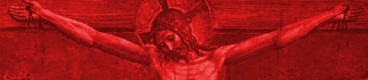
The Third Day in the Octave of Christmas brings us to the Feast of Saint John the Evangelist (or Beloved), the Apostle who was most dearly loved by Our Blessed Lord and Saviour Jesus Christ because he most closely resembled Our Blessed Lord and Saviour Jesus Christ's own innocence and purity. That is, Saint John was himself a virgin throughout his entire life. It was the purity of his life that caused him to remain faithful to His Divine Master during the darkest hours of the latter's Passion and Death. Saint John was the only bishop who kept Our Blessed Lord and Saviour Jesus Christ company at the foot of the Holy Cross. Saint John's unalloyed virginal love for Love Incarnate, Love Crucified and Resurrected, won for him the honor of caring for the Blessed Virgin Mary from the moment she was given him by her Divine Son to be his mother as He spoke to both of them atop the Tree of Life that is His Holy Cross.
The purity and innocence of Saint John the Beloved's life were responsible for the beauty and profundity of the writing that he undertook under the direct inspiration of the Holy Ghost. Saint John's Gospel is the most theological of the four Gospels, including within its sacred texts the beautiful description of how the Word was made flesh, and dwelt amongst us.
Indeed, Saint John's exquisite description of the Word's Incarnation as Man became so important in the life of the Church over the centuries that Pope Saint Pius V mandated its reading after Mass on most days of the year in his Missale Romanum of 1570 to serve as an antidote to the anti-Incarnational errors of Modernity in general and as an antidote to the anti-Incarnational attacks on the nature of Mass by various and sundry Protestant Revolutionaries.
It is of course quite telling that the practice instituted by Pope Saint Pius V, which had begun in the Twelfth Century as priests recited "The Last Gospel" to themselves as they concluded Mass and walked back to their sacristies, was suppressed by the false "pontiff" Giovanni Montini/Paul VI in the Ordo Missae of 1965. There is a direct cause and effect between the suppression of the reading of the Last Gospel after Holy Mass in both the "transitional Mass" of 1965 and the Protestant and Masonic Novus Ordo liturgical service of 1969 and the loss of belief in the sacrificial nature of the Mass and in the Real Presence of Our Blessed Lord and Saviour Jesus Christ in the Most Blessed Sacrament in Catholics attached to the structures of the counterfeit church of conciliarism.
Saint John's Gospel contains also the record of Our Blessed Lord and Saviour Jesus Christ's first public miracle, the transformation of the water into wine at the wedding feast in Cana, a foreshadowing of the Eucharist. There is to be found four chapters thereafter the account of Our Blessed Lord and Saviour Jesus Christ's Eucharistic Discourse, making it abundantly clear that one must eat of the Flesh of the Son and of Man and drink of His Blood to have life in him unto eternity. The Gospel of the Beloved Apostle records Our Blessed Lord and Saviour Jesus Christ's institution of the Sacrament of Penance ("Receive ye the Holy Ghost. Whose sins you shall forgive, they are forgiven them; and whose sins you shall retain, they are retained") and provides two important proofs of Sacred Tradition of being one of the two sources of Divine Revelation:
Many other signs also did Jesus in the sight of his disciples, which are not written in this book. But these are written, that you may believe that Jesus is the Christ, the Son of God: and that believing, you may life in his name. (John: 20: 30-31)
But there are also many other things which Jesus did; which if they were written every one, the world itself, I think, would not be able to contain the books that should be written. (John 21: 25)
It is in Saint John's Gospel that we find Our Blessed Lord and Saviour Jesus Christ's description of Himself as the Good Shepherd and that He is the true Vine Who means to graft us into Him as His branches. Pontius Pilate, speaking for the relativists and the pragmatists of all time, is recorded in Saint John's Gospel as asking most dismissively "What is truth?," reminding us that we who profess Our Blessed Lord and Saviour Jesus Christ to be the Way, the Truth, and the Life must give voice to His truth at all times, yes, even in front of kings and potentates and the powerful men and women who control access to the nation's airwaves. And it is in Saint John's Gospel that we find Saint Peter's triple profession of love for Our Blessed Lord and Saviour Jesus Christ, undoing his triple denial of Him during His Passion, and a confirmation of His headship of the Apostolic College (which confirmation includes Our Blessed Lord and Saviour Jesus Christ's injunction to Saint Peter to feed His lambs, who need to be fed on the tongue.) Even before that particular scene, recorded in Chapter 21 of Saint John's Gospel, the Beloved Apostle and Evangelist indicates his own deference to the headship of Saint Peter when recounting their visit to the empty tomb on Easter Sunday:
And on the first day of the week, Mary Magdalen cometh early, when it was yet dark, unto the sepulchre; and she saw the stone taken away from the sepulchre.
She ran, therefore, and cometh to Simon Peter, and to the other disciple whom Jesus loved, and saith to them: They have taken away the Lord out of the sepulchre, and we know not where they have laid him.
Peter therefore went out, and that other disciple, and they came to the sepulchre. And they both ran together, and that other disciple did outrun Peter, and came first to the sepulchre. And when he stooped down, he saw the linen cloths lying; but yet he went not in.
Then cometh Simon Peter, following him, and went into the sepulchre, and saw the linen cloths lying. And the napkin that had been about his head, not lying with the linen cloths, but apart, wrapped into one place.
Then that other disciple also went in, who came first to the sepulchre: and he saw, and believed. (John 20: 1-8)
Saint John the Beloved, being much younger than Saint Peter, had outrun the first pope to the empty tomb. Out of respect for the absolute Primacy of the Fisherman, however, Saint John peered into the tomb but did not enter it until after the Supreme Pontiff had arrived and entered it himself, finding that the head piece of Church's Divine Bridegroom, Our Blessed Lord and Saviour Jesus Christ and Saviour Jesus Christ, had been carefully wrapped up and placed aside. None of the Apostles was loved more by Our Blessed Lord and Saviour Jesus Christ than Saint John. He, though, deferred to the Apostle who had denied Our Blessed Lord and Saviour Jesus Christ three times, who was not present with him and Our Lady at the foot of the Divine Master's Holy Cross, teaching us humility and respect for the Petrine Office.
Saint John the Beloved's three Epistles teach us much about the truths that had been entrusted solely to the Catholic Church, of which he was one of the first twelve bishops. It is not any kind of pan-Christianity, founded in an acceptance of religious indifferentism, that pleases God. It is fidelity to the Commandments He has taught us through His true Church. The precepts of the Divine positive law, which consist of the Ten Commandments and all those things taught by Our Blessed Lord and Saviour Jesus Christ, are solely within the province of the Catholic Church to safeguard and infallibly explicate. This is what Saint John meant when he wrote:
And by this we know that we have known him, if we keep his commandments. He who saith that he knoweth him, and keepeth not his commandments, is a liar, and the truth is not in him. But he that keepeth his word, in him in very deed the charity of God is perfected; and by this we know that we are in Him.
He that saith he abideth in him, ought himself also to walk, even as he walked. (1 John 2: 2-6)
The love of God and of neighbor of which Saint John wrote much consists in obeying God as He has revealed Himself through His true Church, seeking the ultimate good of all men, that is, the salvation of their immortal souls as members of the Catholic Church. To love our fellow men we must will their good, we must help them to see the world clearly as Catholics and to cooperate with the graces won for us by the shedding of every single drop of Our Blessed Lord and Saviour Jesus Christ's Most Precious Blood on the wood of the Holy Cross. We must perform the Spiritual and Corporal Works of Mercy mindful of how each of them relates to our Last End, giving all to the Immaculate Heat of Mary, in whose maternal bosom Saint John was privileged to abide from Good Friday to the moment of her bodily Assumption into Heaven.
Saint John, the virginal Apostle, was unspotted by the world. Saint John wrote in such eloquent terms of the Incarnation of Word as Man. He wrote of Our Blessed Lord and Saviour Jesus Christ's telling Nicodemus that a born cannot be born again except by water and the Holy Ghost. He recorded Our Blessed Lord and Saviour Jesus Christ's washing of the feet of the Apostles at the Last Supper, symbolic of the dirt we gather on ourselves by means of surrendering to the elements of the world, the flesh, and the devil. It is thus quite appropriate that he, who recounted Our Blessed Lord and Saviour Jesus Christ's words in the Last Discourse of how the world would hate His disciples as much as it hated Him, would write the following words under the inspiration of the Holy Ghost in his first Epistle:
Love not the world, nor the things which are in the world. If any man love the world, the charity of the Father is not in him. For all that is in the world, is the concupiscence of the flesh, and the concupiscence of the eyes, and the pride of life, which is not of the Father, but is of the world. And the world passeth away, and the concupiscence thereof; but he that doth the will of God, abideth for ever. (1 John 2:15-17)
Our Blessed Lord and Saviour Jesus Christ came into the world, as Saint John wrote in Chapter 1 of his Gospel, and His own received Him not. Men preferred the darkness of this passing world rather than to embrace the Light of the World Himself. Men who persist in a love of the things of this world--and who gather up to themselves the pleasures of this life so as to make themselves appear to be more important or successful than others--make room in their own lives and the larger life of the world they love so much for the Antichrist that he wrote about in his first Epistle and in his Book of the Apocalypse.
Jacobus de Voragine's The Golden Legend contains a description of Saint John the Beloved's contempt for the riches of this world:
He then went on to speak against riches, enumerating six reasons that should deter us from an inordinate desire for wealth. The first is in Scripture, and he told the story of the gluttonous rich man, whom God rejected, and the poor man Lazarus, whom God rewarded. The second comes from nature itself: man is born naked and without wealth, and he dies without wealth. The third is seen in creation: just as the sun, the moon, and the stars, the rains and the air, are common to all and their benefits shared by all, so among men everything should be held in common. The next reason is fortune itself. The rich man is the slave of his money; he does not possess it, it possesses him; and he is the slave of the devil, because the Gospel says that the lover of money is a slave of mammon. Fifth comes care and worry: the rich worry day and night about how to get more and how to keep what they have. Sixth and last, he showed that wealth involves the risk of loss. In the acquisition of riches there lies a twofold evil: it leads to swollen pride in this present life and to eternal damnation in the next; and for those doomed to damnation there is a double loss--of divine grace at present and of eternal glory in the future.
We must familiarize ourselves with the completely Catholic nature of Saint John's writing so as to be armed when a Protestant friend or neighbor or relative, steeped in the errors of the evils of Calvinist, capitalist material acquisition, obviously, engages in his effort to quote various passages from New Testament without understanding the very books enumerated as the Word of God therein were accepted as such by the Catholic Church. Thus, for example, anyone who states that it is impossible for one to lose his salvation after he has made his "profession of faith" in the Lord Jesus on his lips and in his heart ought to be referred to Chapter 5 of Saint John's first epistle, wherein the Beloved Apostle and Evangelist speaks quite directly about Mortal Sin, that is, sin that kills the life of sanctifying grace from the soul and excludes one from entrance into Heaven until it is forgiven in the Sacrament of Penance by an alter Christus acting in persona Christi:
There is a sin unto death for that I say not that any man ask. All iniquity is sin. And there is an sin unto death. (1 John 5: 16-17)
That is, it is possible for a baptized Catholic to lose his salvation if he persists until his dying breath in a state of final impertinence. Protestants, committing the sin of Presumption, believe that it is almost impossible for a follower of Our Blessed Lord and Saviour Jesus Christ to be lost after he has made his "profession of faith." This is delusional. Saint John the Beloved contradicted this thoroughly, as does Saint Paul when he warned us to work out our salvation in "fear and in trembling" (Philippians 2: 12).
The necessity of adhering to the teaching that Our Blessed Lord and Saviour Jesus Christ has entrusted exclusively to the Catholic Church and fleeing from familiarity with those who reject Catholic teaching is stressed by Saint John in both his second epistle.
Whosoever revolteth, and continueth not in the doctrine of Christ, hath not God. He that continueth in the doctrine, the same hath both the Father and the Son. If any man come to you, and bring not this doctrine, receive him not into the house nor say to him, God speed you. For he that saith unto him, God speed you, communicateth with his wicked works. (2 John 1: 9-11)
We must adhere to what the Church herself has handed down to us from the Apostles over the centuries under the inspiration of the Holy Ghost without any novelties or errors or deviations whatsoever. It is in light of the Church's Fathers and Doctors, for example, that we must read and understand the profundity contained within Saint John the Beloved's The Book of the Apocalypse, written while he was exiled on the island of Patmos following the unsuccessful attempt to boil him alive at the Latin Gate in Rome during the reign of Emperor Domitian (81-96 A.D.). The Book of the Apocalypse cannot be understood correctly by Protestant "prophets" (whose predictions must never occupy one scintilla of our time or energy) or by their end-times brethren among the Catholic laity, some of whom have to correct their bold predictions when events prove them to be as wrong as their fellow practitioners of soothsaying in the sects of the Protestant Revolution. The Book of the Apocalypse can be understood only in light of the teaching of the Catholic Church.
Saint John himself warned that no man could add to or take away from anything he had written in the Book of the Apocalypse:
For I testify to every one that heareth the word of the prophecy of this book: If any man shall add to these things. God shall add unto him the plagues written in this book. And if any man shall take away from the words of this prophecy, God shall take away his part out of the book of life, and out of the holy city, and from these things that are written in this book. (Apoc. 22:18-19)
The death of Saint John the Beloved of old age in Ephesus at the beginning of the Second Century A.D. closed the Era of Revelation that had begun with the writing of the Old Testament. No new "revelation" has been added since that time. The Church, guided by the Holy Ghost, has had to reflect on what had been revealed so as to refute errors and elucidate certain points that she deemed necessary to discuss at various times. However, not even the proclamation of dogmas--such as the Immaculate Conception of the Blessed Virgin Mary by Pope Pius IX in 1854, Papal Infallibility by the First Vatican Council in 1870, and the Assumption of Our Lady body and soul in to Heaven by Pope Pius XII in 1950--have "added" anything new to the era that closed with the death of the last Apostle, the Beloved of Our Blessed Lord and Saviour Jesus Christ and Saviour Jesus Christ, the son of Zebedee, John the Evangelist. Each of those dogmas were contained in the Deposit of Faith. They had only to be more fully explicated.
There was, as noted just above, an attempt to boil Saint John alive in oil. It was not God's will for Saint John, who had the desire and the willingness to be martyred, to die a death of martyrdom. He was a martyr of love, love unalloyed for Love Incarnate, Love Crucified and Resurrected. One of the proofs of the extent to which Saint John was beloved by the King of Love Himself was that He entrusted the care of His own Most Blessed Mother to him. Saint John looked after Our Lady with the devotion of a true son. She looked after him as a true son.
Saint John was a son of Our Lady by special designation, given to her by her own Divine Son Himself. We are her sons and daughters by means of adoption. It is thus incumbent upon us to ask her to foster a love for her Divine Son that is as unalloyed and as unspotted by the world as was the love of Saint John the Beloved. We must ask Mary Immaculate to help us stay at the foot of the Cross each and every day with Saint John at the Immemorial Mass of Tradition so that our love of the Divine Master will grow with every beat of our hearts, consecrated as they must be to her own Immaculate Heart and the Sacred Heart of Jesus that enfolded the virginal Apostle within Itself so completely, praying as many Rosaries each day as our states-in-life permit, praying an extra Rosary today in reparation for the insidious lie propagated by that master blasphemer of God, Joseph Ratzinger/Benedict XVI, who has dared to repeat the Modernist propaganda that the Beloved Apostle whose sanctity we commemorate today, John, a son of Zebedee, is not the human author of the Fourth Gospel
As Father Benedict Baur, O.S.B., related in The Light of the World:
In the house of Mary, in Holy Mother the Church, we have infallible truth. John gives us this truth in his Gospel and in his life. This truth radiates from the incarnate Wisdom which we see in the manger on Christmas Day; its fruits are a life of purity, the forsaking of all that is sinful and unholy and a life centered on God.
When we celebrate Christmas in the proper spirit we, too, add our testimony to that of St. Stephen and St. John. "The light shineth in darkness, but the darkness did not comprehend it" (John 1: 15). We should add to the testimony of John the testimony of of our own faith. Still more should we bear witness to Christ by the purity of our lives, by the strength of our love of Christ, and by forsaking all that cannot with propriety be seen at the side of the crib and in the house of Mary. (Father Benedict Baur, O.S.B., The Light of the World, Volume I, B. Herder Book Company, 1954, p. 107.)
May we call upon Saint John the Beloved to love the newborn Babe in Bethlehem with all of our hearts and to welcome anew every time He is enfleshed under the appearance of bread and wine in Holy Communion.
Our Lady, Mother of God, pray for us.
Saint Joseph, pray for us.
Saints Peter and Paul, pray for us.
Saint John the Baptist, pray for us.
Saint John the Evangelist, pray for us.
Saint Michael the Archangel, pray for us.
Saint Gabriel the Archangel, pray for us.
Saint Raphael the Archangel, pray for us.
Saints Joachim and Anne, pray for us.
Saints Caspar, Melchior, and Balthasar, pray for us.