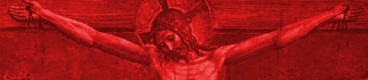
Christus Rex Esto Perpetua
by
Thomas A. Droleskey
Saint Stephen of Hungary was one of the great exemplars of the Social Reign of Christ the King during the era of Christendom. Married to the sister of another such exemplar, Saint Henry of Bavaria and the Holy Roman Emperor, Saint Stephen knew that his principal responsibility as the steward of civil governance was to try to foster those conditions in his Kingdom of Hungary wherein his subjects could better sanctify and thus save their immortal souls as Catholics. Saint Stephen of Hungary, whose own parents had become Catholic as a result of the missionary work that had been underwritten and supported by his future brother-in-law, ruled for Christ the King in all things at all times, seeing it has his solemn obligation to work for the conversion of everyone in his realm to the true Faith and to assure that those who became Catholic persevered in the Faith until the point of their dying breaths.
As Saint Patrick had understood some seven hundred years before, the conversion of pagan peoples begins with the conversion of their leaders, which is why he, Saint Patrick, sought to convert the Druid chieftains upon his arrival on the Emerald Isle, the Island of Saints. Saint Stephen knew that he had the responsibility to seek his own interior sanctification on a daily basis if he wanted to be in fact a king in the image of the King of Kings, if he wanted to show his subjects how to persevere in prayer and penance and mortification and almsgiving in order to show them that even the rulers of kingdoms must submit themselves humbly to the Divine Redeemer as He has revealed Himself to men exclusively through the Catholic Church.
No one rules properly over others, including parents over their children, unless he seeks first of all the eternal good of those whom he rules. That is why, you see, American government and politics are so farcical. No ruler in this country's history, including the only nominally "Catholic" President of the United States, John Fitzgerald Kennedy (a man who was not exactly concerned about the sanctification of his immortal soul), has ever been concerned about the proper formation of souls as Catholics unto their eternal salvation. The Modern State, including the United States of America, was founded in the belief that man is more or less self-redemptive, that he can pursue virtue on his own, that the measure of man's "progress" lies chiefly in the area of the acquisition and expansion of "wealth" and advancements in the realm of technology and science.
Saint Stephen of Hungary understood that the authentic measure of man's true "progress" rested solely on his love of God as He has revealed Himself to us exclusively through His true Church, the Catholic Church, by seeking to cooperate with the graces He won for all men by the shedding of His Most Precious Blood on the wood of the Holy Cross. The fate of nations is determined by the state of the souls of its inhabitants. Saint Stephen, therefore, is to be distinguished from the craven careerists of modernity. He is also to be distinguished from conciliarism and its apologists, men and women who have convinced themselves that Christendom was but a phase in the dialectical evolution of historical events and that it is neither necessary or even desirable to seek a return thereto, contenting themselves with the belief that a generic acceptance of "God" or "Christian values" or "natural morality" is enough for "modern man." And he is to be distinguished from those steeped in all false religions, including those of Protestantism, who believe that they can pursue personal sanctity and social order absent a submission to the Deposit of Faith and a reliance upon Sanctifying Grace. Saint Stephen knew that Catholicism was the one and only foundation of personal and social order, that nothing else can be provide a "respite" from the ravages of Original and Actual Sin.
Oh, not so with Saint Stephen, who would identify himself entirely with these words of Pope Leo XIII in Tametsi Futura Prospicientibus, November 1, 1900:
A system of morality based exclusively on human reason robs man of his highest dignity and lowers him from the supernatural to the merely natural life. Not but that man is able by the right use of reason to know and to obey certain principles of the natural law. But though he should know them all and keep them inviolate through life-and even this is impossible without the aid of the grace of our Redeemer-still it is vain for anyone without faith to promise himself eternal salvation. "If anyone abide not in Me, he shall be cast forth as a branch, and shall wither, and they shall gather him up and cast him into the fire, and he burneth" john xv., 6). "He that believeth not shall be condemned" (Mark xvi., 16). We have but too much evidence of the value and result of a morality divorced from divine faith. How is it that, in spite of all the zeal for the welfare of the masses, nations are in such straits and even distress, and that the evil is daily on the increase? We are told that society is quite able to help itself; that it can flourish without the assistance of Christianity, and attain its end by its own unaided efforts. Public administrators prefer a purely secular system of government. All traces of the religion of our forefathers are daily disappearing from political life and administration. What blindness! Once the idea of the authority of God as the Judge of right and wrong is forgotten, law must necessarily lose its primary authority and justice must perish: and these are the two most powerful and most necessary bonds of society. Similarly, once the hope and expectation of eternal happiness is taken away, temporal goods will be greedily sought after. Every man will strive to secure the largest share for himself. Hence arise envy, jealousy, hatred. The consequences are conspiracy, anarchy, nihilism. There is neither peace abroad nor security at home. Public life is stained with crime.
So great is this struggle of the passions and so serious the dangers involved, that we must either anticipate ultimate ruin or seek for an efficient remedy. It is of course both right and necessary to punish malefactors, to educate the masses, and by legislation to prevent crime in every possible way: but all this is by no means sufficient. The salvation of the nations must be looked for higher. A power greater than human must be called in to teach men's hearts, awaken in them the sense of duty, and make them better. This is the power which once before saved the world from destruction when groaning under much more terrible evils. Once remove all impediments and allow the Christian spirit to revive and grow strong in a nation, and that nation will be healed. The strife between the classes and the masses will die away; mutual rights will be respected. If Christ be listened to, both rich and poor will do their duty. The former will realise that they must observe justice and charity, the latter self-restraint and moderation, if both are to be saved. Domestic life will be firmly established ( by the salutary fear of God as the Lawgiver. In the same way the precepts of the natural law, which dictates respect for lawful authority and obedience to the laws, will exercise their influence over the people. Seditions and conspiracies will cease. Wherever Christianity rules over all without let or hindrance there the order established by Divine Providence is preserved, and both security and prosperity are the happy result. The common welfare, then, urgently demands a return to Him from whom we should never have gone astray; to Him who is the Way, the Truth, and the Life,-and this on the part not only of individuals but of society as a whole. We must restore Christ to this His own rightful possession. All elements of the national life must be made to drink in the Life which proceedeth from Him- legislation, political institutions, education, marriage and family life, capital and labour. Everyone must see that the very growth of civilisation which is so ardently desired depends greatly upon this, since it is fed and grows not so much by material wealth and prosperity, as by the spiritual qualities of morality and virtue. (Pope Leo XIII, Tametsi Futura Prospicientibus, November 1, 1900.)
"All elements of the national life must be made to drink in the Life which proceedeth from Him--legislation, political institutions, education, marriage and family life, capital and labour. Everyone must see that the very growth of civilisation which is so ardently desired depends greatly upon this, since it is fed and grows not so much by material wealth and prosperity, as by the spiritual qualities of morality and virtue." And there is only one fountain-head from which springs the supernatural helps to persevere in authentic morality and virtue: the Catholic Church. It is thus, as Saint Stephen of Hungary himself recognized, an absolute necessity that the civil state afford the Catholic Church full recognition as the one and only true religion that has the Divinely-instituted right to interpose herself as a last resort, following the exhausting of her Indirect Power of preaching and teaching and exhortation, to prevent civil potentates from undertaking actions contrary to the good of souls and thus contrary to the common good of society itself.
Pope Leo XIII had written fifteen years before Tametsi Futura Prospicientibus, in Immortale Dei, November 1, 1885, of the Europe that had emerged as a result of the consistent efforts of the great missionaries, such as Saint Patrick and Saint Aidan and Saint Augustine of Canterbury and Saint Boniface and Saint Hyacinth, to convert men and their nations to the true Faith and as a result of the work of rulers such as Saint Henry and Saint Edward the Confessor and Saint Stephen of Hungary and Saint Louis IX:
There was once a time when States were governed by the philosophy of the Gospel. Then it was that the power and divine virtue of Christian wisdom had diffused itself throughout the laws, institutions, and morals of the people, permeating all ranks and relations of civil society. Then, too, the religion instituted by Jesus Christ, established firmly in befitting dignity, flourished everywhere, by the favor of princes and the legitimate protection of magistrates; and Church and State were happily united in concord and friendly interchange of good offices. The State, constituted in this wise, bore fruits important beyond all expectation, whose remembrance is still, and always will be, in renown, witnessed to as they are by countless proofs which can never be blotted out or ever obscured by any craft of any enemies. Christian Europe has subdued barbarous nations, and changed them from a savage to a civilized condition, from superstition to true worship. It victoriously rolled back the tide of Mohammedan conquest; retained the headship of civilization; stood forth in the front rank as the leader and teacher of all, in every branch of national culture; bestowed on the world the gift of true and many-sided liberty; and most wisely founded very numerous institutions for the solace of human suffering. And if we inquire how it was able to bring about so altered a condition of things, the answer is--beyond all question, in large measure, through religion, under whose auspices so many great undertakings were set on foot, through whose aid they were brought to completion. (Pope Leo XIII, Immortale Dei, November 1, 1885.)
Saint Stephen knew that the evils of his day could only be fought with Catholicism and nothing else. Nothing else. Why is it so hard for so many Catholics, including traditional Catholics, to accept that simple fact. Our cause is not the "American cause." Our cause is not the "conservative" cause. Our cause is not the "libertarian" cause. Our cause is not the "Republican" cause or the "Democrat" cause." Our cause is not the "Constitutional" cause or the cause of "Original Intent" of the American Founding Fathers. Our cause is one and ever the same: the Catholic cause, something that is hated by the devil's minions in the levers of civil and cultural centers of influence around the world and, sadly, something that is hated by almost all of the conciliarists as being an actual "impediment" to the manifestly false cause of "interreligious dialogue" and "universal brotherhood," causes that have everything in common with Judeo-Masonry and nothing in common with Catholicism.
Consider this remarkably Catholic features about Saint Stephen of Hungary, contained in account of his life in The Roman Breviary, as quoted in Dom Prosper Gueranger's The Liturgical Year:
Stephen introduced into the Hungary both the faith of Christ and the regal dignity. He obtained the royal crown from the Roman Pontiff; and, having been, by his command, anointed king, offered his kingdom to the apostolic See. He built several houses of charity at Rome, Jerusalem, and Constantinople; and with a wonderful magnificent spirit of religion, he founded the archiepiscopal See of Gran and ten other bishoprics. His love for the poor was equalled only by his generosity towards them; for, seeing in them Christ himself, he never sent anyone away sad or empty-handed. So great indeed was his charity, that, to relieve their necessities, after expending large sums of money, he often bestowed upon them his household goods. It was his custom to wash the feet of the poor with his own hands, and to visit the hospitals at night, alone and unknown, serving the sick and showing them every charity. As a reward for these good deeds his right hand remained incorrupt after death, when the rest of his body had returned to dust.
He was much given to prayer; and would spend almost entire nights without sleep, rapt in heavenly contemplation; at times he seemed ravished out of his senses, and raised in the air. By the help of prayer, he more than once escaped in a wonderful manner from the attacks of powerful enemies. Having married Ghisella of Bavaria, sister of the emperor St. Henry, he had by her a son Emeric, whom he brought up in such regularity and piety as to form him into a saint. He summoned wise and holy men from all parts to aid him in the government of his kingdom and undertook nothing without his advice. In sackcloth and ashes, he besought God with most humble prayer, that he might not depart this life without seeing the whole kingdom of Hungary Catholic. So great indeed was his zeal for the propagation of the faith, that he was called the apostle of the nation, and he received from the Roman Pontiff, both for himself and for his successors, the privilege of having the cross borne before them.
He had the most ardent devotion towards the Mother of God, in whose honour he built a magnificent church, solemnly declaring her patroness of Hungary. In return the blessed Virgin received him into heaven on the very day of her Assumption, which the Hungarians, by the appointment of their holy king, call "the day of the great Lady.' His sacred body, exhaling a most fragrant odour and distilling a heavenly liquor, was, by order of the Roman Pontiff, translated, amidst many and divers miracles, to a more worthy resting-place, and buried with greater honor. Pope Innocent XI. commanded his feast to be celebrated on the fourth of the Nones of September; on which day, Leopold I. emperor elect of the Romans and king of Hungary, had by the divine assistance, gained a remarkable victory over the Turks at the siege of Buda.
That, ladies and gentlemen, is what you call a just and fitting ruler of men. Saint Stephen of Hungary did not want to die until he had seen the entire kingdom of Hungary become Catholic. Can this be said of any contemporary Catholic public official in the United States of America? Can this be said of any conciliar "bishop" in the United States of America today? And it should go without saying by now that Joseph Ratzinger, who does not believe that the Catholic Church has an urgent mission to convert men and their nations to the Catholic Faith, rejects the confessionally Catholic State entirely.
Nevertheless, the example of Saint Stephen of Hungary is universal and eternal. His life of sanctity is the absolute prerequisite to the just exercise of civil rule. His zeal to convert souls to the Catholic Church is what should characterize the singular ambition of all those who hold (or who aspire to hold) public office in the world today. His desire to see Our Lady honored publicly by his kingdom should be the desire of any true patriot of every country in the world, including any true patriot here in the United States, remembering a true lover of his country wills her good, namely, her Catholicization in every aspect of her national life without any exception whatsoever. And anyone who thinks that a woman who is not devoted to the Mother of God is any kind of "role model," no less a fit servant in public life, is out of his Catholic mind. Devotion to Our Lady is a necessity for salvation, and it is a helpful thing to be concerned about one's salvation if one wants to be a just ruler of his family and of others, including those entrusted to the care of those in public office.
Father Denis Fahey noted these points very clearly in his The Kingship of Christ and the Conversion of the Jewish Nation:
We can thus easily see that the entrance of Christianity into the world has meant two things. Primarily and principally, it has meant the constitution of a supernatural society, the Mystical Body of Christ, absolutely transcending every natural development of culture and civilisation. Secondly, it has had as result that this supernatural society, the Catholic Church, began to exercise a profound influence upon culture and civilisation and modified in a far-reaching way the existing temporal or natural social order. The indirect power of the Church over temporal affairs, whenever the interests of the divine life of souls are involved, presupposes, of course, a clear distinction of nature between the ecclesiastical authority, charged with the care of divine things, and the civil authority, whose mission is concerned with purely temporal matters. In proportion as the Mystical Body of Christ was accepted by mankind, political and economic thought and action began to respect the jurisdiction and guidance of the Catholic Church, endowed, as she is, with the right of intervention in temporal affairs whenever necessary, because of her participation in the spiritual kingship of Christ. Thus the natural or temporal common good of states came to be sought in a manner calculated to favour the development of true personality, in and through the Mystical Body of Christ, and social life came more and more under the influence of the supreme end of man, the vision of God in the three divine Persons.
Accordingly, the divine plan for order in our fallen and redeemed world comprises, primarily, the supernatural social organism of the Catholic Church, and then, secondarily, the temporal or natural social order resulting from the influence of Catholic doctrine on politics and economics and from the embodiment of that influence in social institutions. From the birth of the Catholic Church on Calvary and the solemn promulgation of her mission at the first Pentecost, the Kingdom of God in its essence has been present in the world. As a result of the gradual acceptance of the role of the Church by the temporal representatives of Christ the King, the social institutions of states and nations became deeply permeated with the influence of the supernatural life of Christ. Then, and only then, could the Kingdom of God in its integrity or the rule of Christ the King in its integrity, be said to exist. The Kingdom of God or the rule of Christ the King is present in its integrity only in so far as the whole social life of states, political and economic, is permeated with the influence of the Church. To put it in other terms, Christ fully reigns only when the programme for which He died is accepted as the one true way to peace and order in the world, and social structures in harmony with it are evolved.
The Kingdom of God in its essence is always with us, but the influence of the Church on politics and economics, in other words, the extension of the Kingdom of God in its integrity, has varied with the centuries. Broadly speaking, the thirteenth century has been, so far, the high water mark of that influence. Since then, until recently, there has been steady decay. No particular temporal social order, of course, will ever realise all that the Church is capable of giving to the world. Each of them will be defective for several reasons.
First of all, the action of the Church, welcomed by some Catholics, will be opposed by the ignorance, incapacity and perversity of others.
Secondly, even if all Catholics did accept fully, they could only reflect some of the beauty of the Gospel as the saints reflected some of the infinitely imitable holiness of Christ.
Thirdly, there would still remain the vast number of non-Catholics to be won for Christ and have their social life organised under His rule. It is towards this latter goal that every generation of Catholics is called upon to work. The aim is not, needless to say, to bring back the Middle Ages, for the river of time does not turn back in its course, but the aim is to impregnate a new epoch with the divine principles of order so firmly grasped in the thirteenth century. The result of the so-called Reformation and the French Revolution has been to obscure the rights of God proclaimed by our Lord Jesus Christ and to diffuse naturalism.
Naturalism consists in the negation of the possibility of the elevation of our nature to the supernatural life and order, or more radically still, in the negation of the very existence of that life and order. In our day owing to the progress of the anti-Christian revolt, the more radical meaning has become common. Naturalism may be defined therefore as the attitude of mind which denies the reality of the divine life of grace and of our Fall therefrom by original sin. It rejects our consequent liability to revolt against the order of the divine life, when this life has been restored to us by our membership of Christ, and maintains that all social life should be organized on the basis of that denial. We must combat that mentality and proclaim the rights of God.
In his Encyclical letter on Freemasonry, Pope Leo XIII teaches authoritatively: “From what we have already set forth, it is indisputably evident that their [the Freemasons’] ultimate aim is to uproot completely the whole religious and political order of the world, which has been brought into existence by Christianity, and to replace it by another in harmony with their way of thinking. This will mean that the foundation and the laws of the new structure of society will be drawn from pure naturalism.” Now, it is historically certain that the Declaration of the Rights of Man had been conceived and elaborated in the Masonic lodges before it was presented to the States-General of France. Accordingly, the infamous Declaration, a naturalistic or anti-supernatural document, is in reality a declaration of war on membership of Christ and on the whole structure of society based on that supernatural dignity. The same naturalistic hostility to membership of Christ and the supernatural life of grace runs through all the documents concerning human rights drawn up under the influence of the organised forces that were responsible for the Declaration of 1789. That is the real struggle going on in the world, and in it every member of Christ is called upon to play his or her part. There can be no neutrality. “He that is not with me is against me ” (St. Matthew XII, 30.)
As Father Fahey noted, we must "impregnate," to use his term," the modern world with "the divine principles of order so firmly grasped in the" Thirteenth Century. They were grasped, of course, three hundred years before the dawn of the Thirteenth Century. They were grasped by Saint Henry and by his brother-in-law, Saint Stephen of Hungary. We must invoke their intercession from Heaven to help us to resist the all-too-natural temptation to view the world and its problems naturalistically, that is to say without believing that it is necessary or possible to restore all things in Christ, as the saint we commemorate tomorrow, Pope Saint Pius X, noted throughout his eleven-year pontificate. We must not be concerned about this or that election; it really makes no difference at all as to which set of organized gangsters in the two major political parties control the levers of power. We must be concerned about helping ourselves and our children and our relatives and friends and coworkers to see themselves and the world clearly through the eyes of the Catholic Faith.
We must have the same apostolic zeal for souls as Saint Stephen of Hungary possessed a thousand years ago now. What can we do? Assist exclusively at the Immemorial Mass of Tradition in the catacombs where no concessions are made to conciliarism or to its false shepherds. Spend time in fervent prayer before Our Lord's Real Presence in the Most Blessed Sacrament. Be totally consecrated to Our Lady's Sorrowful and Immaculate Heart. Say as many Rosaries each day as your state-in-life permits. Wear your own Miraculous Medal and Brown Scapular. Enthrone your homes to the Most Sacred Heart of Jesus and the Immaculate Heart of Mary. Have images of the saints, starting with Our Lady and Saint Joseph, displayed prominently in your homes, which must be enthroned to the Sacred Heart of Jesus. Carry on your person at all times plenty of Green Scapulars and blessed Miraculous Medals to distribute to fallen away Catholics and to all non-Catholics whom you meet each day. Pray for crosses. Pray for humiliation. Offer all to the Blessed Trinity through Our Lady's Sorrowful and Immaculate Heart for the conversion of sinners, starting with ourselves.
Saint Stephen of Hungary was able to cooperate with the graces that were won for us by Our Lord on the wood of the Holy Cross and which flow to us through the loving hands of Our Lady to convert an entire nation. Those graces, my friends, are no less powerful or efficacious as they were a millennium ago. We have the means available to us to plant the seeds for the conversion of the United States of America to the Catholic Faith. We have the means to plant the seeds to realize the day when a Catholic bishop will be proclaiming the glories of Christus Rex esto perpetua.
Relying upon the patronage of Our Lady of Guadalupe, inspired by such great exemplars of Christ the King as Saint Stephen of Hungary, careful to fulfill Our Lady's Fatima Message in our own lives, praying as many Rosaries each day as our states in life permit as we offer ourselves each day to the Most Sacred Heart of Jesus through her Sorrowful and Immaculate Heart, we can win souls--and the soul of this very nation--for Christ the King and for Mary our Immaculate Queen.
What are we waiting for?
Vivat Christus Rex Esto Perpetua!
Our Lady of Guadalupe, pray for us.
Saint Joseph, pray for us.
Saints Peter and Paul, pray for us.
Saint John the Baptist, pray for us.
Saint Michael the Archangel, pray for us.
Saint Gabriel the Archangel, pray for us.
Saint Raphael the Archangel, pray for us.
Saint Stephen of Hungary, pray for us.
Saint Henry, pray for us.
See also: A Litany of Saints
The Novena to Maria Bambina
(began August 30, 2013, and runs through September 7, 2013)
Mari Bambina--Infant Queen of the universe, intercede for all of us who have recourse to thee! Do not forget us, thy faithful but lowly subjects who await thy response to our constant prayers ! We long to kneel before thy crib and watch thee sleep, dear little Queen! Choose to look upon us with thy loving childlike gaze and through that gaze send graces to us so that we may rejoice with thee and praise that beautiful day that God chose from all of eternity to begin the Redemption through thy most glorious Immaculate Conception! Amen.