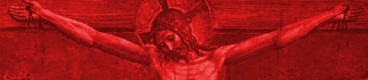
Ascending to Heaven Every Day
by
Thomas A. Droleskey
When about to ascend into heaven He sends His Apostles in virtue of the same power by which He had been sent from the Father; and he charges them to spread abroad and propagate His teaching. "All power is given to Me in Heaven and in earth. Going therefore teach all nations....teaching them to observe all things whatsoever I have commanded you" (Matt. xxviii., 18-1920). So that those obeying the Apostles might be saved, and those disobeying should perish. "He that believeth and is baptized shall be saved, but he that believed not shall be condemned" (Mark xvi., 16). But since it is obviously most in harmony with God's providence that no one should have confided to him a great and important mission unless he were furnished with the means of properly carrying it out, for this reason Christ promised that He would send the Spirit of Truth to His Disciples to remain with them for ever. "But if I go I will send Him (the Paraclete) to you....But when He, the Spirit of Truth is come, He will teach you all truth" John xvi., 7 13). "And I will ask the Father, and He shall give you another Paraclete, that he may abide with you for ever, the Spirit of Truth" (Ibid. xiv., 16-17). "He shall give testimony of Me, and you shall give testimony" (Ibid. xv., 26-27). Hence He commands that the teaching of the Apostles should be religiously accepted and piously kept as if it were His own - "He who hears you hears Me, he who despises you despises Me" (Luke x., 16). Wherefore the Apostles are ambassadors of Christ as He is the ambassador of the Father. "As the Father sent Me so also I send you" John xx., 21). Hence as the Apostles and Disciples were bound to obey Christ, so also those whom the Apostles taught were, by God's command, bound to obey them. And, therefore, it was no more allowable to repudiate one iota of the Apostles' teaching than it was to reject any point of the doctrine of Christ Himself. (Pope Leo XIII, Satis Cognitum, June 29, 1896.)
These words, contained in Pope Leo XIII's Satis Cognitum, June 29, 1896, aptly summarize the great feast that we are celebrating today, Ascension Thursday. After having instructed the Eleven for forty days following His Resurrection from the dead on Easter Sunday morning, including teaching them how to offer the Mass of the ages, Our Lord gave them the commandment to baptize all men and to teach all nations. There is no time limit on this commandment. It is in force until He comes again in glory with a blare of trumpet blasts and the choirs of angels on the Last Day to judge the living and the dead.
The mission of converting souls to the true Faith founded upon the Rock of Peter, the Pope, however, could not begin until the Third Person of the Blessed Trinity, the Holy Ghost, descended upon them--and our dear Blessed Mother--in tongues of flame ten days later, on Pentecost Sunday. The Apostles, adding Matthias to their number to replace the traitor, Judas Iscariot, spent nine days in prayer to prepare for the coming of the Paraclete upon them, having no idea at all what a marvelous transformation He would make in their lives and how He would enlighten their intellects to understand everything that Our Blessed Lord and Saviour Jesus Christ had taught them and to strengthen their wills to act perfectly in accord with His truths in cooperation with the graces that had been won for them--and for all men--on the wood of the Holy Cross. We must begin our own annual Novena to the Holy Ghost tomorrow to ask Him to stir up the gifts and fruits He imparted upon us when we received the Sacrament of Confirmation so that we can do our small parts in spreading the fullness of the Catholic Faith.
The good of the world depends upon the conversion of all men to Catholicism. Our own good as individual Catholics depends upon our daily conversion away from sin and to a greater love of the Blessed Trinity with every beat of our hearts, consecrated as they must be to the Immaculate Heart of Mary and to the Most Sacred Heart of Jesus. The state of the Church and of the world begins with us. Each of us plays our own role in building up or tearing down the Church Militant here on earth. Our human condition is such that we do a little bit of both in our lives, perhaps more of the latter than the former, although we will not see ourselves as we truly are until are lives are reflected in the Mirror of Divine Justice Himself at the moment of our Particular Judgments.
Yes, permit me to restate this simple truth: The good of the world depends upon the conversion of all nations to Catholicism, the heresies of conciliarism notwithstanding, as the fruit of the conversion of all men to the true Faith. Pope Leo XIII put it this way in A Review of His Pontificate, March 19, 1902:
So society in its foolhardy effort to escape from God has rejected the Divine order and Revelation; and it is thus withdrawn from the salutary efficacy of Christianity which is manifestly the most solid guarantee of order, the strongest bond of fraternity, and the inexhaustible source of all public and private virtue. This sacrilegious divorce has resulted in bringing about the trouble which now disturbs the world. Hence it is the pale of the Church which this lost society must re-enter, if it wishes to recover its well-being, its repose, and its salvation.
Just as Christianity cannot penetrate into the soul without making it better, so it cannot enter into public life without establishing order. With the idea of a God Who governs all, Who is infinitely wise, good, and just, the idea of duty seizes upon the consciences of men. It assuages sorrow, it calms hatred, it engenders heroes. If it has transformed pagan society--and that transformation was a veritable resurrection--for barbarism disappeared in proportion as Christianity extended its sway, so, after the terrible shocks which unbelief has given to the world in our days, it will be able to put that world again on the true road, and bring back to order the States and peoples of modern times. But the return of Christianity will not be efficacious and complete if it does not restore the world to a sincere love of the one Holy Catholic and Apostolic Church. In the Catholic Church Christianity is Incarnate. It identifies itself with that perfect, spiritual, and, in its own order, sovereign society, which is the Mystical Body of Jesus Christ and which has for Its visible head the Roman Pontiff, successor of the Prince of the Apostles. It is the continuation of the mission of the Savior, the daughter and the heiress of His Redemption. It has preached the Gospel, and has defended it at the price of Its blood, and strong in the Divine assistance and of that immortality which has been promised It, It makes no terms with error but remains faithful to the commands which It has received, to carry the doctrine of Jesus Christ to the uttermost limits of the world and to the end of time, and to protect It in Its inviolable integrity. Legitimate dispenser of the teachings of the Gospel It does not reveal Itself only as the consoler and Redeemer of souls, but It is still more the internal source of justice and charity, and the propagator as well as the guardian of true liberty, and of that equality which alone is possible here below. In applying the doctrine of its Divine Founder, It maintains a wise equilibrium and marks the true limits between the rights and privileges of society. The equality which it proclaims does not destroy the distinction between the different social classes It keeps them intact, as nature itself demands, in order to oppose the anarchy of reason emancipated from Faith, and abandoned to its own devices. The liberty which it gives in no wise conflicts with the rights of truth, because those rights are superior to the demands of liberty. Not does it infringe upon the rights of Justice, because those rights are superior to the claims of mere numbers or power. Nor does it assail the rights of God because they are superior to the rights of humanity. (Pope Leo XIII, Sapientiae Christianae, January 10, 1890.)
By way of re-emphasis here: "But the return of Christianity will not be efficacious and complete if it does not restore the world to a sincere love of the one Holy Catholic and Apostolic Church. In the Catholic Church Christianity is Incarnate." This is a little different than what have heard from the counterfeit church of conciliarism, is it it not? Has this eternal teaching, rooted in the very words of Our Lord to the Apostles on this very day, lost its force somehow? Judge for yourselves.
As was the case with the Apostles themselves, however, we have been charged our Baptism with the same mission that was given to them this very day, Ascension Thursday, by Our Lord Himself. We have the mission to do what we can to convert our little corners of the world to Catholicism. The mission given us by God Himself in the baptismal font is to get home to Heaven as Catholics and to help as many other people, starting with our own families, to do so as well. We must keep this uppermost in the eyes of our souls even as we recognize the pitfalls of conciliarism and how it has helped to undermine, if not eclipse, the sensus Catholicus in the lives of so many Catholics around the world. We have no chance of planting even a few small seeds for the restoration of the Church and of Christendom in the world if we are not first and foremost seeking to Catholicize every aspect of our lives without any concessions to the spirit of the world, the flesh and the devil.
That is, we are meant to look Heavenward as we do the work that God has assigned to us here in this mortal vale of tears. Our every word and action must help to foster the attainment of our Last End in light of our First Cause. Everything we seek to do with the breath of life that God gives us must be inspired by a love for the true Faith.
We must aspire to ascend to Heaven every day in our thoughts our deeds and words, starting with mental prayer immediately upon our arising and assisting at the Immemorial Mass of Tradition if we are blessed enough in these spiritually barren times to have access to this great treasure on a daily basis.
We must make our Morning Offering and seek to give all that we do to the Blessed Trinity through the Sorrowful and Immaculate Heart of Mary, recognizing that everything that happens to us, including all pains and difficulties and misunderstandings and humiliations and illnesses and tragedies, are opportunities to be united and thus conformed more closely to the Cross of the Divine Redeemer Himself.
A soul seeking to ascend to Heaven every day must long for some moments in adoration before his Beloved in His Real Presence in the Most Blessed Sacrament. Our ardor for possessing the glory of the Beatific Vision in Heaven for all eternity must prompt us to oblate our souls in fervent prayer before the King of Kings and the Lord of Lords, mindful that such time in prayer will help us to despise the world and all its allurements as we seek only Heavenly riches. A soul seeking to ascend to Heaven every day must meditate upon the mysteries of our salvation contained in Our Lady's Most Holy Rosary.
Jacobus de Voragine explained several of the benefits of Our Blessed Lord and Saviour Jesus Christ's Ascension into Heaven this very day:
The fifth benefit is our dignity. Very great indeed is our dignity, when our nature is exalted to the right hand of God! The angels, having in mind the dignity of mankind, forbade man to worship them, as we read in Apoc. 19:10: "I fell down at his feet to adore him. And he said to me, you must not do that. I am a fellow servant with you and our brethren." To this the Gloss adds: "[The angel] allowed himself to be adored, but after the Lord's ascension, seeing a man exalted above himself, he was afraid to receive adoration." Pope Leo, in a sermon on the Lord's ascension, says: "On this day the nature of our humanity was raised up beyond the height of every power to be seated with God the Father, in order that God's grace should become more wondrous, since what men had thought to have a just claim to their veneration had bee removed from their sight, yet faith did not falter nor hope waver nor charity grow cool."
The sixth fruit of the Lord's ascension is the strengthening of our hope; Heb. 4:14: "Having therefore a great high priest who has passed into the heavens, Jesus the Son of God, let us hold fast to the confession of our hope"; and Heb 6:18-19 (RSV): "That we who fled for refuge might have strong encouragement to seize the hope set before us. We have this as a sure and steadfast anchor of the soul, a hope that enters into the inner shrine behind the curtain, where Jesus has gone as a forerunner in our behalf." On this, Leo again: "Christ's ascension is our elevation, and where the glory of the head has gone before, there the hope of the body tends also."
The seventh benefit is that the way is marked out for us; Mic. 2:13: "He shall go up that shall open the way before them." Augustine: "The Savior himself has become your way: arise and walk, you have the way, don't be sluggish!" The eighth fruit is the opening of the gate of heaven; for as the first Adam opened the gates of hell, so the second the gates of paradise. So the Church sings: "You overcame the pain of death and opened the kingdom of heaven to those who believe." The ninth is the preparation of the place; John 14:2 "I go to prepare a place for you." Augustine: "O Lord, do prepare what you are preparing; for you are preparing us for yourself and you are preparing yourself for us when you prepare a place for yourself in us and for us in yourself." (Jacobus de Voragine, The Golden Legend, translated by William Granger Ryan, Volume I, Princeton University Press, 1995, p. 298.)
There are so many pitfalls in the world today. Yes, our own fallen natures drag us down quite enough without any further pitfalls being placed in our way. This is quite true. It is easy for any one of us to slip on a figurative banana peel by making a "little" compromise with the spirit of the world or by thinking that there is some way in which we can help form the souls of our children by being blithe about the company they keep or permitting them to participate in the latest fads so that they will not feel "left out" amongst their peers. A Catholic home must be so oriented to the things of Heaven that the only thing that matters to our children is they will not want to do anything that will make them left out of Heaven at the moment of their deaths, which can occur at any time.
As I have noted on several occasions in the past few years, we live in a world today where one slip-up can ruin a young child's innocence forever. To seek to convert our little corners of the world so as to produce defenders and propagators of the Holy Faith we must remove the devil's tools, such as television and contemporary "music" and magazines, from our homes. We must not visit the homes of others who have such tools, recognizing that the children formed in these homes might be able to entice and thus to deform the souls of our children. This is not Jansenism. This is Catholicism. Louis and Zelie Martin went to great lengths to protect their children from all pernicious influences. They wanted to foster religious vocations and to get their children home to Heaven. So must we. A happy family reunion in Heaven can only occur if the hard, daily planning for such a reunion is drawn up and then implemented in a Catholic home.
Naturalism pulls us down to the depths of the depravity of the world, which is why we must think and act and speak supernaturally at all times. Father Frederick Faber explained this in The Precious Blood:
It is plain that some millions of sins in a day are hindered by the Precious Blood; and this is not merely a hindering of so many individual sins, but it is an immense check upon the momentum of sin. It is also a weakening of habits of sin, and a diminution of the consequences of sin. If then, the action of the Precious Blood were withdrawn from the world, sins would not only increase incalculably in number, but the tyranny of sin would be fearfully augmented, and it would spread among a greater number of people. It would wax so bold that no one would be secure from the sins of others. It would be a constant warfare, or an intolerable vigilance, to preserve property and rights. Falsehood would become so universal as to dissolve society; and the homes of domestic life would be turned into wards either of a prison or a madhouse. We cannot be in the company of an atrocious criminal without some feeling of uneasiness and fear. We should not like to be left alone with him, even if his chains were not unfastened. But without the Precious Blood, such men would abound in the world. They might even become the majority. We know of ourselves, from glimpses God has once or twice given us in life, what incredible possibilities of wickedness we have in our souls. Civilization increases these possibilities. Education multiplies and magnifies our powers of sinning. Refinement adds a fresh malignity. Men would thus become more diabolically and unmixedly bad, until at last earth would be a hell on this side of the grave. There would also doubtless be new kinds of sins and worse kinds. Education would provide the novelty, and refinement would carry it into the region of the unnatural. All highly-refined and luxurious developments of heathenism have fearfully illustrated this truth. A wicked barbarian is like a beast. His savage passions are violent but intermitting, and his necessities of sin do not appear to grow. Their circle is limited. But a highly-educated sinner, without the restraints of religion, is like a demon. His sins are less confined to himself. They involve others in their misery. They require others to be offered as it were in sacrifice to them. Moreover, education, considered simply as an intellectual cultivation, propagates sin, and makes it more universal.
The increase of sin, without the prospects which the faith lays open to us, must lead to an increase of despair, and to an increase of it upon a gigantic scale. With despair must come rage, madness, violence, tumult, and bloodshed. Yet from what quarter could we expect relief in this tremendous suffering? We should be imprisoned in our own planet. The blue sky above us would be but a dungeon-roof. The greensward beneath our feet would truly be the slab of our future tomb. Without the Precious Blood there is no intercourse between heaven and earth. Prayer would be useless. Our hapless lot would be irremediable. It has always seemed to me that it will be one of the terrible things in hell, that there are no motives for patience there. We cannot make the best of it. Why should we endure it? Endurance is an effort for a time; but this woe is eternal. Perhaps vicissitudes of agony might be a kind of field for patience. But there are no such vicissitudes. Why should we endure, then? Simply because we must; and yet in eternal things this is not a sort of necessity which supplies a reasonable ground for patience. So in this imaginary world of rampant sin there would be no motives for patience. For death would be our only seeming relief; and that is only seeming, for death is any thin but an eternal sleep. Our impatience would become frenzy; and if our constitutions were strong enough to prevent the frenzy from issuing in downright madness, it would grow into hatred of God, which is perhaps already less uncommon than we suppose.
An earth, from off which all sense of justice had perished, would indeed be the most disconsolate of homes. The antediluvian earth exhibits only a tendency that way; and the same is true of the worst forms of heathenism. The Precious Blood was always there. Unnamed, unknown, and unsuspected, the Blood of Jesus has alleviated every manifestation of evil which there has ever been just as it is alleviating at this hour the punishments of hell. What would be our own individual case on such a blighted earth as this? All our struggles to be better would be simply hopeless. There would be no reason why we should not give ourselves up to that kind of enjoyment which our corruption does substantially find in sin. The gratification of our appetites is something; and that lies on one side, while on the other side there is absolutely nothing. But we should have the worm of conscience already, even though the flames of hell might yet be some years distant. To feel that we are fools, and yet lack the strength to be wiser--is not this precisely the maddening thing in madness? Yet it would be our normal state under the reproaches of conscience, in a world where there was no Precious Blood. Whatever relics of moral good we might retain about us would add most sensibly to our wretchedness. Good people, if there were any, would be, as St. Paul speaks, of all men the most miserable; for they would be drawn away from the enjoyment of this world, or have their enjoyment of it abated by a sense of guilt and shame; and there would be no other world to aim at or to work for. To lessen the intensity of our hell without abridging its eternity would hardly be a cogent motive, when the temptations of sin and the allurements of sense are so vivid and strong.
What sort of love could there be, when we could have no respect? Even if flesh and blood made us love each other, what a separation death would be! We should commit our dead to the ground without a hope. Husband and wife would part with the fearfullest certainties of a reunion more terrible than their separation. Mothers would long to look upon their little ones in the arms of death, because their lot would be less woeful than if they lived to offend God with their developed reason and intelligent will. The sweetest feelings of our nature would become unnatural, and the most honorable ties be dishonored. Our best instincts would lead us into our worst dangers. Our hearts would have to learn to beat another way, in order to avoid the dismal consequences which our affections would bring upon ourselves and others. But it is needless to go further into these harrowing details. The world of the heart, without the Precious Blood, and with an intellectual knowledge of God, and his punishments of sin, is too fearful a picture to be drawn with minute fidelity.
But how would it fare with the poor in such a world? They are God's chosen portion upon the earth. He chose poverty himself, when he came to us. He has left the poor in his place, and they are never to fail from the earth, but to be his representatives there until the doom. But, if it were not for the Precious Blood, would any one love them? Would any one have a devotion to them, and dedicate his life to merciful ingenuities to alleviate their lot? If the stream of almsgiving is so insufficient now, what would it be then? There would be no softening of the heart by grace; there would be no admission of of the obligation to give away in alms a definite portion of our incomes; there would be no desire to expiate sin by munificence to the needy for the love of God. The gospel makes men's hearts large;and yet even under the gospel the fountain of almsgiving flows scantily and uncertainly. There would be no religious orders devoting themselves with skilful concentration to different acts of spiritual and corporal mercy. Vocation is a blossom to be found only in the gardens of the Precious Blood. But all this is only negative, only an absence of God. Matters would go much further in such a world as we are imagining.
Even in countries profession to be Christian, and at least in possession of the knowledge of the gospel, the poor grow to be an intolerable burden to the rich. They have to be supported by compulsory taxes; and they are in other ways a continual subject of irritated and impatient legislation. Nevertheless, it is due to the Precious Blood that the principle of supporting them is acknowledged. From what we read in heathen history--even the history of nations renowned for political wisdom, for philosophical speculation, and for literary and artistic refinement--it would not be extravagant for us to conclude that, if the circumstances of a country were such as to make the numbers of the poor dangerous to the rich, the rich would not scruple to destroy them, while it was yet in their power to do so. Just as men have had in France and England to war down bears and wolves, so would the rich war down the poor, whose clamorous misery and excited despair should threaten them in the enjoyment of their power and their possessions. The numbers of the poor would be thinned by murder, until it should be safe for their masters to reduce them into slavery. The survivors would lead the lives of convicts or of beasts. History, I repeat, shows us that this is by no means an extravagant supposition.
Such would be the condition of the world without the Precious Blood. As generations succeeded each other, original sin would go on developing those inexhaustible malignant powers which come from the almost infinite character of evil. Sin would work earth into hell. Men would become devils, devils to others and to themselves. Every thing which makes life tolerable, which counteracts any evil, which softens any harshness, which sweetens any bitterness, which causes the machinery of society to work smoothly, or which consoles any sadness--is simply due to the Precious Blood of Jesus, in heathen as well as in Christian lands. It changes the whole position of an offending creation to its Creator. It changes, if we may dare in such a matter to speak of change, the aspect of God's immutable perfections toward his human children. It does not work merely in a spiritual sphere. It is not only prolific in temporal blessings, but it is the veritable cause of all temporal blessings whatsoever. We are all of us every moment sensibly enjoying the benignant influence of the Precious Blood. Yet who thinks of all this? Why is the goodness of God so hidden, so imperceptible, so unsuspected? Perhaps because it is so universal and so excessive, that we should hardly be free agents if it pressed sensibly upon us always. God's goodness is at once the most public of all his attributes, and at the same time the most secret. Has life a sweeter task than to seek it, and to find it out?
Men would be far more happy, if they separated religion less violently from other things. It is both unwise and unloving to put religion into a place by itself, and mark it off with an untrue distinctness from what we call worldly and unspiritual things. Of course there is a distinction, and a most important one, between them; yet it is easy to make this distinction too rigid and to carry it too far. Thus we often attribute to nature what is only due to grace; and we put out of sight the manner and degree in which the blessed majesty of the Incarnation affects all created things. But this mistake is forever robbing us of hundreds of motives for loving Jesus. We know how unspeakably much we owe to him; but we do not see all that it is not much we owe him, but all, simply and absolutely all. We pass through times and places in life, hardly recognizing how the sweetness of Jesus is sweetening the air around us and penetrating natural things with supernatural blessings.
Hence it comes to pass that men make too much of natural goodness. They think too highly of human progress. They exaggerate the moralizing powers of civilization and refinement, which, apart from grace, are simply tyrannies of the few over the many, or of the public over the individual soul. Meanwhile they underrate the corrupting capabilities of sin, and attribute to unassisted nature many excellences which it only catches, as it were by the infection, by the proximity of grace, or by contagion, from the touch of the Church. Even in religious and ecclesiastical matters they incline to measure progress, or test vigor, by other standards rather than that of holiness. These men will consider the foregoing picture of the world without the Precious Blood as overdrawn and too darkly shaded. They do not believe in the intense malignity of man when drifted from God, and still less are they inclined to grant that cultivation and refinement only intensify still further this malignity. They admit the superior excellence of Christian charity; but they also think highly of natural philanthropy. But has this philanthropy ever been found where the indirect influences of the true religion, whether Jewish or Christian, had not penetrated? We may admire the Greeks for their exquisite refinement, and the Romans for the wisdom of their political moderation. Yet look at the position of children, of servants, of slaves, and of the poor, under both these systems, and see if, while extreme refinement only pushed sin to an extremity of foulness, the same exquisite culture did not also lead to a social cruelty and an individual selfishness which made life unbearable to the masses. Philanthropy is but a theft from the gospel, or rather a shadow, not a substance, and as unhelpful as shadows are want to be. . . .
I reckon failure to be the most universal unhappiness on earth. Almost everybody and every thing are failures--failures in their own estimation, even if they are not so in the estimation of others. Those optimists who always think themselves successful are few in number, and they for the most part fail in this at least, namely, that the cannot persuade the rest of the world of their success. Philanthropy can plainly do nothing here, even if were inclined to try. But philanthropy is a branch of moral philosophy, and would turn away in disdain from unhappiness which it could prove to be unreasonable, even while it acknowledged it to be universal. It is simply true that few men are successful; and of those few it is rare to find any who are satisfied with their own success. The multitude of men live with a vexatious sense that the promise of their lives remains unfulfilled. Either outward circumstances have been against them, or they have been misappreciated, or they have got out of their grooves unknowingly, or they have been the victims of injustice. What must all life be put a feverish disappointment, if there be no eternity in view? The religious man is the only successful man. Nothing fails with him. Every shaft reaches the mark, if the mark be God. He has wasted no energies. Every hope has been fulfilled beyond his expectations. Every effort has been disproportionately rewarded. Every means has turned out marvellously to be an end, because it had God in it, who is our single end. In piety, every battle is a victory, simple because it is a battle. The completest defeats have something of triumph in them; for it is a positive triumph to have stood up and fought for God at all. In short, no life is a failure which is lived for God; and all lives are failures which are lived for any other end. If it is part of any man's disposition to be peculiarly and morbidly sensitive to failure, he must regard it as an additional motive to be religious. Piety is the only invariable, satisfactory, genuine success. (Father Frederick Faber, The Precious Blood, published originally in England in 1860, republished by TAN Books and Publishers, pp. 53-59; 63.)
Father Faber's The Creator and Creature describes how the worldliness of naturalism keeps our thoughts from ascending to Heaven every day:
The question of worldliness is a very difficult one, and one which we would gladly have avoided, had it been in our power to do so. But it is in too many ways connected with our subject, to allow of its being passed over in silence. In the first place, a thoughtful objector will naturally say, If the relation between the Creator and the creature is such as has been laid down in the first eight chapters, and furthermore if it is as manifest and undeniable as it is urged to be, how comes it to pass that it is not more universally, or at least more readily, admitted than it is? Almost all the phenomena of the world betray a totally opposite conviction, and reveal to us an almost unanimous belief in men, that they are on a quite different footing with God from that one, which is here proclaimed to be the only true and tenable one. There must be at least some attempt to explain this discrepancy between what we see and what we are taught. The explanation, we reply, is to be found in what Christians call worldliness. It is this which stands in the way of God's honor, this which defrauds Him of the tribute due to Him from His creatures, this which blinds their eyes to His undeniable rights and prerogatives. How God's own world comes to stand between Himself and the rational soul, how friendship with it is enmity with Him--indeed an account of the whole matter must be gone into, in order to show, first, that the influence of the world does account for the non-reception of right views about God, and, secondly, that the world is in no condition to be called as a witness, because of the essential falsehood of its character. This identical falsehood about God is its very life, energy, significance, and condemnation. The right view of God is not unreal, because the world ignores it. On the contrary, it is because it is real that the unreal world ignores it, and the world's ignoring it is, so far forth, an argument in favor of the view.
But not only does this question of worldliness present itself to us in connection with the whole teaching of the first eight chapters; it is implicated in the two objections which have already been considered, namely, the difficulty of salvation and the fewness of the saved. If it is easy to be saved, whence the grave semblance of its difficulty? If the majority of adult catholics are actually saved, because salvation is easy, why it is necessary to draw so largely on the unknown regions of the death-bed, in order to make up our majority? Why should not salvation be almost universal, if the pardon of sin is so easy, grace so abundant, and all that is wanted is a real earnestness about the interests of our souls? If you acknowledge, as you do, that the look of men's lives, even of the lives of believers, is not as if they were going to be saved, and that they are going to be saved in reality in spite of appearances, what is the explanation of these appearances, when the whole process is so plain and easy? To all this the answer is, that sin is a partial explanation, and the devil is a partial explanation, but that the grand secret lies in worldliness. That is the chief disturbing force, the prime counteracting power. It is this mainly, which keeps down the number of the saved; it is this which makes the matter seem so difficult which is intrinsically so easy; nay, it is this which is a real difficulty, though not such an overwhelming one as to make salvation positively difficult as a whole. Plainly then the phenomenon of worldliness must be considered here, else it will seem as if an evident objection, and truly the weightiest of all objections, had not been taken into account, and thus an air of insecurity will be thrown, not only over the answer to the preceding two objections, but also over the whole argument of the first eight chapters.
This inquiry into worldliness will, in the third place, truthfully and naturally prepare us for the great conclusion of the whole inquiry, namely, the personal love of God is the only legitimate development of our position as creatures, and at the same time the means by which salvation is rendered easy, and the multitude of the saved augmented. For it will be found that the dangers of worldliness are at once so great and so peculiar, that nothing but a personal love of our Creator will rescue us from them, enable us to break with the world, and to enter into the actual possession of the liberty of the sons of God.
O, it is a radiant land--this wide, many-colored mercy of our Creator! But we must be content for a while now to pass out of its kindling sunshine into another land of most ungenial darkness, in the hope that we shall come back heavy laden with booty for God's glory, and knowing how to prize the sunshine more than ever. There is a hell already upon earth; there is something which is excommunicated from God's smile. It is not altogether matter, not yet altogether spirit. It is not man only, nor Satan only, nor is it exactly sin. It is an infection, an inspiration, an atmosphere, a life, a coloring matter, a pageantry, a fashion, a taste, a witchery, an impersonal but a very recognisable system. None of these names suit it, and all of them suit it. Scripture calls it, "The World." God's mercy does not enter into it. All hope of its reconciliation with Him is absolutely and eternally precluded. Repentance is incompatible with its existence. The sovereignty of God has laid the ban of the empire upon it; and a holy horror ought to seize us when we think of it. Meanwhile its power over the human creation is terrific, its presence ubiquitous, its deceitfulness incredible. It can find a home under every heart beneath the poles, and it embraces with impartial affection both happiness and misery. It is wider than the catholic Church, and is masterful, lawless, and intrusive within it. It cannot be damned, because it is not a person, but it will perish in the general conflagration, and so its tyranny be over, and its place know it no more. We are living in it, breathing it, acting under its influences, being cheated by its appearances, and unwarily admitting its principles. Is it it not of the last importance to us that we should know something of this huge evil creature, this monstrous seabird of evil, which flaps its wings from pole to pole, and frightens the nations into obedience by its discordant cries?
But we must not be deceived by this description. The transformations of the spirit of the world are among its most wonderful characteristics. It has its gentle voice, its winning manners, its insinuating address, its aspect of beauty and attraction; and the lighter its foot and the softer its voice, the more dreadful is its approach. It is by the firesides of rich and poor, in happy homes where Jesus is named, in gay hearts which fain would never sin. In the chastest domestic affections it can hide its poison. In the very sunshine of external nature,in the combinations of the beautiful elements--it is somehow even there. The glory of the wind-swept forest and the virgin frost of the Alpine summits have a taint in them of this spirit of the world. It can be dignified as well. It can call to order sin which is not respectable. It can propound wise maxims of public decency, and inspire wholesome regulations of police. It can open the churches, and light the candles on the altar, and entone Te Deums to the Majesty on high. It is often prominently, and almost pedantically, on the side of morality. Then, again, it has passed into the beauty of art, into the splendor of dress, into the magnificence of furniture. Or, again, there it is, with high principles on its lips, discussing the religious vocation of some youth, and praising God and sanctity, while it urges discreet delay, and less self-trust, and more considerate submissiveness to those who love him, and have natural rights to his obedience. It can sit on the benches of senates and hide in the pages of good books. And yet all the while it is the same huge evil creature which was described above. Have we not reason to fear?
Let us try to learn more definitely what the world is, the world in the scripture sense. A definition is too short, a description is too vague. God never created it; how then does it come here? There is no land, outside the creation of God, which could have harbored this monster, who now usurps so much of this beautiful planet, on which Jews was born and died, and from which He and His sinless Mother rose to heaven? It seems to be a spirit of spirit, which has risen up from a disobedient creation, as if the results, and after-consequences of all the sins that ever were, rested in the atmosphere, and loaded it with some imperceptible but highly powerful miasma. It cannot be a person, and yet it seems as if it possessed both a mind and a will, which on the whole are very consistent, so as to disclose what might appear to be a very perfect self-consciousness. It is painless in its operations, and unerring too; and just as the sun bids the lily be white and the rose red, and they obey without an effort, standing side by side with the same aspect and in the same soil, so this spirit of the world brings forth colors and shapes and scents in our different actions, without the process being cognisable to ourselves. The power of mesmerism on the reluctant will is a good type of the power of this spirit of the world upon ourselves. It is like grace, only that it is contradictory.
But it has not always the same power. It the expression may be forgiven, there have been times when the world was less worldly than usual; and this look as as if it were something which the existing generator of men always gave out from themselves, a kind of magnetism of varying strengths and different properties. As Satan is sometimes bound, so it pleases God to bind the world sometimes. Or He thunders, and the atmosphere is cleared for awhile, and the times are healthy, and the Church lifts her head and walks quicker. But, on the whole, its power appears to be increasing with time. In other words, the world is getting more worldly. Civilization develops it immensely, and progress helps it on, and multiplies its capabilities. In the matter of worldliness, a highly civilized time is to a comparatively ruder time what the days of machinery are to those of hand-labor. We are not speaking of sin; that is another idea, and brings in fresh considerations: we are speaking only of worldliness. If the characteristic of modern times go on developing with the extreme velocity and herculean strength which they promise now, we may expect (just what prophecy would lead us to anticipate) that the end of the world and the reign of anti-Christ would be times of the most tyrannical worldliness.
This spirit also has its characteristic of time and place. The worldliness of one century is different from that of another. Now it runs toward ambition in the upper classes and discontent in the lower. Now to money-making, luxury, and lavish expenditure. One while it sets towards grosser sins; another while towards wickedness of a more refined description; and another while it will tolerate nothing but educated sin. It also has periodical epidemics and accessions of madness, thought at what intervals, or whether by the operation of any law, must be left to the philosophy of history to decide. Certain it is, that ages have manias, the source of which it is difficult to trace, but under which whole communities, and sometimes nations, exhibit symptoms of diabolical possession. Indeed, on looking back, it would appear that every age, as if an age were an individual and had an individual life, had been subject to some vertigo of its own, by which it may be almost known in history. Very often, the phenomena, such as those of the French Revolution, seem to open out new depths in human nature, or to betoken the presence of some preternatural spiritual influences. Then, again, ages have panics, as if some attribute of God came near to the world, and cast a deep shadow over its spirit, marking men's hearts quail for fear.
This spirit is further distinguished by the evidences which it presents of a fixed view and a settled purpose. It is capricious, but, for all that, there is nothing about it casual, accidental, fortuitous. It is well instructed for its end, inflexible in its logic, and making directly, no matter through what opposing medium to its ultimate results. Indeed, it is obviously informed with the wisdom and subtlety of Satan. It is his greatest capability of carrying on his war against God. Like a parasite disease, it fixes on the weak places in men, pandering both to mind and flesh, but chiefly to the former. It i one of those three powers to whom such dark pre-eminence is given, the world, the flesh, and the devil; and among these three, it seems to have a kind of precedence given to it, by the way in which our Lord speaks of its in the Gospel, though the line of its diplomacy has been to have itself less thought of and less dreaded than the other two; and, unhappily for the interests of God and the welfare of souls, it has succeeded. It is, then, pre-eminent among the enemies of God. Hence the place which it occupied in Holy Scripture. It is the world which hated Christ, the world which cannot receive the Spirit, the world that loves its own, the world that rejoices because Christ has gone away, the world which He overcame, the world for which He would not pray, the world that by wisdom knew not God, the world whose spirit Christians were not to receive, the world that was not worthy of the saints, the world whose friendship is enmity with God, the world that passeth away with its lusts, the world which they who are born of God overcome, or, as the Apocalypse calls its, the world that goes wandering after the beast. Well then might St. James come to his energetic conclusion, Whosoever therefore will be a friend of this world, becometh an enemy of God. It is remarkable also that St. John, the chosen friend of the Incarnate Word, and the Evangelist of His Divinity, should be the one of the inspired writers who speaks most often and most emphatically about the world, as if the spirit of Jesus found something especially revolting to it in the spirit of the world.
It is this world which we have to fight against throughout the whole of our Christian course. Our salvation depends upon our unforgiving enmity against it. It is not so much that it is a sin, as that it is the capability of all sins, the air sin breathes, the light by which it sees to do its work, the hotbed which propagates and forces it, the instinct which guides it, the power which animates it. For a Christian to look at, it is dishearteningly complete. It is a sort of catholic church of the powers of the darkness. It is laws of its own, and tastes the principles of its own, literature of its own, a missionary spirit, a compact system, and it is a consistent whole. It is a counterfeit of the Church of God, and in the most implacable antagonism to it. The doctrines of the faith, the practices and devotions of pious persons, the system of the interior life, the mystical and contemplative world of the Saints, with all these it is at deadly war. And so it must be. The view which the Church takes of the world is distinct and clear, and far from flattering to its pride. It considers the friendship of the world as enmity with God. It puts all the world's affairs under its feet, either as of no consequence, or at least of very secondary importance. It has great faults to find with the effeminacy of the literary character, with the churlishness of the mercantile character, with the servility of the political character, and even with the inordinateness of the domestic character. It provokes the world by looking in progress doubtingly, and with what appears a very inadequate interest, and there is a quiet faith in its contempt for the world extremely irritating to this latter power.
The world on the contrary thinks that it is going to last for ever. It is almost assumes that there are no other interests but its own, or that if there are, they are either of no consequence, or troublesome and in the way. It thinks that there is nothing like itself anywhere, that religion was made for its convenience, merely to satisfy a want, and must not forget itself, or if it claims more, must be put down as a rebel, or chased away as a grumbling beggar; and finally it is of opinion, that of all contemptible things spirituality is the most contemptible, cowardly, and little. Thus the Church and the world are incompatible, and must remain so to the end.
We cannot have a better instance of the uncongeniality of the world with the spirit of the Gospel, than their difference in the estimate of prosperity. All those mysterious woes which our Lord denounced against wealth, have their explanation in the dangers of worldliness. It is the peculiar aptitude of wealth and pomp, and power, to harbor the unholy spirit of the world, to combine with it, and transform themselves into it, which called forth the thrilling malediction of our Lord. Prosperity may be a blessing from God, but it may easily become the triumph of the world. And for the most part the absence of chastisement is anything but a token of God's love. When prosperity is a blessing, it is generally a condescension to our weakness. Those are fearful words, Thou has already received thy reward; yet how many prosperous men there are, the rest of whose lives will keep reminding us of them; the tendency of prosperity in itself is to wean the heart from God, and fix it on creatures. It gives us a most unsupernatural habit of esteeming others according to their success. As it increases, so anxiety to keep it increases also, and makes men restless, selfish, and irreligious; and at length it superinduces a kind of effeminacy of character, which unfits them for the higher and more heroic virtues of the Christian character. This is but a sample of the different way which the Church and the world reason.
Now it is this world which, far more than the devil, fare more than the flesh, yet in union with both, makes the difficulty we find in obeying God's commandments, or following His counsels. It is this which makes earth such a place of struggle and of exile. Proud, exclusive, anxious, hurried, fond of comforts, coveting popularity, with an offensive orientation of prudence, it is this worldliness which hardens the hearts of men, stops their ears, blinds their eyes, vitiates their taste, and ties their hands, so far as the things of God are concerned. Let it be true that salvation is easy, and that by far the greater number of catholics are saved, it is still unhappily true that that the relations of the Creator and the creature, as put forward in this treatise, are not so universally or so practically acknowledged as they ought to be. Why is this? Sin is a partial answer. The devil is another partial answer. But I believe worldliness has got to answer for a great deal of sin, and for a great deal of devil, besides a whole deluge of iniquity of its own, which is perpetually debasing good works, assisting the devil in his assaults, and working with execrable assiduity against the sacraments and grace. The world is for ever lowering the heavenly life of the Church. If there ever was an age in which this was true, it is the present. One of the most frightening features of our condition is, that we are so little frightened of the world. The world itself has brought this about. Even spiritual books are chiefly occupied with the devil and the flesh; and certain of the capital sins, such as envy and sloth, no loner hold the prominent places which they held of the systems of the elder ascetics; and yet they are just those vices which contain most of the ungodly spirit of the world. The very essence of worldliness seems to consist in its making us forget that we are creatures; and the more this view is reflected upon, the more correct will it appear.
When our Blessed Lord describes the days before the Flood, and again those which shall precede the end of the world, He portrays them rather as times of worldliness than of open sin. Men were eating and drinking, marrying and giving in marriage; and He says no more. Now none of these things are wrong in themselves. We can eat and rink, as the apostle teaches us, to the glory of God, and marriage was a divine institution at the time of the Flood, and is not a Christian Sacrament. In the same way when He describes the life of the only person whom the gospel narratives follows into the bode of the lost, He sums it up as the being clothed in purple and fine linen, and feasting sumptuously every day. here again there is nothing directly sinful in the actions which He names. It surely cannot be a mortal sin to have fine linen, nor will a man lose a state of grace because he feasts sumptuously every day, provided that no other sins follow in the train of this soft life. The malice of it all is in its worldliness, in the fact that this was all or nearly all the lives of those before the flood, of those before the days of anti-Christ, and of the unhappy Dives. Life began and ended in worldliness. There was nothing for God. It was comprised in the pleasures of the world, it rested in them, it was satisfied by then. Its characteristic was sins of omission. Worldliness might also be defined to be a state of habitual sins of omission. The devil urges men on to great positive breaches of the divine commandments. The passions of the flesh impel sinners to give way to their passions by such dreadful sins, as catch the eyes of men and startle them by their iniquity. Worldliness only leads to these things occasionally and by accident. It neither scandalizes others, not frightens the sinner himself. This is the very feature of it, which, rightly considered, ought to be so terrifying. The reaction of a great sin, or the same which follows it, are often the pioneers of grace. They give self-love such a serious shock, that under the influence of it men return to God. Worldliness hides from the soul its real malice, and thus keeps at arm's length from it some of the most persuasive motives to repentance. Thus the Pharisees are depicted in the Gospel as being eminently worldly. It is worldliness, not immorality, which is put before us. There is even much of moral decency, much of respectable observance, much religious profession; and yet when our Blessed Saviour was among them, they were further from grace than the publicans and sinners. They had implicit hatred of God in their hearts already, which became explicit as soon as they saw Him. The Magdalen, the Samaritan, the woman taken in adultery--it was these who gathered round Jesus, attracted by His sweetness, and touched by the graces which went out from Him. The Pharisees only grew more cold, more haughty, more self-opinionated, until they ended by the greatest of all sins, the crucifixion of our Lord. For worldliness, when its selfish necessities drive it at last into open sin, for the most part sins more awfully and more impenitently than even the unbridled passions of our nature. So again there was the young man who had great possessions, and who loved Jesus when he saw Him, and wished to follow Him. He was a religious man, and with humble scrupulosity observed the commandments of God; but when our Lord told him to sell and give the price to the poor and to follow Him, he turned away sorrowful, and was found unequal to such a blessed vocation. Now his refusing to sell his property was surely not a mortal sin. It does not appear that our Lord considered him to have sinned by his refusal. It was the operation of worldliness. We do not know what the young man's future was; but a sad cloud of misgivings must hang over the memory of him whom Jesus invited to follow Him, and who turned away. Is he looking now in heaven upon that Face, form whose mild beauty he so sadly turned away on earth?
Thus the outward aspect of worldliness is not sin. Its character is negative. It abounds in omissions. Yet throughout the Gospels our Saviour seems purposely to point to it rather than to open sin. When the young man turned away, His remark was, How hard it is for those who have riches to enter into the kingdom of heaven. But the very fact of our Lord's thus branding worldliness with His especial reprobation is enough to show that it is in reality deeply sinful, hatefully sinful. It is a life without God in the world. It is a a continual ignoring of God, a continual quiet contempt of His rights, an insolent abatement in the service which He claims from His creatures. Self is set up instead of God. The canons of human respect are more looked up to than the Divine Commandments. God is very little adverted to. He is passed over. The very thought of Him soon ceases to make the worldly man uncomfortable. Indeed all his chief objections to religion, if he thought much about the matter, would be found a repose on his apprehension of it as restless and uncomfortable. But all this surely must represent an immensity of interior mortal sin. Can a man habitually forget God, and be in a state of habitual grace? Can he habitually prefer purple garments and sumptuous fare to the service of his Creator, and be free of mortal sin? Can be make up a life for himself even of the world's sinless enjoyments, such as eating, drinking, and marrying, and will not the mere omission of God from it be enough to constitute him in a state of deadly sin? At that rate a moral atheist is more acceptable to God than a poor sinner honestly but freely fighting with some habit of vice, to which his nature and his past offenses set so strongly, that he can hardly lift himself up. At that rate the Pharisees in the Gospel would be the patterns for our imitation, rather than the publicans and sinners; or at least they would be as safe. Or shall we say that faith is enough to save us without charity? If a man only believes rightly, let him eat and rink and be gaily clothed, and let him care for nothing else, and at least that exclusive love of creatures, that omission of the Creator, provided only it issues in no other outward acts than his fine dinners and his expensive clothes, shall never keep his soul from heaven. His purple and his sumptuous feasting shall be his beatific vision here, and then his outward morality shall by God's mercy hand him on to his second beatific Vision, the Vision of the beauty of God, and the eternal ravishment of the Most Holy and Undivided Trinity! Can this be true?
Yet on the other hand, we may not make into sins what God had not made sins. How is this? O it is the awful world of inward sin which is the horror of all this worldliness! It is possession, worse far than diabolical possession, because at once more hideous and more complete. It is the interior irreligiousness, the cold pride, the hardened heart, the depraved sense, the real unbelief, the more implicit hatred of God, which makes the soul of the worldly man an actual, moral, and intellectually hell on earth, hidden by an outward show of faultless proprieties, which only make it more revolting to the Eye that penetrates the insulting disguise. The secret sins moreover of the worldly are a very sea of iniquity. Their name is legion; they cannot be counted. Almost every thought is sin, because of the inordinate worship of self that is in it. Almost every step is sin, because it is treading underfoot some ordinance of God. It is a life without prayer, a life without desire of heaven, a life without fear of hell, a life without love of God, a life without any supernatural habits at all. Is not hell the most natural transition from such a life as this? heaven is not a sensual paradise. God is the joy, and he beauty, and the contentment there; all is for God, all from God, all to God, all in God, all around God as the beautiful central fire about which His happy creatures cluster in amazement and delight. Whereas in worldliness God is the discomfort of the whole thing, an intrusion, an unseasonable thought, an unharmonious presence like a disagreeable uninvited guest, irritating and fatiguing us by the simple demand His presence makes on sufferance and our courtesy. O surely such a man has sin in his veins instead of blood!
Worldliness then is a life of secret sins. It is such an irresistible tendency to sin, such a successful encouragement of it, such a genial climate, such a collection of favourable circumstances, such an amazing capability of sin, that it breeds actual sins, regularly formed and with all the theological requirements, by millions and millions. It we read what the catechism of the Council of Trent says of sins of thought, we shall see how marvellously prolific sins can be, and what a pre-eminently devastating power sins of thought in particular exercise within the soul. In numberless cases open and crying sins must come at last. Still we must remember that on the whole there are two characteristics which always distinguish sins of worldliness from sins of the passions, or sins of direct diabolical temptation. The respectability which worldliness affects leads it rather to satisfy itself in secret sins. Indeed its worship of self, its predilection for an easy life, would hinder its embarking in sins which take trouble, time, and forethought, or which run risks of disagreeable consequences, and therefore would keep it confined within a sphere of secret sins. And in the next place its love of comfort makes it so habitually disinclined to listen to the reproaches of conscience, or the teasing solicitations of grace, that it passes into the state of a seared conscience, a dreaded moral sense, with a speed which is unknown even to cruelty or sensuality. (Father Frederick Faber, The Creator and Creature, written 1856 and republished by TAN Books and Publishers, pp. 314-328.)
The task of ascending to Heaven in our thoughts, words and deeds every day is made difficult not only by the false spirits of the world. The task of ascending to Heaven in our thoughts, words and deeds every day has been made more difficult by the fact that the false shepherds of the counterfeit church of conciliarism tell us all of the time that it is not absolutely necessary to urgently seek the conversion of all men to the Catholic Faith, no less to teach them that Faith as it has been handed down to us over the centuries from the Apostles themselves, who received it from Our Lord and were then enlightened by God the Holy Ghost to teach all nations. The spirit of false ecumenism has robbed almost every conciliar "bishop" in the world of the understanding that he has the responsibility to seek the conversion of all non-Catholics in his diocesan boundaries to the true Church, outside of which there is no salvation and without which there is no true social order. Do the false "bishops" of the counterfeit church of conciliarism today understand that they have the obligation to baptize all men and to teach all nations? As the late Archbishop Marcel Lefebvre noted in 1986, "I am not inventing this situation. I do not want it." However, it is what it is.
Thus, we must see to it that we fulfill our own responsibilities to teach the Faith and to seek the conversion of all of the non-Catholics who cross our paths so that they can live every day as their ascend in their thoughts and prayers to Heaven. We can do this in a variety of ways. No one approach works with all people, which is why we pass out Miraculous Medals and Green Scapulars, trusting in Our Lady and pledging to her our continued prayers to her Immaculate Heart for the conversion of the people to whom we give (or on whose property we hide) these great sacramentals. And the two greatest ways we can help to bring people to the baptismal font--and/or to be confirmed as members of the true Church--is to have Masses said for them and remember them in our daily Rosaries without fail.
Indeed, Our Lady's Rosary is, after Holy Mass itself, the chief means by which our souls are lifted up to Heaven every day. Our meditation upon the mysteries of our very salvation will prompt us to cling all the more to Our Blessed Mother, who made possible our salvation by her perfect fiat to the will of the Father at the Annunciation. We can never say enough Rosaries in the course of a day. Not enough time? Make it. At least one set of mysteries must be prayed by a family together on their knees every day, all three if at all possible. Busy fathers and mothers can offer a decade here and a decade there as the day goes along. This is not impossible. Not if we want to possess Heaven for all eternity, that is. Not if we want to have our bodies rise up incorrupt and glorious on the Last Day and to ascend into Heaven for all eternity with our souls. No, it is not impossible at all.
Our Lady is, indeed, our life, our sweetness, and our hope. She will see us through all of the troubling times of our own lives. She will see us through all of the troubling times of apostasy and betrayal. She will help us to bear patiently the wrongs that others do us--and to do penance for the wrongs we do to others. She will help us to deal charitably and to pray fervently for those who calumniate us. She will help us to pray for more sufferings and more humiliations so that we will be more and more configured to the Cross of her Divine Son, at Whose feet she stood so valiantly (and where she stands at every offering of the Holy Sacrifice of the Mass). She will help us to truly despise the world and all of its honors, seeking only the joys of Heaven, into which Our Blessed Lord and Saviour Jesus Christ Ascended on this very day, taking into Heaven that which He did not have from all eternity with His Co-Equal Father: the Sacred Humanity He received from His Most Blessed Mother by the power of God the Holy Ghost at the Annunciation, the Sacred Humanity with which He redeemed us on the wood of the Holy Cross, making it possible for to ascend to Heaven every day in our thoughts and to do so body and soul on the Last Day at the General Judgment of the Living and the Dead. That Last Day will be a time of a happy reconciliation with everyone, friend and foe, who has died in a state of Sanctifying Grace, which is why we must be careful in this mortal vale of tears to bear no other person any malice while always willing his good, which is his eternal salvation. Our Lady will help us, in other words, to raise our entire beings to God through her Immaculate Heart in this life so that we might share the joys she herself is privileged to experience in both body and soul in the unending Easter Sunday of glory that is Heaven.
Our Lady's role in the Church after the Ascension of her Divine Son was described by the Venerable Mary of Agreda in The Mystical City of God:
For such was to
be her office after the ascension of her Son and Redeemer, as I will relate in the third part. It was also
befitting and necessary for the honor of Christ, our
Redeemer, that the teaching of the Gospel, by which
and on which He was to found the law of grace, holy,
immaculate and without a wrinkle, should give full evidence of its efficacy and power in a mere creature, and
that all its adequate and supereminent effects should be
exhibited in some one, who could be a standard for all
men. It is clear, that this creature could be none else
than the most blessed Mary, who, as his Mother, stood
so close to the Master and Teacher of all holiness.
(Venerable Mary of Agreda, The Mystical City of God, Volume III: The Transfixion, p. 4; the entire chapter from The Mystical City of God concerning Our Lady's experiences on this day, Ascension Day, can be found in the Appendix below.)
May we, therefore, on this glorious feast day forty days after Easter Sunday, do our part to help plant a few seeds for the restoration of the Church Militant on earth and for the restoration of Christendom in the world by relying upon the twin pillars of profound Eucharist Adoration and Total Consecration to Mary Immaculate.
May this glorious feast day be a foretaste of the Triumph of the Immaculate Heart of Mary, a time when all men and all nations will be baptized and instructed in the true Faith as it was given by the Divine Redeemer before He Ascended to Heaven on this very day.
A blessed feast day to you all.
Vivat Christus Rex! Viva Cristo Rey!
Our Lady of the Rosary, pray for us!
Saint Joseph, pray for us.
Saints Peter and Paul, pray for us.
Saint John the Baptist, pray for us.
Saint John the Evangelist, pray for us.
Saint Michael the Archangel, pray for us.
Saint Gabriel the Archangel, pray for us.
Saint Raphael the Archangel, pray for us.
Saints Joachim and Anne, pray for us.
Saints Caspar, Melchior, and Balthasar, pray for us.
Appendix
From The Mystical City of God on the Ascension of Our Lord
Other wonderful favors the Most High wrought
for Mary in those forty days, and there was none of
them, in which He did not show forth his beneficent
power and holiness toward his Mother and his solicitude
to enrich Her more and more before his Ascension into
heaven. When the pre-ordained time for the return
of the eternal Wisdom to his Father had arrived, after
having proved his Resurrection by many apparitions
and by many arguments (as saint Luke says, Acts 1, 3),
He resolved to appear and manifest Himself once more
to that whole gathering of Apostles and disciples, numbering one hundred and twenty persons. This apparition took place in the Cenacle on the very day of the
Ascension and in addition to the one mentioned by saint
Mark in the last chapter (Mark 16, 14) ; for all this
happened on one and the same day. After the sojourn
of the Apostles in Galilee, whither the Lord had commanded them to go and where He appeared to them
close to the sea of Tiberias, after they had seen and
adored Him on the mountain, as mentioned by Mark,
and after He had been seen by the five hundred according
to saint Paul, the disciples returned to Jerusalem in
order to be present according to the wishes of the Lord, at his wonderful Ascension. While the eleven Apostles
were reclining at their meal, as is related by saint Mark
and saint Luke in the Acts, the Lord entered and ate
with them, moderating, with admirable affability and
condescension, the splendors of his beauty and glory
in order that He might be looked upon by all. Having
finished their meal He spoke to them in earnest yet
sweetly tempered majesty.
792 "Know ye, my disciples, that my eternal Father
has given Me all power in heaven and on earth, and
I wish to communicate it to you in order that you may
establish my new Church throughout the whole world.
You have been slow and tardy in believing my Resurrection; but it is now time that as true and faithful
disciples, you be the teachers of the faith to all men.
Preaching my Gospel as you have heard it from my
lips, you shall baptize all that believe, giving them Baptism in the name of the Father, and of the Son (who
am I) and of the Holy Ghost. Those that shall believe
and be baptized, shall be saved, and those that shall
not believe, shall be damned. Teach the believers to
observe all that concerns my holy Law. In confirmation
thereof the faithful shall perform signs and wonders;
they shall cast out the demons from their habitations;
they shall speak new tongues; they shall cure the bites
of serpents; if they drink aught poisonous, it shall not
hurt them; and they shall cure the sick by the laying
on of hands." Such miracles Christ our Savior promised for the foundation of the Church in the preaching
of the Gospel; and all of them were verified in the first
ages of the Church. For the propagation of the faith
in the rest of the world and for the preservation of
the Church where it exists, He continues the same signs,
when and how his Providence deems it necessary; for
He never will forsake the holy Church, his most beloved
spouse.
793. On that same day, by divine dispensation, while
the Lord was at table with the eleven Apostles, other
disciples and pious women gathered at the Cenacle to
the number of one hundred and twenty; for the divine
Master wished them to be present at his Ascension.
Moreover, just as He had instructed the Apostles, so He
now wanted to instruct these faithful respectively in
what each was to know before his leaving them and ascending into heaven. All of them being thus gathered
and united in peace and charity within those walls in the
hall of the last Supper, the Author of life manifested
Himself to them as a kind and loving Father and said
to them:
794. "My sweetest children, I am about to ascend to
my Father, from whose bosom I descended in order to
rescue and save men. I leave with you in my stead my
own Mother as your Protectress, Consoler and Advocate,
and as your Mother, whom you are to hear and obey in
all things. Just as I have told you, that he who sees
Me sees my Father, and he who knows Me, knows
also Him; so I now tell you, that He who knows
my Mother, knows Me; he who hears Her, hears
Me; and who honors Her, honors Me. All of you shall
have Her as your Mother, as your Superior and Head,
and so shall also your successors. She shall answer
your doubts, solve your difficulties; in Her, those who
seek Me shall always find Me; for I shall remain in
Her until the end of the world, and I am in Her now,
although you do not understand how." This the Lord
said, because He was sacramentally present in the bosom
of his Mother; for the sacred species, which She had
received at the last Supper, were preserved in Her until
consecration of the first Mass, as I shall relate further on. The Lord thus fulfilled that which He promised in
saint Matthew: "I am with you to the consummation of
the world" (Matth. 28, 20). The Lord added and said: "You will have Peter as the supreme head of the Church,
for I leave him as my Vicar ; and you shall obey him as
the chief high priest. Saint John you shall hold as the
son of my Mother; for I have chosen and appointed
him for this office on the Cross." The Lord then looked
upon his most beloved Mother, who was there present,
and intimated his desire of expressly commanding that
whole congregation to worship and reverence Her in a
manner suited to the dignity of Mother of God, and
of leaving this command under form of a precept for
the whole Church. But the most humble Lady besought
her Onlybegotten to be pleased not to secure Her more
honor than was absolutely necessary for executing all
that He had charged Her with; and that the new children of the Church should not be induced to show Her
greater honor than they had shown until then. On the
contrary, She desired to divert all the sacred worship
of the Church immediately upon the Lord himself and to make the propagation of the Gospel redound entirely
to the exaltation of his holy name. Christ our Savior
yielded to this most prudent petition of his Mother,
reserving to Himself the duty of spreading the knowledge of Her at a more convenient and opportune time;
yet in secret He conferred upon Her new extraordinary
favors, as shall appear in the rest of this history.
795. In considering the loving exhortations of their
divine Master, the mysteries which He had revealed to
them, and the prospect of his leaving them, that whole
congregation was moved to their inmost hearts; for
He had enkindled in them the divine love by the vivid
faith of his Divinity and humanity. Reviving within
them the memory of his words and his teachings of
eternal life, the delights of his most loving intercourse
and company, and sorrowfully realizing, that they were
now all at once to be deprived of these blessings, they
wept most tenderly and sighed from their inmost souls.
They longed to detain Him, although they could not,
because they saw it was not befitting; words of parting
rose to their lips, but they could not bring themselves
to utter them; each one felt sentiments of sorrow arising
amid feelings both of joy and yet also of pious regret.
How shall we live without such a Master ? they thought.
Who can ever speak to us such words of life and consolation as He ? Who will receive us so lovingly and kindly ?
Who shall be our Father and protector ? We shall be helpless children and orphans in this world. Some of them
broke their silence and exclaimed : "O most loving Lord
and Father! O joy and life of our souls! Now that
we know Thee as our Redeemer, Thou departest and
leavest us! Take us along with Thee, O Lord; banish
us not from thy sight. Our blessed Hope, what shall
we do without thy presence? Whither shall we turn,
if Thou goest away? Whither shall we direct our steps,
if we cannot follow Thee, our Father, our Chief, and
our Teacher?" To these and other pleadings the Lord
answered by bidding them not to leave Jerusalem and
to persevere in prayer until He should send the Holy
Spirit, the Consoler, as promised by the Father and as
already foretold to the Apostles at the last Supper.
Thereupon happened, what I shall relate in the next
chapter.
INSTRUCTION GIVEN TO ME BY THE QUEEN OF HEAVEN,
MOST HOLY MARY.
796. My daughter, it is just, that in thy admiration
of the hidden favors vouchsafed to me by the right
hand of the Almighty, thy love be awakened in eternal
benedictions and praise of his wonderful operations.
Although I withhold from thy knowledge many of them,
which thou shalt know after leaving mortal flesh; yet
I wish, that from now on thou consider it thy especial
duty to praise and magnify the Lord, because, in spite
of my being formed of the same material as Adam
(Luke 1, 51), He has raised me from the dust and has
manifested to me the power of his arm, operating in
me such great things as can never be merited. In order
to exercise thyself in these praises of the Most High,
repeat many times over the canticle of the Magnificat,
in which I have briefly comprehended them. When
thou art alone, say it prostrate and upon thy knees;
and above all, let it be done with the sincerest love
and veneration. This exercise shall be especially agree
able and pleasing in my eyes; and I shall present it to
the Lord, if thou perform it in the manner I tell thee.
797. As thou art now again astonished, that the
Evangelists should not have made any mention of these
wonderful favors of the Lord toward me, I will repeat
what I have already told thee; for I wish that all
mortals should remember the reason for the reticence
of the Gospels. I myself have commanded the Evangelists not to write anything about my privileges except
what is contained in the articles of faith and in the
commandments of the divine law and what was necessary for the establishment of the Church. For, as
the Teacher of the Church, I knew by the infused science
of the Most High, what would then be proper for its
beginning. The manifestation of my prerogatives, being
included in the dignity of Mother of God and in my
being full of grace, was reserved by the divine Providence for a more opportune and convenient time; namely,
when the faith should be better known and established.
In the course of the centuries some mysteries pertaining
to me have been made plain; but the plenitude of light
has been given to thee, who art a poor and insignificant
creature; and this has been done on account of the
necessities and unhappy state of the world. God in his
kindness wishes to offer this opportune remedy to men,
in order that all of them may seek help and eternal salvation through my intercession. This thou hast always
understood, and thou shalt understand it still better.
But above all I desire, that thou occupy thyself entirely in the imitation of my life and in the continual
contemplation of my virtues and works, in order that
thou mayest gain the desired victory over my and thy
enemies.
CHAPTER XXIX.
CHRIST OUR REDEEMER ASCENDS INTO HEAVEN FOLLOWED
BY ALL THE SAINTS IN HIS COMPANY; HE ASSUMES
WITH HIM HIS MOST HOLY MOTHER AND PUTS HER
IN POSSESSION OF GLORY.
798. The most auspicious hour, in which the Onlybegotten
of the eternal Father, after descending from
heaven in order to assume human flesh, was to ascend
by his own power and in a most wonderful manner to
the right hand of God, the Inheritor of his eternities,
one and equal with Him in nature and infinite glory.
He was to ascend, also, because He had previously
descended to the lowest regions of the earth, as the
Apostle says (Ephes. 4, 9), having fulfilled all that had
been written and prophesied concerning his coming into
the world, his Life, Death and the Redemption of man,
and having penetrated, as the Lord of all, to the very
centre of the earth. By this Ascension he sealed all the
mysteries and hastened the fulfillment of his promise,
according to which He was, with the Father, to send
the Paraclete upon his Church after He himself should
have ascended into heaven (John 16, 7). In order to
celebrate this festive and mysterious day, Christ our
Lord selected as witnesses the hundred and twenty persons, to whom, as related in the foregoing chapter,
He had spoken in the Cenacle. They were the most
holy Mary, the eleven Apostles, the seventy-two disciples,
Mary Magdalen, Lazarus their brother, the other Marys
and the faithful men and women making up the abovementioned
number of one hundred and twenty.
799. With this little flock our divine Shepherd Jesus
left the Cenacle, and, with his most blessed Mother
at his side, He conducted them all through the streets
of Jerusalem. The Apostles and all the rest in their
order, proceeded in the direction of Bethany, which was
less than half a league over the brow of mount Olivet.
The company of angels and saints from limbo and
purgatory followed the Victor with new songs of praise, although Mary alone was privileged to see them. The
Resurrection of Jesus of Nazareth was already divulged
throughout Jerusalem and Palestine. Although the perfidious and malicious princes and priests had spread
about the false testimony of his being stolen by the
disciples, yet many would not accept their testimony,
nor give it any credit. It was divinely provided, that
none of the inhabitants of the city, and none of the
unbelievers or doubters, should pay any attention to
this holy procession, or hinder it on its way from the
Cenacle. All, except the one hundred and twenty just,
who were chosen by the Lord to witness his Ascension
into heaven, were justly punished by being prevented from noticing this wonderful mystery, and the
Chieftain and Head of this procession remained in
visible to them.
800. The Lord having thus secured them this privacy,
they all ascended mount Olivet to its highest point.
There they formed three choirs, one of the angels, another of the saints, and a third of the Apostles and
faithful, which again divided into two bands, while
Christ the Savior presided. Then the most prudent
Mother prostrated Herself at the feet of her Son
and, worshipping Him with admirable humility, She
adored Him as the true God and as the Redeemer
of the world, asking his last blessing. All the
faithful there present imitated Her and did the same.
Weeping and sighing, they asked the Lord, whether He
was now to restore the kingdom of Israel (Acts 1, 6).
The Lord answered, that this was a secret of the eternal
Father and not to be made known to them; but, for
the present, it was necessary and befitting, that they
receive the Holy Ghost and preach, in Jerusalem, in
Samaria and in all the world, the mysteries of the
Redemption of the world.
801. Jesus, having taken leave of this holy and fortunate gathering of the faithful, his countenance beaming
forth peace and majesty, joined his hands and, by his
own power, began to raise Himself from the earth,
leaving thereon the impression of his sacred feet. In
gentlest motion He was wafted toward the aerial regions,
drawing after Him the eyes and the hearts of those
first-born children, who amid sighs and tears vented
their affection. And as, at the moving of the first Cause
of all motion, it is proper that also the nether spheres
should be set in motion, so the Savior Jesus drew after
Him also the celestial choirs of the angels, the holy
Patriarchs and the rest of the glorified saints, some of
them with body and soul, others only as to their soul.
All of them in heavenly order were raised up together
from the earth, accompanying and following their King,
their Chief and Head. The new and mysterious sacrament, which the right hand of the Most High wrought
on this occasion for his most holy Mother, was that
He raised Her up with Him in order to put Her in possession of the glory, which He had assigned to Her
as his true Mother and which She had by her merits
prepared and earned for Herself. Of this favor the
great Queen was capable even before it happened; for
her divine Son had offered it to Her during the forty days which He spent in her company after his Resurrection. In order that this sacrament might be kept
secret from all other living creatures at that time, and
in order that the heavenly Mistress might be present
in the gathering of the Apostles and the faithful in
their prayerful waiting upon the coming of the Holy
Ghost (Acts 1, 14),.the divine power enabled the blessed
Mother miraculously to be in two places at once; remaining with the children of the Church for their comfort during their stay in the Cenacle and at the same
time ascending with the Redeemer of the world to his
heavenly throne, where She remained for three days.
There She enjoyed the perfect use of all her powers and
faculties, whereas She was more restricted in the use
of them during that time in the Cenacle.
802. The most blessed Lady was raised up with
her divine Son and placed at the right hand in
fulfillment of what David said: "The Queen was
at his right hand in vestments gilded by the splendors of his glory and surrounded by the variety
of his gifts and graces in the sight of the ascending angels and saints" (Ps. 44, 10). In order
that this astounding mystery may excite the devotion and enliven the faith of the faithful, and that
it may draw them to magnify the Author of this extraordinary and inconceivable miracle, I again inform
those who read of it, that, from the time in which the
Most High commissioned me, and afterward repeatedly,
through many years, expressly commanded me to write
this history, He has revealed to me many diverse mysteries and great sacraments, both already written and
yet to be written ; for the exalted nature of this history
demanded such a preparation and predisposition. I
have not received all these revelations at once; for the
limitation of a creature is not capable of such abundance.
But in order that I might be enabled to write, new enlightenment was given me for each mystery in particular. The enlightenments concerning each were
usually given to me on the feasts of the Christ our
Lord and of the heavenly Lady. Especially the great
sacrament of Mary s being raised to heaven with her
divine Son at his Ascension and of her remaining at
the same time in the Cenacle in a wonderful manner,
was shown to me in several consecutive years on that
feast day.
803. When the divine truth is known and contemplated in God himself, in whom there is all light without
mixture of darkness and where as well the object as its cause is evident, it creates a certainty without a touch
of doubt (I John 1, 5). But those who hear these mysteries told by others, must excite their piety in order to
ask for belief in what is obscure. On this account I
would feel a hesitation in writing of the hidden sacrament of this celestial visit of our Queen, if the omission
of such a great and important wonder and prerogative
were not so serious a defect in this history. This hesitation occurred to me, when I was made aware of this
mystery for the first time; but now, after I have already
related in the first part, that the child Mary at its birth
was elevated to the empyrean heavens, and, in this
second part, that She was twice thus elevated during
the nine days of preparation for the incarnation of the
divine Word, I have no such hesitation in writing of
this miracle. If the divine power conferred such admirable favors on the blessed Virgin before She became
the Mother of God in preparation for this dignity; it
is much more credible, that He should repeat it after
She had been consecrated by bearing Him in her virginal womb, after giving Him human form from her
own purest blood, after nursing Him at her breast and
raising Him as a true Son, after serving Him for thirty three
years, following Him and imitating Him in his
life, in his Passion and Death with a fidelity inexpressible
to human tongue.
804. In the investigation of these mysteries and special
favors of the blessed Mother the reason why the Most
High operated them, is quite a different thing from
the
cause of their being kept secret for so many centuries in the Church. In inquiring into the first, we
must be guided by our knowledge of the divine power
and of the love of God for his Mother, as well as by
our knowledge of his desire of raising Her to a dignity
above all other creatures. As men in their mortal flesh
can never perfectly know the dignity of that Mother,
nor her love, nor the love of her Son, or of the blessed
Trinity, nor the merits and holiness conferred upon Her
by the Almighty, their ignorance tends to set limits to
the divine power in its operations. God did for Her
all He could, and that was as much as He wished. But
he communicated Himself to Her in such a special
manner, as to become her Son of her substance, hence
it necessarily follows, that in the order of grace He
dealt with Her in an extraordinary manner, and as
befitted no one else, not even the whole human race.
Hence to Her were due not only extraordinary favors,
benefits and blessings of the Almighty; but the rule of
judging about them must be, that, after his own most
holy humanity, nothing, that could in any manner redound to her glory and holiness, was denied Her.
805. But in regard to the revelation of these wonders
in his Church, the high providence of God, which governs it and procures new splendors for it according to
the circumstances of the times, is guided by other reasons. For the happy day of grace, which dawned upon
the world in the Incarnation of the Word and in the
Redemption of man, has its morning and its noontide
as also its eventide, and all this the divine Wisdom
disposes when and how it becomes opportune. Although
all the mysteries of Christ and his Mother are revealed
in the holy Scriptures; yet not all of them are manifested at the same time, but little by little the Lord
withdraws the veil of figures, metaphors and enigmas,
under which many of the sacraments have been hidden.
Like the rays of the sun under a passing cloud, they
were covered and concealed until some of the many
rays of divine light should fall upon men; since even
the angels, though they were made aware of the Incarnation in a general way as being the end of all their
ministry to man, were not informed of all the conditions,
effects and circumstances of this mystery : they gradually came to know many of them during the five
thousand two hundred years from the creation to the
Incarnation. This acquisition of new knowledge gave
occasion for continued admiration and renewed praise
and glory to the Author of these mysteries, as I have
shown in the whole course of this history. I mention
this example in answer to any wonder, which might be
caused in those that hear of this mysterious exaltation
of the most blessed Mary, which, with many others
already described and to be described, was hidden until
the Most High was willing to make them manifest.
806. Before I was capable of these reasonings and
when I first came to know of this mystery of Christ's
having taken his blessed Mother to heaven with Him,
I was not a little astounded, not only on my own account,
but on account of those who should hear it. Among
other things which I then heard the Lord tell me, was
that I should remember what saint Paul has left recorded
of himself in the Church, when he refers to his rapture
into the third heaven, which is that of the blessed, and
how he was in doubt whether he was taken up in the
body or out of the body, daring to affirm neither the
one or the other, but supposing that it could have happened in either manner. This at once cleared up my
difficulties; for if such a thing as being taken bodily
to heaven could happen to the Apostle in the beginning
of his conversion and when he had no merits, but only
sins to his credit; and if the concession of such a privilege entailed no danger or inconvenience to God's
Church; how can any one doubt that the Lord showed
the same favor to his Mother, especially after her at
attaing to such ineffable merit and holiness? The Lord
also added, that if some of the saints, who rose in their
body with the resurrected Christ, were privileged to
ascend in their body with the Savior, surely there was a
better reason for showing this favor to his purest
Mother. Even if none of the mortals ever should have
enjoyed this distinction, it was due to the most blessed
Mary, because She had suffered with the Lord. It was
reasonable that She should share with Him his triumph
and glory in taking possession of it at the right hand
of the Most High; since She, as his Mother, had, from
her own substance, given Him his human nature, in
which He now triumphantly ascended into heaven. And
just as it was befitting, that She should not be separated from her Son in glory, so it was also due to
Her that none of the human race should come body
and soul to the enjoyment of eternal glory before most
blessed Mary, not even excepted her mother or father,
or her spouse Joseph, or any of the rest. All of them, I
and the Savior himself, her Son Jesus, would have
been deprived of this accidental increase of their joy,
if the most blessed Mary, as the Mother of the Redeemer and as the Queen of all creation, who merited
such a favor and blessing more than all the rest, had
not ascended with them into heaven on that day.
807. These arguments seem to me sufficient to establish the knowledge and excite the pious joy and consolation of this mystery and of others to be mentioned
in the third part in the further history of the life of
Mary. Returning now to my history, I say that the
Lord took with Him his blessed Mother in his Ascension
into heaven and, amid incredible rejoicing and admiration, filled Her with splendor and glory in the sight of
the angels and saints. It was also very appropriate, that
the Apostles and the other faithful, for the time being,
should be ignorant of this mystery; for if they had
seen their Mother and Mistress ascend with Christ,
their affliction would have been beyond all bounds and
without recourse or relief. Nothing could ever console
them for the departure of Christ more fully than to
feel that they had still with them their most blessed
Lady and kindest Mother. Even then their sighs and
sobbing, and their tears welled up from their inmost
hearts, when they saw their beloved Master and Redeemer disappearing through the aerial regions. And
when they had almost lost sight of Him, a most resplendent cloud interposed itself between Him and those
He had left upon earth (Acts 1, 9), intercepting Him
altogether from their view. In it the Person of the
eternal Father descended from heaven to the regions
of the air in order to meet the Son and the Mother,
who had furnished the new mode of existence in which
He now returned. Coming to Them the eternal Father
received Them in his embrace of infinite love, to the
joy of the angels, who had accompanied the Father in
innumerable choirs from his heavenly seat. In a short
space of time, penetrating the elements and the celestial
orbs, that whole divine procession arrived at the supreme
regions of the empyrean. At their entrance the angels,
who had ascended from the earth with their Sovereigns
Jesus and Mary, and those who had joined them in the
aerial regions, spoke to those who had remained in the
heavenly heights and repeated those words of David and
many others referring to this mystery, saying:
808. "Open, ye princes, open your gates eternal; let
them be raised and opened up, and receive into his
dwelling the great King of glory, the Lord of virtues, the Powerful in battle, the Strong and Invincible, who
comes triumphant and victorious over all his enemies.
Open the gates of the heavenly paradise, and let them
remain open and free forever, since the new Adam is
coming, the Repairer of the whole human race, rich in
mercy, overflowing with the merits of his copious Redemption wrought by his Death in the world. He has
restored our loss and has raised human nature to the
supreme dignity of his own immensity. He comes with
the reign of the elect and the redeemed, given to Him
by his eternal Father. Now his liberal mercy has given
to mortals the power of regaining in justice the right
lost by their sin, to merit, by the observance of his
law, as his brothers and co-inheritors of the goods of
his Father eternal life; and, for his greater glory and
to our greater rejoicing, He brings with Him and at
his side the Mother of piety, who gave Him the form
of man for overcoming the demon; She comes as our
charming and beautiful Queen delighting all that behold
Her. Come forth, come forth, ye heavenly courtiers,
and you shall see our most beautiful King with the
crown given to Him by his Mother, and his Mother
crowned with the glory conferred upon Her by her Son."
810. On this occasion the humility and wisdom of
our most prudent Queen reached their highest point; for,
overwhelmed by such divine and admirable favors, She
hovered at the footstool of the royal throne, annihilated
in the consciousness of being a mere earthly creature.
Prostrate She adored the Father and broke out in new
canticles of praise for the glory communicated to his Son
and for elevating in Him the deified humanity to such
greatness and splendor. Again the angels and saints
were filled with admiration and joy to see the most
prudent humility of their Queen, whose living example
of virtue, as exhibited on that occasion, they emulated
among themselves in copying. Then the voice of the
eternal Father was heard saying: "My Daughter, ascend
higher!" Her divine Son also called Her, saying: "My
Mother, rise up and take possession of the place, which
I owe Thee for having followed and imitated Me."
The Holy Ghost said: "My Spouse and Beloved, come
to my eternal embraces!" Immediately was proclaimed
to all the blessed the decree of the most holy Trinity,
by which the most blessed Mother, for having furnished
her own life-blood toward the Incarnation and for
having nourished, served, imitated and followed Him
with all the perfection possible to a creature, was exalted
and placed at the right hand of her Son for all eternity.
None other of the human creatures should ever hold
that place or position, nor rival Her in the unfailing
glory connected with it; but it was to be reserved to
the Queen and to be her possession by right after her
earthly life, as of one who pre-eminently excelled all the
rest of the saints.
811. In fulfillment of this decree, the most blessed
Mary was raised to the throne of the holy Trinity at
the right hand of her Son. At the same time She,
with all the saints, was informed, that She was given
possession of this throne not only for all the ages of
eternity, but that it was left to her choice to remain
there even now and without returning to the earth.
For it was the conditional will of the divine Persons,
that as far as they were concerned, She should now
remain in that state. In order that She might make
her own choice, She was shown anew the state of the
Church upon earth, the orphaned and necessitous condition of the faithful, whom She was left free to assist.
This admirable proceeding of the divine Providence was to afford the Mother of mercy an occasion of going
beyond, so to say, even her own Self in doing good
and in obliging the human race with an act of tenderest
love similar to that of her Son in assuming a passible
state and in suspending the glory due to his body during
and for our Redemption. The most blessed Mother
imitated Him also in this respect, so that She might be in
all things like the incarnate Word. The great Lady
therefore, having clearly before her eyes all the sacrifices included in this proposition, left the throne and,
prostrating Herself at the feet of the Three Persons,
"Eternal and almighty God, my Lord, to accept
at once this reward, which thy condescending kindness
offers me, would be to secure my rest; but to return
to the world and continue to labor in mortal life for
the good of the children of Adam and the faithful of
thy holy Church, would be to the glory and according
to the pleasure of thy Majesty and would benefit my
sojourning and banished children on earth. I accept
this labor and renounce for the present the peace and
joy of thy presence. Well do I know, what I possess
and receive, but I will sacrifice it to further the love
Thou hast for men. Accept, Lord and Master of all
my being, this sacrifice and let thy divine strength govern
me in the undertaking confided to me. Let faith in
Thee be spread, let thy holy name be exalted, let thy
holy Church be enlarged, for Thou hast acquired it by
the blood of thy Onlybegotten and mine; I offer myself
anew to labor for thy glory and for the conquest of
the souls, as far as I am able."
812. Such was the sacrifice made by the most loving
Mother and Queen, one greater than ever was conceived
by creature, and it was so pleasing to the Lord, that
He immediately rewarded it by operating in Her those
purifications and enlightenments, which I have at other times mentioned as necessary to the intuitive vision of
the Divinity; for so far She had on this occasion seen
It only by abstractive vision. Thus elevated She partook of the beatific vision and was filled with splendor
and celestial gifts, altogether beyond the power of man
to describe or conceive in mortal life.
813. The Most High renewed in Her all the gifts,
which until then He had communicated to Her and confirmed and sealed them anew in the degree then befitting,
in order to send Her back as Mother and Instructress
of holy Church, confirming all the titles He had conferred upon Her as the Queen of all creation, as the
Advocate and Mistress of all the faithful; and just as
wax receives the form of the seal, so the blessed Mary,
by the divine Omnipotence, became the image of the
humanity of Christ, in order that She might thus return
to the militant Church and be the true garden, locked
and sealed to preserve the waters of grace (Cant. 4, 12).
O secrets of the highest Majesty, worthy of all reverence! O mysteries, as venerable as they are exalted!
O charity and kindness of the most holy Mary, never
comprehended by the ignorant children of Eve! The
choice made by God of this only and sweetest Mother
for a refuge of his faithful children was not without
its great mystery; it was a contrivance for manifesting
to us this maternal love, which perhaps in her other
great deeds we would not succeed in finding out. It
was in accordance with the divine decree, by which
neither She should be deprived of an occasion to attain such excellence, nor we be deprived of the blessed obligation of imitating her example. To whom should it
now seem much in comparison with this excess of love,
when he sees the saints and the martyrs rejecting momentary contentment in order to arrive at their eternal
rest, since our most loving Mother has deprived Herself
of this complete beatitude in order to succour her little
children? How can we avoid direst confusion, when,
neither in gratitude for this favor, nor for the imitation
of her example, nor in order to please this Lady, nor
in order to secure us Her company or that of her Son,
we on our part will not deny ourselves of a slight and
deceitful pleasure, that brings us only their enmity and
death itself ? Blessed be that Woman, let all the heavens
praise Her, and let all generations call her fortunate
and happy (Luke 1, 48).
814. I finished up the first part of this history with
the thirty-first chapter of the parables of Solomon, set
ting forth in its explanation the exalted virtues of this
great Lady, the only strong Woman of the Church, and
by referring to the same chapter I close this second part.
For the Holy Ghost includes all concerning Her in the
mysterious fecundity of the words of that passage. The
great sacrament, of which I have here spoken that fecundity is verified more particularly in the supreme exaltation of the most blessed Mary consequent upon this
blessing. But I will not tarry to repeat what I have
there said; for much of what I could say can be understood by the perusal of that portion. There I said, that
this Queen is the strong Woman, whose price and value
is as of things from afar (Prov. 31, 10), from the
farthest confines of the empyrean heavens, measured by
the esteem shown Her by the most blessed Trinity; and
the heart of her Man was not deceived, since She failed
in nothing that He had expected of Her. She was the
ship of the merchant, who brought from heaven the
sustenance of his Church ; She was the One who planted
it by the fruit of her hands; She, who girded Herself
with strength; it was She who put forth her arras to great things; She who extended her hands to the poor,
and opened her palms to the destitute; She, who tasted
and saw how good was this negotiation, seeing with her
own eyes the reward of eternal beatitude; She, who
clothed her servants in double garments; it was She,
whose light was not extinguished in the night of tribulation, and needed not to fear the rigor of temptation.
Before descending from the heavens, She, in order to
fulfill these offices, besought the eternal Father for his
power, the Son for his wisdom, and the Holy Ghost for
the fire of his love, and all the three divine Persons,
for their assistance and their blessing. This They gave
Her, as She prostrated Herself before the throne, and
They filled Her with new influences and communications
of the Divinity. Then They lovingly permitted Her to
depart with ineffable treasures of grace. The holy angels
and saints magnified Her in wonderful exaltation and
praise and She returned to the earth, as I will relate
in the third part. There I shall also relate all that She
did in the holy Church during the time of her stay;
and her doings were the admiration of heaven and of
exceeding benefit to men; for all her labors and sufferings were undergone to secure eternal felicitude for
her children. As She had come to know the excellence
of charity in its origin and source, namely in the eternal
God, who is charity (I John 4, 16), She continued to
be inflamed by its ardors, and her bread day and night,
was charity. Like a busy bee She descended from the
triumphant to the militant Church, charged with the
flower-dust of charity, to construct the honey-comb of
the love of God for the nourishment of the little children of the primitive Church. She raised them Up to
manhood, so robust and consummate in perfection that
they formed a foundation abundantly strong enough for
the high edifice of the holy Church (Ephes. 2, 20).
815. In order to finish this chapter, and with it this
second part, I return to the congregation of the faithful,
whom we left so sorrowful on mount Olivet. The most
holy Mary did not forget them in the midst of her
glory; as they stood weeping and lost in grief and, as
it were, absorbed in looking into the aerial regions, into
which their Redeemer and Master had disappeared, She
turned her eyes upon them from the cloud on which
She had ascended, in order to send them her assistance.
Moved by their sorrow, She besought Jesus lovingly to
console these little children, whom He had left as orphans
upon the earth. Moved by the prayers of his Mother,
the Redeemer of the human race sent down two angels
in white and resplendent garments, who appeared to all
the disciples and the faithful and spoke to them: "Ye
men of Galilee, do not look up to heaven in so great
astonishment, for this Lord Jesus, who departed from
you and has ascended into heaven, shall again return
with the same glory and majesty in which you have
just seen Him." (Acts 1, 11). By such words and others
which they added they consoled the Apostles and disciples and all the rest, so that they might not grow faint,
but in their retirement hope for the coming and the
consolation of the Holy Ghost promised by their divine
Master.
816. But I must remark, that these words of the
angels, though they consoled these men and women, at
the same time contained a reproach of their want of faith. For if their faith had been well-founded and
permeated by the pure love and charity, it would not
have been necessary to remain there with their gaze
so intently fixed on the heavens, since they could not
see their Master, nor detain Him by the outward and
sensible demonstration of their love, which they showed
in looking up in the air where they had seen Him disappear; but they should have enlivened their faith and
looked for Him and sought Him there, where He really
was and where they would certainly have found Him.
Theirs was a useless and imperfect manner of seeking
Him; for in order to obtain the presence and assistance
of his grace, it was not necessary that they should see
and converse with Him corporally. That they did not
understand this truth was a blamable defect in men
so enlightened and perfected. For a long time had the
Apostles and disciples attended the school of Christ our
God and they had drawn the doctrine of perfection from its very fount, from a source so pure and exquisite,
that they should have been far advanced in spirituality
and highest perfection. But this is the misfortune of
our nature, that in its dependence upon the senses and
its satisfaction in exercising its lower faculties, it wishes to love and enjoy even the most divine spiritual blessings
in a sensible manner. Accustomed to this grossness,
it is very dilatory in purifying and cleansing itself from
those lower elements; and sometimes it is thus deceived,
even when it firmly and eagerly pursues the highest aims.
This truth was well exemplified for our instruction in
the Apostles, who had been taught by the Lord that He
was the light and the truth, and at the same time the
way (John 14, 6), and that they were to come to the
knowledge of the eternal Father through Him, the true
way; since light shines not merely for its own self, and
a road is not made for the purpose of resting upon it.
817. This teaching, so often repeated in the Gospels,
heard from the lips of its Author, and confirmed by the
example of his life, should have raised the hearts and
the understanding of the Apostles to its comprehension
and practice. But the very
their spirit and for their senses in the intercourse and
conversation with their Master, the security of their love,
and the assurance of the just love of their Master, kept
the forces of their will bound to their senses, so that
they did not know how to free themselves from the
encroachments of their lower faculties, nor ever became
aware how much of self-seeking there really was in their
piety and how much they were carried away by the
spiritual delight coming only from the senses. If their
divine Master had not left them by ascending into
heaven, they could not have separated from Him without
great bitterness and sorrow, and therefore would not
have been as fit to preach the Gospel; for this was to
be preached throughout the world at the cost of much
labors and difficulties, and at the risk of life itself.
This could not be the work of small-minded men, but
of men courageous and strong in love, men not hampered or softened by the sensible delights clinging to
the spirit, but ready to go through abundance or want,
infamy or renown, honors or dishonors, sorrows or
joys, preserving throughout it all their love and zeal
for the Lord, and a magnanimous heart, superior to
all prosperity and adversity (II Cor. 6, 8). After they
had therefore been admonished by the angels they left
mount Olivet and returned to the Cenacle with most
holy Mary, persevering in prayer and in their expectation
of the coming of the Holy Ghost, as \ve shall see in the
last part.
INSTRUCTION WHICH MOST HOLY MARY, THE QUEEN OF HEAVEN, GAVE ME.
818. My daughter, thou wilt appropriately close this
second part of my life by remembering the lesson concerning the most efficacious sweetness of the divine love
and the immense liberality of God with those souls, that
do not hinder its flowing. It is in conformity with the
inclinations of his holy and perfect will to regale rather
than afflict creatures, to console them rather than cause
them sorrow, to reward them rather than to chastise
them, to rejoice rather than grieve them. But mortals
ignore this divine science, because they desire from the
hands of the Most High such consolations, delights and
rewards, as are earthly and dangerous, and they prefer
them to the true and more secure blessings. The divine
Love then corrects this fault by the lessons conveyed in
tribulations and punishments. Human nature is slow,
coarse and uneducated; and if it is not cultivated and
softened, it gives no fruit in season, and on account of
its evil inclinations, will never of itself become fit for
the most loving and sweet intercourse with the highest
Good. Therefore it must be shaped and reduced by the
hammer of adversities, refined in the crucible of tribulation, in order that it may become fit and capable of the
divine gifts and favors and may learn to despise terrestrial and fallacious goods, wherein death is concealed.
819. I counted for little all that I endured, when I saw
the reward which the divine Goodness had prepared for
me; and therefore He ordained, in his admirable Providence, that I should return to the militant Church of
my own free will and choice. This I knew would
redound to my greater glory and to the exaltation of
his holy name, while it would provide assistance to his
Church and to his children in an admirable and holy
manner (I Tim. 1,17). It seemed to me a sacred duty,
that I deprive myself of the eternal felicity of which I
was in possession and, returning from heaven to earth,
gain new fruits of labor and love for the Almighty;
all this I owed to the divine Goodness, which had raised me up from the dust. Learn therefore, my beloved,
from my example, and excite thyself to imitate me most
eagerly during these times, in which the holy Church
is so disconsolate and overwhelmed by tribulations and
in which there are none of her children to console her.
In this cause I desire that thou labor strenuously, ready
to suffer in prayer and supplication, and crying from
the bottom of thy heart to the Omnipotent. And if it
were necessary thou shouldst be willing to give thy life.
I assure thee, my daughter, thy solicitude shall be very
pleasing in the eyes of my divine Son and in mine.
820. Let it all be for the glory and honor of the
Most High, the King of the ages, the Immortal and Invisible (I Tim. 1, 17), and for that of his Mother, the
most blessed Mary, through all the eternities!
(Venerable Mary of Agreda, The Mystical City of God, Volume III: The Transfixion, pp. 763-790.)